

♥ Wishlist
Compare 66 verified Pet Beds Furniture for Dogs and Cats products in India. Reviews, ratings, pros, cons and buying advice updated for October 2026.










Choosing a pet bed is not simply a matter of picking the softest cushion or the most attractive design. The right sleeping product should match your pet's body size, sleeping position, age, activity level, chewing habits, temperature preferences and the climate in your part of India. A bed that works well for a small indoor cat may be completely unsuitable for a large Labrador, while a thick plush bed that feels comfortable during a North Indian winter may become unnecessarily warm during a humid summer.
For Indian households, practical considerations deserve particular attention. Marble and tile floors can be hard and cold, summer temperatures can make enclosed bedding uncomfortable, and monsoon humidity can make poorly ventilated or difficult-to-clean beds frustrating to maintain. A good buying decision therefore balances comfort, support, hygiene, durability, ventilation and ease of cleaning rather than focusing on appearance alone.
Brands and product ranges shoppers may encounter in India include Heads Up For Tails, Supertails, Skatrs, Fluffy's, Trixie, Pawpourri, Petter World, PetSutra and Goofy Tails. Brand recognition should not replace product-level evaluation, however. Always compare the actual dimensions, filling, cover construction, base material, washing instructions and suitability for your individual pet before buying.
The best pet bed is the one your pet can comfortably use every day while remaining practical for the household. A useful evaluation starts with five questions:
There is no universally best design. A curled-up cat may prefer a covered cave or compact bolster, whereas a dog that sleeps stretched out may need a flat mattress. A senior dog may benefit from supportive cushioning and a low-entry design, while an energetic puppy may need something simpler, washable and resistant to repeated accidents.
Orthopedic beds are designed around support rather than decorative softness. They commonly use foam or layered cushioning intended to distribute the pet's weight over a larger area. This can make them worth considering for older, larger or less mobile dogs, particularly when a conventional fibre-filled cushion collapses quickly beneath heavier body weight.
When comparing orthopedic beds, do not rely solely on the word "orthopedic" in a product title. Look for information about the actual foam construction, thickness, density where provided, support layers, cover and base. A very soft mattress is not automatically more supportive. Likewise, a thick-looking bed can have limited useful support if its filling compresses substantially under the animal.
A low or dipped entrance is particularly useful for pets that have difficulty stepping over high bolsters. For senior pets or animals with known mobility problems, product selection should complement veterinary guidance rather than attempt to replace it.
Bolster beds have raised edges around some or all of the sleeping surface. They are useful for pets that like to rest their head against something or curl their bodies against a boundary. They can also create a defined sleeping zone that fits naturally into a living room.
Check the height of the sidewalls carefully. High sides may provide a sense of security for some pets but can make entry and exit less convenient for older or less mobile animals. A bed with a lower entrance can offer a better compromise between enclosure and accessibility.
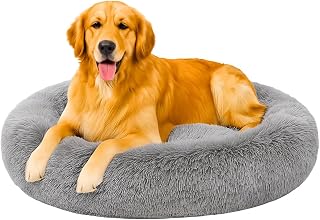
Donut beds have a rounded shape and a raised perimeter designed for pets that enjoy curling up. Their appeal is primarily physical comfort and the enclosed sleeping shape. They should not be treated as a guaranteed treatment for anxiety or separation-related behaviour.
These beds are often most suitable for pets that naturally curl into a compact sleeping position. Before buying, check whether the usable interior area is large enough rather than judging the size from the outside diameter alone.
Flat beds are among the most versatile choices. They can work as primary sleeping surfaces, crate liners, travel beds or secondary beds in another room. Their simple construction can also make them easier to wash and replace.
The main limitation is that inexpensive cushion filling may compress over time. For a heavier dog, examine whether the product provides enough structural support after the pet lies down rather than evaluating it only by how thick it looks when unused.
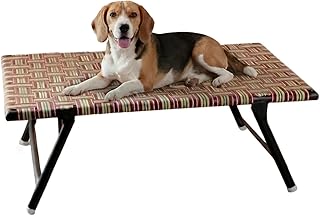
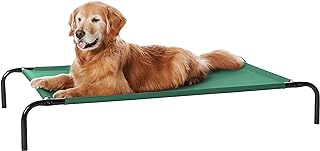
Raised beds lift the sleeping surface above the floor and allow air to circulate underneath. This can be useful in warm Indian conditions, especially in rooms where a conventional padded bed tends to retain heat.
For outdoor or semi-outdoor use, inspect the frame, joints, feet and sleeping fabric carefully. The bed should remain stable when the pet climbs onto it and should not have accessible sharp edges or poorly finished components. Breathable mesh can improve airflow, but it should still be strong enough for the animal's weight and activity.
Cooling mats and breathable summer beds can be useful during hot weather. They are particularly worth considering for pets that prefer cool surfaces or struggle with warm, enclosed bedding.
Cooling products differ considerably in construction. Some rely on breathable fabric, some use gel-filled layers and others work through airflow or pressure-sensitive materials. Read the manufacturer's care and usage instructions and inspect the product regularly for punctures or damage.
Enclosed beds provide a sheltered sleeping environment. They can appeal to cats and dogs that naturally seek covered spaces, particularly when the animal likes to sleep away from household activity.
Ventilation matters. An enclosed bed should not become excessively warm or difficult to access. For kittens and puppies, avoid designs that create unnecessary entrapment hazards and choose a construction appropriate for the animal's age and behaviour.
Size is one of the most common reasons an otherwise good pet bed becomes a poor purchase. Do not choose a bed only from breed names such as "Labrador bed" or "small dog bed." Individual animals within the same breed can differ significantly in body size and sleeping style.
Measure your pet while relaxed. For a dog, measure from the nose to the base of the tail and observe the animal's normal sleeping posture. If the dog routinely stretches out, allow additional space beyond its resting body length. If it curls tightly, the usable interior diameter of a round bed becomes more important.
For cats, consider both the cat's body size and whether it prefers curling, stretching, perching or hiding. A cat that sleeps on elevated furniture may be more interested in a stable platform or cat tree than a conventional floor cushion.
Memory foam can provide pressure-distributing support and is commonly considered for orthopedic beds. Its suitability depends on construction quality, thickness, density and the surrounding cover. It can also retain more warmth than highly breathable materials, so the overall design matters in hot weather.
Fibre-filled cushions are commonly used because they can provide a soft, lightweight sleeping surface at a lower price than more complex foam constructions. They are particularly practical when washability and easy replacement are priorities.
The trade-off is compression. A heavily used bed may lose loft faster than a well-constructed foam mattress, so check how the filling is contained and whether the cushion can be reshaped.
Cotton and cotton-blend covers can feel comfortable and breathable, but the fabric should be judged alongside the filling and construction. A breathable cover does not automatically make a thick bed cool.
Fleece and plush materials are attractive for winter use and pets that enjoy soft textures. They can collect hair, dust and debris, however, so removable covers and straightforward washing instructions are important.
Synthetic upholstery fabrics can offer useful resistance to everyday wear and may be easier to wipe than loosely woven textiles. Inspect the stitching and zipper construction, particularly if your pet scratches or digs before settling down.
Mesh is especially relevant to elevated beds and warm-weather products. Its major advantage is airflow. Its limitations include potential snagging, wear from claws and difficulty repairing damaged sections, so construction quality matters.
A pet bed can accumulate fur, skin flakes, dirt, saliva, outdoor debris and other contaminants through normal use. The easiest bed to maintain is usually one that can be disassembled into washable components.
Monsoon conditions make drying particularly important. A cover that washes easily but takes an excessively long time to dry may be inconvenient during prolonged humid weather. If the bed remains damp internally, odour and material deterioration can become concerns.
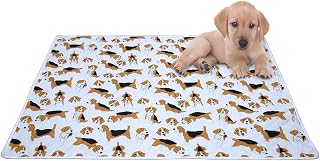
A waterproof inner layer can be especially useful for puppies undergoing toilet training, senior pets that have occasional accidents, pets recovering from illness, and households where the bed is exposed to wet paws or outdoor moisture.
Be precise about the term "waterproof." A waterproof cover is not necessarily the same as a waterproof mattress interior. Ideally, examine whether the protective layer surrounds the vulnerable filling or foam and whether the seams and closures are designed to limit liquid penetration.
In hot weather, ventilation can be more useful than additional plush material. Elevated beds, breathable mats and appropriately designed cooling products can help provide a cooler resting surface. Avoid assuming that the thickest cushion is the most comfortable option during summer.
During humid and rainy periods, prioritise washable covers, moisture-resistant construction and sufficient ventilation. Avoid placing a fabric-heavy bed directly against a damp wall or on a floor that regularly becomes wet.
In colder regions, fleece, plush surfaces, thicker cushions and enclosed beds may become more attractive. However, the pet should always be able to move away from excessive warmth and have a comfortable alternative if it becomes too warm.
Pets living in air-conditioned rooms may prefer a different bed from animals spending most of their time in warm rooms. A soft, insulated sleeping surface can be useful, while a breathable secondary mat gives the pet another temperature option.
Although many beds are marketed for both dogs and cats, the ideal design can differ. Dogs often require greater attention to weight capacity, surface area and durability. Cats may place more value on enclosed spaces, elevated positions, scratch-friendly surroundings or a compact sleeping zone.
For cats, consider whether the product can remain stable when the animal jumps onto it. For dogs, consider whether the bed remains stationary when the animal turns around, digs or gets up quickly.
Pet furniture can include cat trees, scratching structures, sofas, raised loungers, crates, kennels, ramps and dedicated sleeping furniture. These products should be evaluated according to their function rather than treated as interchangeable decorative accessories.
A cat tree can combine sleeping, climbing, observation and scratching functions. Stability is critical. A tall structure should have a sufficiently stable base and should not wobble significantly when the cat jumps between levels.
Pet sofas can suit households that want dedicated furniture with a living-room appearance. Check whether the cushion is removable, whether the upholstery can be cleaned and whether the frame can support the animal's weight.
Ramps and steps can help pets reach sofas or beds without repeated jumping. Surface grip, incline, width and structural stability are more important than decorative appearance. For pets with mobility problems, seek professional veterinary guidance about whether a ramp or steps are appropriate.
Use the following product-level checklist when comparing listings:
A stylish bed may look excellent in product photographs but still be difficult to clean or unsuitable for your pet's sleeping habits. Treat design as a secondary consideration after size, support and maintenance.
A small bed can force a large dog into an awkward posture, while an excessively large bed may not provide the enclosed feel preferred by some small pets. Measure first and compare the measurements against the usable sleeping surface.
Softness and support are different properties. A cushion can feel extremely soft when pressed by hand but compress substantially under the pet's body. For heavy or older dogs, investigate the underlying support structure.
The cover is one of the most important parts of a pet bed. If it cannot be removed or cleaned effectively, routine maintenance can become unnecessarily difficult.
A bed that constantly slides across polished flooring can be uncomfortable and potentially unsafe. A non-slip base is particularly useful on tile and marble surfaces.
A heavily padded winter bed is not automatically appropriate for an Indian summer. Consider having seasonal bedding or a breathable secondary option where temperatures vary significantly.
A numerical rating is useful but incomplete. Read verified customer reviews for recurring comments about actual dimensions, compression, washing, stitching, odour, colour changes, zipper durability and whether the pet actually uses the bed.
When comparing pet beds on Amazon India or other trusted retailers, look for repeated patterns rather than isolated praise or criticism.
Puppies can be hard on bedding. Digging, chewing, accidents and rapid growth make durability and washability more important than luxury materials.
A practical puppy bed should be easy to clean, appropriately sized, low enough for uncomplicated entry and constructed without exposed components that could become dangerous if chewed. If the puppy is likely to outgrow the product quickly, an expensive premium bed may not provide the best value.
Senior dogs often benefit from a stable sleeping surface that does not require climbing over tall walls. Supportive cushioning can be useful, but the ideal design depends on the individual dog's mobility and health.
Look for a firm, supportive base, adequate surface area, a low-entry section and a cover that can be washed regularly. If your dog is showing pain, difficulty standing, repeated slipping, or a significant change in sleeping behaviour, a veterinarian should assess the underlying problem rather than relying on a new bed alone.
Large dogs put greater loads on cushions and frames, making construction especially important. Check the maximum supported weight for raised beds and inspect foam or filling specifications where available.
Large breeds also need enough length to stretch comfortably. A bed labelled XL may still have inadequate internal dimensions for a particularly large dog, so compare measurements rather than relying on the label.
Small dogs often appreciate beds with a defined perimeter because the surrounding edge can create a compact sleeping area. Donut, bolster and enclosed designs may therefore be attractive options.
However, the bed should not be so deep or high that the dog struggles to enter and exit. Measure the actual sleeping cavity and consider the dog's preferred sleeping posture.
Cats can be selective about where they sleep. A cat bed may be ignored if it is positioned in an unsuitable location, even when the product itself is comfortable.
When shopping for cat furniture, consider offering choices such as a soft floor bed, elevated platform, enclosed hideaway or stable cat tree. A product that combines sleeping and observation space can be particularly useful for cats that prefer elevated locations.
For scratching and climbing furniture, inspect the stability of the entire structure, the quality of the scratching material and the attachment points between platforms. Tall furniture should be stable enough to withstand jumping and shifting weight.
Not every premium-looking feature adds meaningful value. Decorative buttons, elaborate trim, excessive cushions and complicated shapes can make a product harder to clean without improving everyday comfort.
Likewise, marketing terms such as "luxury," "premium," "orthopedic" or "calming" should be treated as prompts to investigate the construction rather than as proof of performance.
Instead of setting an arbitrary price as the definition of quality, divide the budget according to the pet's needs.
Always compare the cost of ownership rather than the initial price. A washable cover, durable filling and replaceable components can make a more expensive product more practical over time, while a cheap bed that loses its shape quickly may require repeated replacement.
Regular maintenance helps extend the useful life of pet furniture. Vacuum or brush away loose hair and debris before washing fabric components. Follow the manufacturer's washing instructions rather than assuming every textile can tolerate hot water or aggressive detergents.
There is no universal replacement interval because durability depends on the product, pet and frequency of use. Replace or repair bedding when the support has permanently collapsed, the filling has become uneven, the cover can no longer be cleaned properly, structural components are damaged, or the material presents a chewing, snagging or sharp-edge hazard.
For orthopedic beds, pay particular attention to support. A mattress that was originally supportive but has become permanently flattened may no longer provide the same function.
When two products appear similar, create a simple comparison based on measurable attributes rather than branding alone.
Indian shoppers may encounter a mixture of specialist pet brands, established pet-supply companies and marketplace sellers. Heads Up For Tails offers a broad pet-accessory range including its own furniture and bedding products. Supertails carries multiple pet-bed brands and categories, including products from Skatrs, Fluffy's, Pawpourri, Petter World and Trixie. PetSutra and Goofy Tails are other names shoppers may encounter when comparing dog bedding.
The right approach is not to assume that one brand is automatically best. Compare individual products on dimensions, materials, support, cleaning instructions, construction and customer feedback. A well-designed mid-range product can be a better choice for a particular pet than a more expensive product from a familiar brand.
Pet beds are widely sold through online marketplaces, specialist pet retailers, brand websites and physical pet stores. When comparing offers, verify the exact model, size and colour because product listings can contain multiple variants with substantially different dimensions.
For marketplace purchases, pay attention to the seller information, product specifications, customer review history and current return conditions. For specialist retailers, compare the same product across multiple sources rather than assuming the first displayed price represents the best overall value.
One bed is not always the ideal solution for an entire home. Pets often move between rooms depending on temperature, household activity and time of day. A practical setup may therefore include a primary supportive bed and a lighter secondary mat.
There is no single best type for every region or season. Breathable elevated beds and cooling mats can be useful during hot periods, while padded or enclosed beds may be preferable during colder weather. A washable all-purpose mattress can work well as a year-round option when the material and filling are appropriate for the home.
It can be worthwhile for larger, older or less mobile dogs because support becomes more important as body weight and mobility needs change. Compare the actual foam construction and accessibility rather than purchasing solely because a listing uses the word "orthopedic."
For most households, easy-clean construction is a major advantage. Removable, washable covers make routine maintenance substantially simpler and are especially useful where pets spend time outdoors or where humidity and dust are significant concerns.
Breathable fabrics, mesh and appropriately designed cooling surfaces can be useful in hot conditions. Thick plush bedding may be less suitable if the dog tends to become warm while resting. Individual temperature preference also matters.
A non-slip base is useful when the bed is placed on smooth tile, marble or polished flooring. It can prevent the entire bed from sliding when the dog stands, turns or jumps onto it.
A washable, appropriately sized and durable mattress or cushion is often a practical starting point. Puppies can have accidents and may chew bedding, so easy cleaning and safe construction are more important than expensive decorative features.
A supportive mattress with a low, accessible entrance can be a sensible choice. The bed should provide enough space to change position without forcing the dog to climb over high sides. If the dog has mobility or pain issues, discuss suitable bedding and access with a veterinarian.
Elevated beds can provide airflow underneath the sleeping surface and keep pets away from the floor. They are particularly useful in warm environments and can also be convenient for outdoor or semi-outdoor areas when the frame and fabric are durable enough.
The appropriate frequency depends on the pet, the environment and the manufacturer's care instructions. Beds used by outdoor pets, pets that shed heavily or animals prone to getting dirty may require more frequent cleaning than lightly used indoor beds. Inspect the bed regularly and clean it before dirt and odour accumulate.
Only if the product is designed for outdoor conditions. Outdoor use requires attention to moisture, UV exposure, drainage, ventilation, frame stability and material durability. A normal indoor fabric bed may deteriorate quickly when exposed to rain and prolonged sunlight.
Position the new bed in a familiar resting area and allow the dog to investigate it without pressure. A familiar blanket can make the new surface less unfamiliar. If the dog consistently avoids the bed, consider whether its temperature, firmness, size, location or smell differs from what the dog prefers.
For households with enough space, multiple beds can be useful because pets may prefer different locations at different times of day. A large primary bed combined with a lightweight secondary mat can provide flexibility without requiring several expensive pieces of furniture.
The best pet bed in India is not necessarily the most expensive, most luxurious or most highly advertised product. The strongest choice is the one that fits your pet properly, supports its normal sleeping posture, remains comfortable in your local climate, can be cleaned without excessive effort and is durable enough for everyday use.
For most buyers, the most important comparison points are size, support, washability, ventilation, construction quality and suitability for the pet's age and behaviour. Check verified customer reviews, compare specifications across several products and confirm today's price, seller information and return conditions before placing an order.
For a first purchase, prioritise practical features over decoration. For a senior or large dog, place greater emphasis on support and accessibility. For summer, consider airflow and cooling. For monsoon conditions, focus on moisture protection and drying. For cats, evaluate stability, height and the animal's preference for enclosed or elevated spaces.
These principles provide a more reliable way to compare the best pet beds and furniture products available in India in 2026 than relying on a single ranking. Product availability, specifications, customer ratings and prices can change, so always verify the current listing details immediately before purchasing.