
♥ Wishlist
Compare 58 verified Pet Collars, Leashes & Harnesses for Dogs and Cats products in India. Reviews, ratings, pros, cons and buying advice updated for October 2026.






![PETS EMPIRE Floral Fusion Dog Collar & Leash Set with Bow – Elegant Adjustable Collar[1.5*(26-37) cm] & Leash(1.5 * 150cm) for Small to Medium Dog (Small)](https://m.media-amazon.com/images/I/41zHXZl2viL._AC_UL320_.jpg)


Choosing a collar, leash or harness for a dog is not simply a matter of picking the most attractive design. The right product should match the dog's size, body shape, temperament, walking habits and intended use. A lightweight collar that works well for a calm small dog may be unsuitable for a strong, energetic dog that pulls. Similarly, a traditional collar may be convenient for identification and everyday wear but may not be the best choice for a dog that tends to pull, cough or back out of its collar.
For Indian pet owners, climate and everyday surroundings also deserve attention. Hot and humid conditions can make thick or poorly ventilated materials uncomfortable, while dust, mud and monsoon rain can increase the importance of easy-clean construction. Dogs that frequently walk on roads, apartment pathways, parks or uneven surfaces may also benefit from different leash lengths and harness designs depending on their walking style.
This guide is designed to help compare the most important characteristics before purchasing. Instead of treating one product type as universally superior, consider whether you need a collar for identification and routine wear, a leash for controlled walking, a harness for improved body control, or a combination of all three.
A collar, leash and harness serve different purposes, although they are frequently purchased as a set. Understanding those differences makes comparison much easier.
There is no universal requirement to choose only one. A dog can wear a properly fitted collar containing identification information while being walked using a harness and leash. The appropriate combination depends on the dog's behaviour, training and individual needs.
Fit should be the first consideration. A collar that is too tight can be uncomfortable, while one that is too loose can potentially slip over the dog's head. Adjustable collars are particularly useful for growing puppies, provided they are regularly checked as the dog gains size.
A practical fit check is to make sure the collar is secure without being excessively tight. The exact fit also depends on the collar's construction and the dog's neck shape, so manufacturer sizing instructions should be consulted rather than relying solely on breed names.
Common collar materials include nylon, polyester, leather and various coated or synthetic materials. Nylon and polyester are popular because they are generally lightweight and relatively easy to clean. Leather can offer a different feel and appearance but requires appropriate care, particularly when exposed to moisture.
For India's monsoon season or dogs that frequently encounter water and mud, easy-clean materials can be more convenient. Look closely at stitching, adjustment hardware and areas where moisture may remain trapped.
The buckle is an important component because it determines how easily the collar can be put on and removed and how securely it stays closed. Plastic buckles can be lightweight and convenient, while metal hardware may provide a different balance of durability and weight.
Do not judge a collar solely by the buckle material. The attachment point, stitching, webbing width and overall construction should also be considered, especially for larger or stronger dogs.
An everyday collar can be particularly useful for carrying identification information. A tag may contain the dog's name and the owner's preferred contact details. Check the tag attachment point and make sure the ring is properly secured.
Shorter leashes can provide closer control in busy environments, while longer designs can give a trained dog greater freedom in suitable open areas. The best length depends on where the leash will be used.
A leash handle is easy to overlook until a dog pulls repeatedly. Look for a handle that feels secure and comfortable in the hand. Padded handles can be useful for some owners, particularly when taking longer walks.
The clip connecting the leash to the collar or harness should be compatible with the attachment ring and appropriate for the dog's size. A swivel mechanism can help reduce twisting as the dog changes direction.
For stronger dogs, compare the construction of the entire leash rather than focusing only on the advertised length or appearance. The clip, webbing, stitching and handle attachment all contribute to practical reliability.
Harnesses distribute contact around the dog's body instead of placing the leash attachment directly at the neck. This can be useful for dogs that pull, dogs that frequently try to back out of collars, and owners who prefer the handling characteristics of a body harness.
However, a harness is not automatically the right choice for every dog. Fit and design matter. A poorly fitted harness can restrict movement, rub against the skin or allow the dog to escape. A harness should therefore be selected according to measurements and body shape rather than simply by weight.
Back-clip harnesses have the leash attachment on the dog's back. They are generally straightforward to put on and can work well for everyday walking, particularly when the dog already has reasonable leash manners.
Front-clip designs position the leash attachment closer to the front of the dog's body. They are often considered by owners working on loose-leash walking because the attachment position can influence how pulling is managed.
A front attachment does not replace training. Dogs still need consistent handling and reward-based training to develop reliable walking behaviour.
Some harnesses provide both front and rear attachment points. These can be useful for owners who want flexibility between ordinary walks and training situations. Before purchasing, check whether the manufacturer explains how the attachment points are intended to be used.
Step-in harnesses can be convenient for dogs that dislike having equipment placed over their head. Over-the-head harnesses can provide a different fit and may be preferred by dogs that are comfortable with them.
The dog's behaviour during dressing is an important practical consideration. The theoretically strongest design is not particularly useful if the dog becomes distressed whenever the harness is put on.
Harness sizing should be based on the manufacturer's measurement instructions. Depending on the design, chest girth, neck circumference, body length and weight may all be relevant.
Different body shapes can require different harness designs. A slim-necked dog, deep-chested dog, broad-chested dog and compact small breed may not fit the same harness style equally well even when their weights are similar.
Nylon is widely used in pet walking equipment because it can provide a practical balance of weight, flexibility and cleanability. It is available in numerous widths, colours and construction styles.
Polyester webbing is another common option. Depending on construction, it can be lightweight and suitable for everyday use. As with nylon, the quality of stitching and hardware remains important.
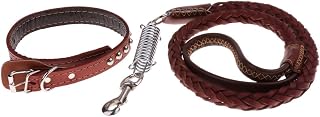
Leather collars and leashes can appeal to owners who prefer a traditional appearance and natural material. Leather requires more maintenance than many synthetic alternatives and should be kept in appropriate conditions.
Reflective stitching, piping or panels can improve visibility when illuminated by headlights. This can be a useful consideration for evening walks, particularly around roads and parking areas. Reflective material should not be treated as a substitute for safe walking practices or adequate lighting.
India's climate varies significantly by region, so there is no single material specification that suits every household. A pet owner in a humid coastal city may have different priorities from someone in a dry northern region or a colder hill area.
In hot weather, consider lightweight construction and adequate ventilation where relevant. Thick padded sections may provide comfort in some designs but can also retain heat. For humid conditions, inspect whether the product dries easily after exposure to rain or washing.
During monsoon weather, practical maintenance becomes especially important. Mud and moisture can accumulate around buckles, adjustment points and harness straps. Products that can be cleaned according to their care instructions may be easier to maintain over time.
Brand reputation can be a useful starting point, but it should not replace product-level evaluation. Established names such as Ruffwear, Julius-K9, PetSafe, KONG and Zee.Dog offer different approaches to pet equipment, and individual products within a brand can vary considerably in fit, construction and intended use.
Indian buyers should compare the exact model, size range, material specifications, attachment configuration and care instructions rather than assuming that every product from a familiar brand has the same characteristics.
For everyday Indian pet ownership, local and international brands can both be considered. The most important question is whether the specific product is appropriate for the dog's measurements, behaviour and walking environment.
An adjustable collar is a practical starting point for owners who need a basic everyday option. Priorities should include secure adjustment, comfortable webbing, suitable identification-tag attachment and hardware appropriate for the dog's size.
This category is particularly useful when the collar will be worn routinely rather than only during walks. Puppies require especially frequent fit checks because their neck size can change rapidly.
Padded collars can provide a softer contact surface for dogs that wear a collar for extended periods. Compare the padding, stitching and moisture management rather than assuming thicker padding automatically means greater comfort.
A reflective collar is worth considering for dogs regularly walked during early morning or evening hours. Reflective elements can make a dog more noticeable when light falls on them.
Check exactly which parts of the collar are reflective. A small reflective logo is different from a design incorporating reflective material around much of the collar.
A conventional fixed-length leash remains one of the most versatile choices for controlled everyday walks. It is straightforward to handle and provides predictable distance between the dog and handler.
When comparing models, pay attention to handle construction and clip quality. A visually attractive leash is not necessarily the most practical option for a strong or energetic dog.
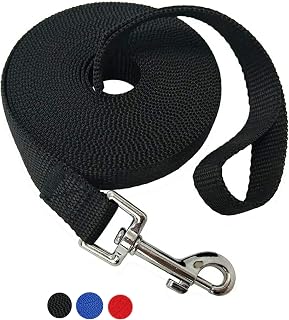
Long-line leashes can be useful in appropriate controlled environments for recall and distance training. They should be used with awareness of the surroundings because additional leash length can create tangling and handling risks.
They are not a substitute for secure fencing or reliable recall, and they are generally unsuitable for crowded roads and similarly constrained environments.
A back-clip harness offers a body-based attachment point and can be a comfortable everyday option for many dogs. It is especially worth comparing when an owner wants a simple harness that is easy to put on and remove.
Front-clip designs can be considered for dogs whose owners are working on pulling behaviour. The harness should fit correctly and allow natural movement. Marketing language such as "no-pull" should not be interpreted as a guarantee that the dog will stop pulling.
A dual-clip harness can offer greater flexibility by providing front and rear attachment options. This makes it appealing to owners who want one harness for different walking and training situations.
Small dogs can benefit from equipment proportionate to their size. Oversized hardware and excessive material can add unnecessary bulk. Look for lightweight construction, appropriate strap width and a secure fit without excessive restriction.
Large, muscular or particularly energetic dogs may require equipment designed with appropriate materials and hardware for their size. The focus should be on overall construction, secure attachment points and correct fitting rather than simply choosing the heaviest product available.
Puppies present a different buying challenge because their bodies change quickly. A collar or harness that fits correctly today may become unsuitable after a period of growth.
For puppies, simplicity is often valuable. Equipment should be easy for the owner to adjust and easy for the puppy to tolerate during gradual training.
Small dogs generally need proportionately sized equipment. A very wide strap or oversized metal clip may be unnecessarily bulky, while extremely lightweight construction may not be appropriate if the dog is unexpectedly strong or prone to pulling.
Measure the dog's actual neck and chest dimensions and compare them with the manufacturer's sizing instructions. Pay particular attention to the possibility of escape, since some small dogs have body shapes that allow them to reverse out of poorly fitted harnesses.
For larger dogs, construction becomes increasingly important. Examine the leash attachment point, stitching, buckle, D-rings and clip. A product should be selected according to the manufacturer's intended size and use.
Do not assume that "heavy duty" printed on packaging proves that a product is suitable for every powerful dog. Compare specifications and inspect how the load-bearing components are constructed.
Owners of strong dogs should also remember that equipment cannot compensate for unsafe handling. Proper leash manners, training and an appropriate walking environment remain important.
Pet walking equipment should be checked periodically for wear. Webbing can fray, stitching can weaken, metal can corrode and plastic components can develop cracks.
Never rely on an apparently minor defect in a component that directly controls the dog. Regular inspection is particularly important for dogs that pull strongly or use equipment frequently.
Colour, patterns and fashionable designs can make a product appealing, but appearance tells you little about fit, stitching, hardware or suitability for the dog's behaviour.
Dogs within the same breed can have different neck and chest dimensions. Breed-based sizing can be a useful starting point but should not replace actual measurements.
Buying equipment with excessive room in an attempt to make it last longer can compromise security. Adjustability is useful, but the product still needs to fit correctly at the time it is being used.
Padding can improve comfort, but excessive material can add heat and bulk. Consider the climate, walking duration and location of the padding.
The clip is a critical connection point. Compare its size, construction and compatibility with the collar or harness instead of focusing only on the leash material.
A harness changes the way the dog is connected to the handler; it does not automatically teach loose-leash walking. Training remains an essential part of behaviour management.
Dogs can gain or lose weight, puppies grow, coats change and equipment can stretch or shift. Fit should therefore be checked periodically rather than only when the product is first purchased.
When comparing products online in India, start with the exact model and size rather than relying on the product title alone. Read the listed specifications and compare them against your dog's measurements.
Customer reviews can provide useful information, but they should be interpreted carefully. A review from a small puppy may not tell you how the same product performs for a large adult dog, and a complaint about sizing may simply indicate that the buyer selected an unsuitable size.
Look for repeated observations rather than isolated comments. Useful review themes include accurate sizing, ease of adjustment, comfort during walks, durability of stitching, clip performance, cleaning convenience and whether the product remains secure during movement.
Verified purchase indicators can add context where available, but they do not guarantee that a review is applicable to your dog's particular circumstances.
The cheapest collar, leash or harness is not necessarily the best value, while the most expensive product is not automatically superior. Value comes from obtaining the features and construction appropriate for the intended use.
For an everyday accessory used frequently, durability and easy maintenance may justify spending more than you would for an occasional-use item. Conversely, paying for specialised features that you will never use may provide little practical benefit.
Compare the total specification rather than price alone. A slightly more expensive product may offer better adjustability or more suitable construction, while another higher-priced product may primarily differ in styling or branding.
A collar can be useful for identification and routine wear, while a harness can be used for walks where body-based control is preferred. Many owners therefore use both, with the leash attached to whichever walking equipment is appropriate for the dog and situation.
If a dog has a history of escaping collars, a properly fitted harness may be worth considering for walking. If a dog pulls strongly, owners may also explore front-clip or other harness designs alongside appropriate training.
For dogs with specific medical, mobility or behavioural considerations, professional veterinary or qualified training advice can be more appropriate than choosing equipment solely from online product comparisons.
Regular maintenance can help keep pet equipment in usable condition. Always follow the care instructions supplied with the specific product because different materials and hardware require different cleaning methods.
In monsoon conditions, drying is especially important. Damp equipment left in a closed bag or container can develop unpleasant odours and may deteriorate more quickly.
There is no universal replacement schedule because service life depends on construction, frequency of use, cleaning, exposure to weather and the dog's strength and behaviour. Instead of replacing equipment on a fixed calendar, inspect it regularly.
Replace a product when there is significant fraying, damaged stitching, cracked hardware, compromised buckles, unreliable clips or other damage that could affect secure use. Puppies may also need replacement equipment simply because they have outgrown the original size.
Pet equipment descriptions frequently use terms such as "no-pull," "escape-proof," "heavy duty," "premium," "tactical," "comfort" or "anti-choke." These labels can help identify the intended design, but they should not be treated as proof that a product will produce a particular outcome for every dog.
Look beyond marketing language and examine measurable characteristics such as adjustment range, attachment position, material, strap width, padding, hardware and size range. A well-designed product can support safer and more controlled walking, but equipment should be combined with appropriate training and supervision.
A collar concentrates its contact around the neck, making correct sizing particularly important. A harness distributes contact across multiple areas of the torso, but this creates more adjustment points that need to be positioned correctly.
Harnesses can therefore take longer to fit properly than simple collars. Owners should not assume that a harness is automatically more comfortable simply because it covers a larger area. Comfort depends on design, fit, movement and the individual dog.
Leash durability is influenced by several components working together. Webbing strength is only one part of the equation. Stitching at the handle and clip attachment, the quality of the clip, the swivel mechanism where present and the condition of the material over time all matter.
For dogs that pull, inspect stress points particularly carefully. A leash that looks thick may still have a weak connection point if the stitching or hardware is poorly suited to the intended load.
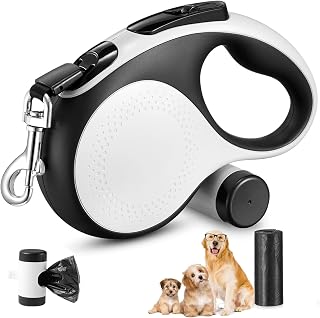
Retractable leashes provide adjustable distance and can be convenient in appropriate settings. However, their handling characteristics differ substantially from conventional fixed-length leashes.
They require the owner to manage the available distance carefully, particularly near roads, other dogs, pedestrians and obstacles. The locking mechanism and cord or tape condition should also be inspected regularly. A retractable design should be selected based on the manufacturer's intended dog size and use.
A practical setup does not need to contain every accessory available. A basic kit can be built around equipment that matches the dog's needs.
Owners with multiple dogs may need different equipment for each dog because individual size, behaviour and walking style can vary considerably.
There is no single best option for every dog. The right choice depends on the dog's measurements, behaviour, size, walking environment, climate and owner's preferences. Compare fit, materials, attachment points, adjustability and customer feedback before choosing.
Both can have a useful role. A collar can be practical for identification and everyday wear, while a properly fitted harness can provide a body-based walking attachment. The best choice depends on the individual dog and intended use.
Many owners use both for different purposes, such as keeping identification on a collar while attaching the walking leash to a harness. The equipment should be fitted correctly and used according to its intended design.
Measure the dog according to the manufacturer's instructions and compare those measurements with the product's size chart. Do not rely solely on breed, age or weight because body proportions vary between individual dogs.
A medium fixed-length leash is often a practical general-purpose choice, but the ideal length depends on the walking environment and the handler's preference. Shorter lengths can provide closer control in crowded areas, while longer lines may be more suitable for controlled training situations.
Reflective materials can improve visibility when illuminated by headlights or another light source. They can be useful for early morning and evening walks, although they do not replace careful road awareness and safe handling.
No. Price alone does not establish suitability or quality. Compare construction, materials, fit, hardware, adjustability, maintenance requirements and intended use rather than assuming a higher price guarantees a better product for your dog.
There is no universally best material. Nylon and polyester are practical choices for many everyday situations because of their common availability and easy-care characteristics, while leather may appeal to owners who prefer its feel and appearance. Climate, maintenance and the dog's individual needs should guide the decision.
Check it regularly, particularly before frequent walks or after exposure to water, mud and rough conditions. Pay attention to fraying, damaged stitching, cracked buckles and worn attachment points.
A harness can change how leash pressure is distributed and some designs are intended to make pulling easier to manage, but it does not automatically teach a dog to walk without pulling. Consistent training remains important.
Recheck the puppy's measurements frequently and replace or resize the harness when it no longer fits correctly. Do not keep using an undersized harness simply because it was originally purchased as an adjustable model.
Consider materials that are practical to clean and dry, and pay attention to areas around buckles, adjustment points and stitching where moisture and dirt can accumulate. Always follow the product's care instructions.
The best pet collar, leash or harness is the one that fits the individual dog securely, suits the walking environment and provides the features the owner actually needs. For some dogs, a simple adjustable collar and fixed-length leash will be sufficient. Others may benefit from a properly fitted harness, reflective details, multiple attachment options or specialised training equipment.
For buyers in India, the most useful comparison is not simply "which product has the highest rating?" Instead, ask whether the exact product matches your dog's measurements, behaviour and daily routine. Compare specifications, examine construction, read recurring customer feedback and consider climate and maintenance requirements before making the final decision.
Brands such as Ruffwear, Julius-K9, PetSafe, KONG and Zee.Dog can be included in a broader comparison, but the individual model and size should always be evaluated on their own specifications. Availability, current pricing and customer feedback can change, so check the latest information from trusted retailers before purchasing.