

♥ Wishlist
Compare 56 verified Baby Wipes for Gentle and Convenient Baby Care products in India. Reviews, ratings, pros, cons and buying advice updated for October 2026.


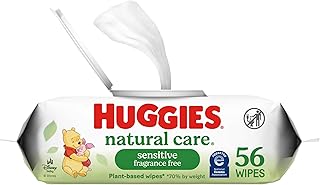


Choosing baby wipes is not simply a matter of picking the pack with the highest review count or the lowest price per wipe. A good baby wipe needs to balance skin comfort, cleansing performance, moisture level, material, fragrance, packaging, and everyday practicality. Babies may need to be cleaned several times a day, so even small differences in formulation or wipe texture can become important over repeated use.
For Indian families, the buying decision can also depend on climate, travel habits, availability of different pack sizes, and whether wipes are being used primarily for diaper changes or for occasional cleaning of hands and other skin surfaces. The best baby wipes for one family may therefore not be the best choice for another.
When comparing products from brands such as Pampers, Huggies, Himalaya, Mamaearth, Mee Mee, Johnson's and Baby Dove, look beyond the front of the package. Check the ingredient information, intended use, material description, fragrance details, pack configuration and current customer feedback before buying.
A useful baby wipe should remove urine, stool and everyday dirt without requiring excessive rubbing. The wipe should also be sufficiently moist to make cleaning practical while remaining manageable during use. Texture matters because a very thin wipe can require several sheets for one cleaning session, whereas a suitably sized and durable wipe may be easier to use.
There is no single specification that guarantees a wipe will suit every baby. Skin can respond differently to fragrances, preservatives, cleansing ingredients and other formulation components. Parents should therefore pay attention to how their individual baby's skin reacts rather than assuming that a popular product will work equally well for everyone.
Baby wipes can use different nonwoven materials and fibre combinations. The material influences softness, strength, thickness, absorbency and how the wipe feels against the skin. A thicker wipe can be convenient for messy diaper changes, while a lighter wipe may be preferable when portability is the priority.
Do not automatically equate thickness with quality. A well-constructed thinner wipe can perform effectively, while an unnecessarily thick product may simply use more material. The practical question is whether the wipe remains intact during cleaning and provides enough coverage for the intended task.
Moisture is one of the most important practical characteristics. A wipe that is too dry may require more rubbing, while excessive liquid can make handling inconvenient and may leave the skin feeling unusually wet.
Packaging also affects moisture retention. Resealable packs and secure lids can help reduce drying after repeated opening. If wipes are purchased in large quantities, consider whether the household can use each package within a reasonable period after opening.
Fragrance is a preference rather than a universal quality indicator. Some parents like a mild scent because it gives a clean sensory impression, while others prefer fragrance-free products to minimise unnecessary exposure to fragranced ingredients.
If a baby's skin becomes irritated after using a particular wipe, discontinuing that product and discussing persistent or significant irritation with a qualified healthcare professional is more appropriate than repeatedly switching products without identifying the possible cause.
Ingredient lists deserve more attention than marketing phrases alone. Parents should check the current packaging for ingredients they already know their child does not tolerate. Claims such as gentle, natural, herbal or dermatologist tested should not replace reading the actual product information.
Products marketed for babies can still contain ingredients that are unsuitable for an individual child's skin. If your baby has particularly sensitive skin or a history of reactions to personal-care products, a conservative approach is to introduce a new wipe carefully and monitor the skin.
Newborn skin requires careful handling, and wiping should never involve unnecessary friction. During the early weeks, some parents choose to rely mainly on cotton and water for certain cleaning tasks, particularly when the baby's skin is easily irritated. Baby wipes can still be useful, especially when changing a diaper away from home, but the choice should be based on the baby's individual tolerance.
When selecting wipes for a newborn, prioritise a soft texture, appropriate moisture, a clearly stated intended use and an ingredient profile that fits your family's preferences. Avoid assuming that a wipe is automatically appropriate for every newborn simply because it is labelled as a baby product.
Diaper changes are where wipe performance becomes most obvious. For routine wet-diaper cleaning, a relatively soft wipe may be sufficient. For a bowel movement, parents may value larger dimensions, better strength and a texture capable of lifting residue without repeated passes.
A practical diaper-changing setup should also include a clean diaper, suitable disposal arrangements and any skin-care product recommended for the baby's needs. Wipes should complement good diaper-changing hygiene rather than replace regular washing when washing is practical and appropriate.
If wipes are used multiple times every day, cost per usable wipe becomes more meaningful than the advertised pack price. Calculate the effective cost by dividing the current pack price by the number of wipes, while also considering how many wipes are normally required for one diaper change.
A cheaper pack is not necessarily more economical if the wipes are very small, tear easily or require several sheets for ordinary cleaning. Conversely, a premium pack may not offer sufficient practical benefit to justify its higher cost for every household.
For heavier cleaning, look for adequate wipe dimensions, strength and a texture that provides useful coverage. A wipe that stays intact when pulled from the pack and during cleaning can make the process easier and reduce the need to use multiple sheets.
Parents should avoid scrubbing. If residue is difficult to remove, using additional suitable wipes or washing the area with water may be preferable to increasing pressure against the skin.
For sensitive skin, the simplest formulation that meets your practical requirements may be preferable. However, there is no universal ingredient list that guarantees a product will never cause irritation. Skin sensitivity varies between children, and irritation can also result from moisture, friction, prolonged contact with urine or stool, and other factors unrelated to the wipe itself.
Parents considering wipes for sensitive skin should compare fragrance information, ingredient lists, cleansing agents, preservatives and the manufacturer's intended-use information. If a particular product repeatedly causes redness or discomfort, stop using it and seek professional advice when symptoms persist or are concerning.
Fragrance-free wipes can be an appealing option for parents who want to minimise fragranced ingredients. Scented wipes may be preferred by families who enjoy a particular fragrance, but scent itself does not demonstrate superior cleaning performance or skin compatibility.
When comparing two otherwise similar products, fragrance-free may be the more conservative starting point for a child whose skin is easily irritated.
Water-based terminology can be useful, but it should be interpreted alongside the complete ingredient list. A wipe can contain a high proportion of water while also containing preservatives, cleansing ingredients and other components needed to maintain the formulation and product quality.
Rather than relying exclusively on a front-of-pack claim, compare the complete ingredients and manufacturer's directions. This gives a more meaningful picture of what is actually being applied to the baby's skin.
Environmental claims require careful examination. Plant-derived fibres and biodegradable materials are not necessarily interchangeable with flushable materials, and a wipe described as biodegradable should not automatically be disposed of through a toilet.
Parents should follow the packaging's disposal instructions and local waste-management guidance. In general, used baby wipes should be placed in appropriate waste rather than flushed unless the product and local guidance specifically state otherwise.
Environmental considerations can also include packaging size, material usage and the number of wipes needed per cleaning session. Choosing a product that performs effectively with fewer sheets can be a practical consideration alongside material claims.
Baby wipes are commonly sold in different counts and multipack configurations. Comparing only the total number of wipes can be misleading because package sizes, wipe dimensions and product thickness can differ.
For travel, compact packaging can be more useful than buying the largest available pack. A smaller pack can fit more easily into a diaper bag, handbag or luggage compartment and may be opened and finished relatively quickly.
For longer journeys, carrying multiple sealed packs can provide a practical balance between availability and portability. Parents should also consider access to water, changing facilities, waste disposal and the expected number of diaper changes during the trip.
Packaging is an important but frequently overlooked buying criterion. A strong seal can help preserve moisture between uses, while a flip-top lid can make one-handed access easier during a diaper change.
Soft packs can be lightweight and convenient, whereas rigid-lid formats may be easier to open repeatedly. The best design depends on where the wipes will be stored and how often they will be used.
Wipes can gradually lose moisture if the package is not closed securely or if the product is stored under unsuitable conditions. Repeatedly leaving the opening exposed can accelerate drying.
Store wipes according to the manufacturer's instructions and close the pack securely after removing each wipe. Avoid unnecessary exposure to high temperatures or direct sunlight.
Cotton and water remain a simple cleaning option and can be particularly useful when parents want to minimise the number of formulation ingredients contacting the skin. Baby wipes, however, offer substantial convenience when changing a diaper outside the home or when immediate access to clean water is limited.
These options do not necessarily need to be mutually exclusive. Some families use cotton and water at home while keeping baby wipes available for travel, outings and emergencies. The appropriate choice depends on the baby's skin, family routine and circumstances.
Dry wipes can be useful when parents prefer to control the amount of water or cleansing solution used during cleaning. They may also be suitable for families that routinely use water separately.
Pre-moistened wipes provide greater convenience because the product is ready to use. When comparing them, focus on material quality, moisture, ingredients and practical cleaning performance rather than assuming one format is universally better.
The lowest upfront price does not always represent the lowest overall cost. Consider the number of wipes, wipe size, number of sheets required per change and whether the product remains usable throughout the pack.
Well-known brands such as Pampers, Huggies, Himalaya, Johnson's, Mamaearth and Baby Dove provide familiar options, but brand recognition cannot predict how an individual baby's skin will respond. Always check the current product information.
Marketing language can make products appear similar even when their formulations differ. Parents with specific preferences or known sensitivities should compare ingredients rather than relying solely on labels such as premium, natural or gentle.
A bulk purchase can be economical once a product is known to suit your baby. Buying a very large quantity before testing it can be inconvenient if the product causes irritation or simply does not meet your expectations.
Baby wipes are designed for their stated intended uses. They should not automatically be treated as substitutes for soap and water, household disinfectants or specialised cleaning products.
When comparing several products, create a simple specification checklist rather than relying on product names alone. Important fields include wipe count, dimensions, material description, fragrance information, formulation claims, packaging style and stated intended use.
Customer reviews can reveal practical issues that specifications do not always communicate, but review counts and star ratings should not be treated as definitive proof of quality. Product versions, packaging, seller listings and formulations can change over time.
Look for recurring themes rather than isolated comments. Useful review topics include wipe strength, actual moisture level, texture, packaging quality, ease of dispensing and whether customers experienced problems with dryness or leakage.
For skin-related comments, remember that individual experiences are not medical evidence. A review describing redness or irritation should be treated as one consumer experience rather than proof that a product is unsafe for every baby.
A structured comparison makes a long shortlist easier to narrow down. Start by eliminating products that do not meet your essential requirements, then compare the remaining options on practical factors.
Prioritise a combination of adequate size, dependable strength, comfortable texture and suitable moisture. A practical everyday wipe should perform consistently without requiring excessive rubbing or several sheets for ordinary cleaning.
Consider fragrance-free or otherwise simple formulations if they fit your baby's needs, and pay close attention to the ingredient list. Individual skin tolerance remains more important than a generic product label.
Compact packs with secure closures are often more convenient for diaper bags and journeys. Consider carrying more than one small pack rather than relying on one oversized package.
Compare cost per wipe together with actual usability. A value-oriented purchase should provide sufficient coverage and strength so that the household does not need substantially more wipes per change.
Compare the actual material and disposal information rather than relying on broad environmental wording. Follow disposal instructions carefully and never assume that biodegradable means suitable for flushing.
Storage can matter particularly in hot weather. Keep packs in a clean, dry location away from direct sunlight and excessive heat unless the manufacturer's instructions state otherwise. Avoid storing an opened pack in places where the seal can be repeatedly exposed to dirt or moisture.
For diaper bags, keep the wipe package closed when not in use. If you maintain separate packs at home, in a vehicle and in a travel bag, check each package periodically rather than assuming that all stored packs remain in identical condition.
Start with your baby's skin needs. If your child has no known sensitivity, you can compare a broader range of formulations. If there are known sensitivities, narrow the selection using ingredient and fragrance preferences first.
Next, determine how the wipes will be used. A family primarily using wipes at home may prefer larger economical packs, while parents who frequently travel may place greater value on compact packaging.
Finally, compare the current specifications and customer feedback of the shortlisted products. Because formulations, packaging and retailer listings can change, verify the current product information immediately before purchase rather than relying on an old comparison.
Several established baby-care brands are commonly encountered when researching baby wipes in the Indian market. Depending on the product range and current availability, shoppers may encounter Pampers, Huggies, Himalaya, Mamaearth, Mee Mee, Johnson's and Baby Dove.
The purpose of including recognised brands in a buying guide is to give shoppers useful comparison points, not to suggest that one manufacturer is automatically superior. Product specifications can vary substantially within the same brand, so compare the exact wipe variant rather than the brand name alone.
The best baby wipes depend on your baby's skin tolerance, your preferred formulation, intended use, wipe size, packaging and budget. There is no single product that is automatically best for every family. Compare the exact product specifications and current customer feedback before purchasing.
Baby wipes are designed for baby-care use, but newborns can have particularly delicate skin and individual sensitivities. Check the manufacturer's intended use and ingredient information, use wipes gently and consider a simpler cleaning method if your baby's skin does not tolerate a particular product.
Fragrance-free wipes can be a sensible choice for parents who want to minimise exposure to fragranced ingredients, particularly when a baby's skin is easily irritated. However, fragrance-free does not guarantee compatibility with every child.
Many baby wipes are designed for routine baby-care use, including diaper changes. Follow the product's instructions and pay attention to your baby's skin. If repeated use appears to contribute to irritation, reconsider the product and seek professional advice when necessary.
Do not assume that baby wipes are flushable. Most conventional wipes should be disposed of with appropriate waste according to the manufacturer's instructions and local waste-management guidance. Even products marketed with disposal-related claims should be checked against local wastewater guidance.
Close the package securely after every use and store it according to the manufacturer's recommendations. Avoid unnecessary exposure to heat and direct sunlight. If a pack has a lid or resealable closure, make sure it is properly sealed after removing a wipe.
No. A higher price does not automatically mean better skin compatibility, cleaning performance or value. Compare the exact formulation, dimensions, material, packaging and cost per usable wipe.
Compare the specific variants rather than the brands as a whole. Examine ingredients, fragrance, material, wipe dimensions, pack size, packaging design, intended use and current customer feedback. Then compare the effective cost per wipe.
Stop using the suspected product if you believe it is contributing to irritation and keep the area clean and dry using an appropriate method. If the irritation is persistent, severe, worsening or otherwise concerning, consult a qualified healthcare professional rather than relying solely on product changes.
Bulk buying can make sense after you have identified a product that suits your baby and household routine. Before purchasing a large quantity, check the current product formulation, packaging and expiry or other date information where applicable.
Before choosing from a Top 10 baby wipes list, make the decision based on your actual routine rather than popularity alone. A strong shortlist should satisfy your baby's skin requirements, provide practical cleaning performance, fit your preferred formulation and offer packaging that works for home and travel.
This buying guide is intended to support independent consumer research rather than replace the manufacturer's current product information or professional medical advice. Product formulations, packaging, pack sizes, retailer listings and availability can change, so shoppers should verify the latest information before purchasing.
The most useful comparison is not simply a ranking from one to ten. It is the process of identifying which product characteristics matter for your baby's skin and your family's routine, then selecting the option that provides the most appropriate balance of comfort, cleaning convenience, ingredients, packaging and value.