

♥ Wishlist
Compare 59 verified Baby Toys and Activity Gear products in India. Reviews, ratings, pros, cons and buying advice updated for October 2026.











Choosing baby toys is less about finding the product with the most buttons, lights or features and more about matching the toy to a child's developmental stage, play habits, available space and supervision needs. A good baby toy should be engaging without being unnecessarily complicated, durable enough for everyday handling and appropriate for the child's age.
For parents shopping in India, the choice can be particularly broad. Online marketplaces offer rattles, teethers, activity gyms, stacking toys, musical toys, walkers, push toys, sensory toys, bath toys, soft toys, play mats and activity centres from brands such as Fisher-Price, Funskool, Babyhug, R for Rabbit, Chicco, VTech and Skip Hop. The important question is not simply which brand is popular, but whether a particular product is suitable for the child who will actually use it.
At this stage, babies are beginning to respond to sound, contrast, movement and familiar voices. Toys should be simple and easy to observe rather than overloaded with functions. High-contrast sensory toys, lightweight rattles designed for the appropriate age, soft activity toys and supervised tummy-time accessories can be useful choices.
Babies increasingly reach, grasp, pull and explore objects with their hands and mouths. Rattles, grasping toys, activity arches, crinkle toys and age-appropriate teethers can encourage sensory exploration. Products should be easy to hold and should not contain components that could become detached through normal handling.
This is a particularly active period for play. Babies may begin transferring objects between hands, sitting independently, crawling, pulling themselves up and experimenting with cause and effect. Stacking cups, activity cubes, simple shape toys, soft blocks, musical activity toys and supervised floor-play equipment can become more useful.
At this age, parents should pay special attention to small parts. A toy that appears harmless to an older toddler may be unsuitable for a younger child who explores objects by putting them in the mouth.
Toddlers typically benefit from toys that encourage movement, problem-solving, imitation and early language. Push toys, chunky building pieces, simple puzzles, sorting toys, pretend-play accessories and musical instruments can provide different types of play.
For active toddlers, stability becomes especially important. A push toy should not be selected solely because it looks attractive. Examine its base, wheel arrangement, construction, handle design and the manufacturer's instructions for use.
Older toddlers can usually engage with more complex construction, matching, pretend-play and problem-solving toys, subject to the stated age recommendation. Products such as LEGO DUPLO, larger puzzles, role-play sets and more advanced activity toys may become appropriate when the specific product's age guidance permits their use.
Safety should take priority over appearance, entertainment value and price. In India, toy safety is covered by applicable Bureau of Indian Standards requirements. BIS currently lists toy standards covering mechanical and physical properties, flammability, migration of certain elements, activity toys and other safety considerations. Electric toys are covered by a separate Indian Standard. Buyers should therefore pay attention to applicable certification information and the product's intended age range rather than relying only on a marketplace rating.
The age label is one of the most important pieces of information on a baby toy. It can indicate more than the expected developmental ability; it may also relate to physical hazards such as small parts, cords, magnets, moving mechanisms or the way the product is intended to be used.
Do not automatically assume that a toy marked for an older child is suitable for a younger baby simply because an adult will be present. Follow the manufacturer's age guidance and safety warnings.
Inspect toys periodically for buttons, eyes, wheels, caps, decorative pieces, plastic covers and other components that could become loose. Seams on soft toys deserve the same attention. If a component becomes damaged or detached, discontinue use until the product can be safely assessed or replaced.
Baby toys are frequently pulled, twisted, dropped and chewed. Look for smooth construction and avoid products with accessible sharp edges, cracked plastic or damaged components. Activity equipment with hinges, folding mechanisms or moving parts requires additional attention to pinch and trapping hazards.
Magnetic components deserve particular caution around young children. Do not allow babies or toddlers to use a toy if a magnet can become accessible through damage or deterioration. Products containing magnets should be used only as intended and according to the stated age guidance.
Long cords, loops and straps can present hazards to young children. Before buying an activity toy, examine whether cords or attachments are necessary for the intended function and whether the manufacturer provides specific safety instructions.
Electronic toys can produce sounds at close range. Toys with adjustable volume are often easier to manage in a home environment. Parents should avoid placing loud sound-producing toys directly beside a baby's ears and should follow the manufacturer's usage instructions.
Indian toy buyers should understand the difference between a marketplace seller's marketing statement and formal product compliance information. BIS certification has been part of India's compulsory toy safety framework since the Toys (Quality Control) Order came into effect in 2020. BIS information also distinguishes between non-electric and electric toys and identifies relevant Indian Standards.
For 2026 shoppers, this is particularly relevant because BIS documentation now includes the fifth revision of IS 9873 Part 1 for mechanical and physical toy safety. When evaluating a product, look for credible manufacturer or packaging information relating to applicable standards rather than treating generic phrases such as “premium quality” or “non-toxic” as proof of compliance.
Plastic is common because it can be lightweight, moulded into rounded shapes and relatively easy to clean. However, plastic quality varies considerably. Inspect the finish, seams, moving parts and overall construction. A durable plastic toy should not have obvious cracks, sharp flashing or poorly secured components.
Silicone is widely used for teethers and sensory products because of its soft, flexible texture. The material itself should not be treated as the only buying criterion. Check the complete product, including handles, rings, seams, attached pieces and cleaning instructions.
Wooden stacking toys, blocks and puzzles can provide excellent tactile play. Look closely at the surface finish, edges, paint or coating, and whether small pieces are appropriate for the child's age. A wooden toy is not automatically safer simply because it is made from wood.
Soft toys can provide comfort and sensory interest, but they require inspection for loose stitching, detachable decorations and filling exposed through damaged seams. Washability is another practical consideration because baby toys frequently come into contact with saliva, food and household dirt.
Flexible toys should be checked for tears, splits and degradation. If the product has a squeaker, valve or other internal component, inspect the surrounding material regularly to make sure the component cannot become accessible.
A toy does not need to be labelled “educational” to support development. Simple toys can encourage useful skills when they require the child to look, reach, grasp, manipulate, move, listen, imitate or solve a small problem.
Electronic toys can be engaging, particularly when they respond to a child's actions. However, more features do not necessarily mean greater developmental value. A simple object can generate longer and more varied play because the child has to decide what to do with it.
Open-ended products such as blocks, stacking cups and simple sorting toys can be used in multiple ways as a child develops. Electronic products may offer lights, melodies, buttons and programmed responses, but parents should assess whether those functions genuinely encourage interaction or simply keep the toy producing entertainment.
A balanced toy collection can include both approaches. The better choice depends on the child's age, interests, attention span and the kind of play parents want to encourage.
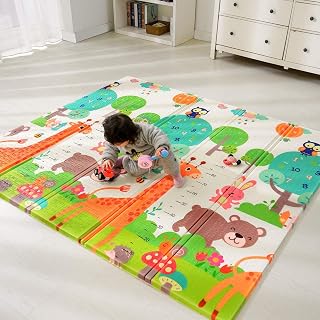
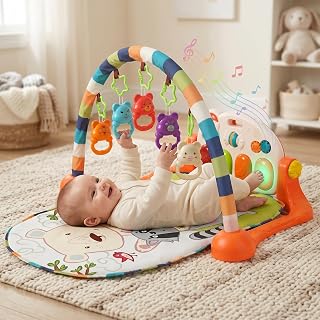
Activity gyms and play mats can create a dedicated floor-play area, especially during early developmental stages. When comparing them, consider more than the number of hanging toys included.
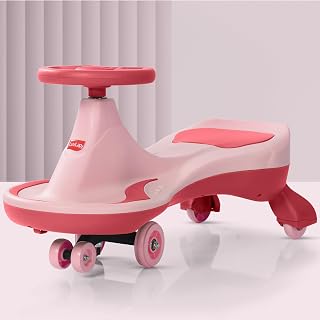
The terms used for mobility products can be confusing. A push toy, ride-on toy, walker and activity centre can have very different designs and intended uses. Parents should identify the exact category before buying.
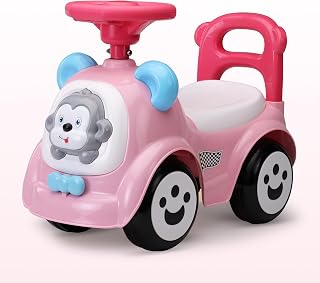
For push toys and ride-on products, stability, wheel design, construction quality and the child's developmental readiness deserve close attention. Do not select an active-play product merely because a child is interested in standing or walking. The manufacturer's instructions should determine the intended age, weight or developmental requirements.
Products with wheels should also be used on appropriate surfaces and under the supervision specified by the manufacturer. Stairs, uneven surfaces, balconies and other hazardous areas should never be treated as ordinary play spaces.
Many babies naturally explore objects with their mouths. This makes construction and material quality especially important for teethers and toys intended for oral exploration.
Brand recognition can be useful as a starting point, but it should not replace product-level evaluation. Fisher-Price has a broad range of developmental and activity products, while Funskool has a strong presence in children's toys. Babyhug covers a wide selection of baby and toddler products, and R for Rabbit offers various baby and child activity categories. Chicco and VTech are also familiar names in baby and children's products.
Instead of asking which brand is universally best, compare the specific product's age recommendation, construction, dimensions, materials, safety information, cleaning requirements, included components and expected usage.
Parents can easily spend more on features that have little practical value. Before paying extra, ask what the feature actually changes about everyday play.
Battery-operated toys introduce additional considerations beyond ordinary toy construction. Examine the battery compartment and follow the manufacturer's instructions for battery installation and replacement.
Customer reviews can reveal useful information, but they should be interpreted carefully. A high average rating does not guarantee that a product is suitable for every child.
Prioritise reviews that describe specific characteristics such as construction, dimensions, cleaning, battery life, ease of assembly, durability and suitability for the stated age. Reviews that simply say “excellent product” provide much less buying information.
Adults may prefer sophisticated electronic toys because they appear more advanced. Babies often benefit from simpler interaction. Select based on developmental suitability rather than the number of functions listed on the box.
Online photographs can make toys appear smaller or larger than they are. Check measurements before purchasing, especially for activity gyms, play kitchens, ride-ons and large activity centres.
Price can be an important consideration, but the lowest upfront cost is not always the best value. Compare construction, replaceability of consumable components, cleaning requirements, useful lifespan and whether the product can remain appropriate as the child develops.
Parents sometimes purchase toys for a future developmental stage. This can be wasteful if the child loses interest or if the toy is unsuitable when opened. Age-specific purchasing can make the toy collection more relevant and easier to manage.
A toy that cannot be cleaned easily may become inconvenient in daily use. Babies frequently drool, spit up and drop toys on the floor. Consider whether surfaces are wipeable and whether fabric components can be washed according to the manufacturer's instructions.
Maintenance should match the material and the manufacturer's care instructions. Avoid assuming that every toy can be boiled, submerged, machine washed or treated with household disinfectants.
A practical toy collection should fit the family's living space. Too many toys can make play areas difficult to organise and can make it harder for parents to notice damaged components.
Use separate storage for small loose toys, larger activity equipment and frequently cleaned products. Keep products with age restrictions away from younger children when siblings share a home. It can also be useful to rotate toys rather than keeping every item available at once.
Space is an important buying factor in apartments and compact homes. Foldable play gyms, nesting toys, stackable products and compact activity toys can be easier to live with than large fixed activity centres.
India's climate varies considerably, so the practical requirements for a toy can differ between homes. Humid conditions can make drying and fabric care more important, while dusty environments may favour smooth, washable surfaces.
For outdoor activity gear, consider the manufacturer's instructions regarding sunlight, moisture and storage. Do not assume that a product designed for indoor use can be left outside permanently.
Travel toys should be compact, durable and easy to clean. Parents should avoid carrying a large collection when a small selection of versatile toys can provide enough variety.
There is no universal budget that guarantees a better toy. A sensible approach is to divide the budget across different types of play instead of buying several products with nearly identical functions.
For example, a family might prioritise one useful sensory toy, one construction or manipulation toy, one movement-oriented product and a few simple open-ended toys rather than purchasing multiple electronic activity centres.
When comparing prices, consider the expected period of use, durability, cleaning requirements, storage needs and whether the toy offers genuinely different play opportunities.
A more expensive product may make sense when it offers meaningful advantages such as better construction, versatile configurations, useful adjustability, easier cleaning or a longer appropriate usage period. The premium should be connected to a tangible benefit rather than branding alone.
Conversely, a basic toy can be excellent value when it is well constructed, age-appropriate, easy to clean and capable of supporting repeated play.
Consider rattles, textured teethers, crinkle toys, soft activity toys and simple sensory products designed for the appropriate age.
Stacking toys, large-piece puzzles, shape sorters and age-appropriate construction toys can encourage grasping, placing and manipulating.
Push toys, suitable ride-on products and properly designed activity equipment can support movement when the child is developmentally ready and the product is used according to instructions.
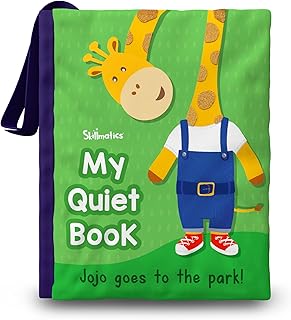
Board books, simple puzzles, stacking toys and soft sensory products can provide lower-noise alternatives to electronic toys.
Compact stacking toys, small sensory toys, soft books and portable activity products are often easier to pack than large activity centres.
As children become older, larger construction sets, pretend-play products and simple cooperative activities can encourage interaction. Always consider the youngest child's age when toys contain small components.
A balanced collection does not need dozens of products. Aim for variety in the type of interaction each toy encourages.
There is no single best baby toy for every child. The right choice depends on age, developmental stage, interests, available space, safety requirements and budget. Compare the specific product rather than choosing solely by brand or rating.
Fisher-Price, Funskool, Babyhug, R for Rabbit, Chicco and VTech are among the recognisable brands shoppers may encounter in the Indian baby and children's product market. Product suitability should still be evaluated individually.
Not necessarily. Price can reflect construction, materials, electronics, design or branding, but a higher price does not automatically mean greater developmental value or better suitability for a particular child.
Not automatically. Safety depends on the complete product, including construction, finish, dimensions, detachable components, applicable standards and age suitability. Both wooden and plastic toys should be inspected and used according to their instructions.
The appropriate cleaning frequency depends on the toy, material and how it is used. Toys that are frequently mouthed or handled during meals generally require more frequent cleaning than products used occasionally. Follow the manufacturer's care instructions.
Electronic toys can be part of a varied toy collection, but they do not need to dominate it. Simple non-electronic toys can provide extensive opportunities for grasping, stacking, sorting, movement and imaginative play.
Stop using it and assess whether the damage could expose sharp edges, small parts, internal components or other hazards. Do not continue using a damaged product simply because it was expensive or because the child likes it.
No. Ratings can help identify products worth investigating, but parents should also examine the age recommendation, manufacturer information, safety details, dimensions, materials, construction, cleaning requirements and recurring review comments.
Prioritise age-appropriate products that support simple visual, auditory and tactile exploration. Keep the design uncomplicated and inspect every component for potential hazards. Follow the manufacturer's age and safety instructions.
Developmentally useful toys can include rattles, stacking toys, shape sorters, blocks, simple puzzles, sensory toys, books and suitable movement products. The best option is one that matches the child's current abilities while offering an appropriate challenge.
The strongest buying decision is rarely the product with the longest feature list. Start with the child's age and developmental stage, then narrow the choices using safety, construction, material, size, cleaning, storage and expected usage.
For Indian shoppers, applicable BIS requirements and certification information should also be part of the evaluation process. Compare specifications carefully, read both positive and negative customer feedback, check the exact model and variant, and review the manufacturer's warnings before purchasing.
Whether you are comparing a simple rattle, a teether, an activity gym, a stacking toy, a musical product or larger activity gear, the goal is the same: choose an age-appropriate product that is practical for your home and provides meaningful opportunities for safe play. Prices, availability, seller information and customer ratings can change, so verify the current product details before making a final purchase.