

♥ Wishlist
Compare 54 verified Baby Face Cream for Gentle Skin Care products in India. Reviews, ratings, pros, cons and buying advice updated for October 2026.


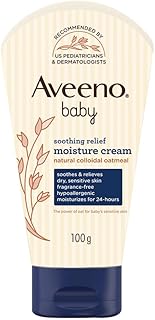
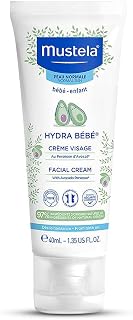


Choosing a baby face cream is different from choosing an ordinary facial moisturizer. A baby's facial skin can be delicate, easily irritated and more vulnerable to dryness from bathing, weather changes, saliva, food residue, air conditioning and environmental exposure. The most suitable product is therefore not necessarily the one with the longest ingredient list, strongest fragrance or most attractive packaging. A better choice is one that matches the child's age, skin condition, climate and tolerance.
For parents comparing baby face creams in India, the priority should generally be gentle moisturization, a well-tolerated formula, appropriate texture and a clear ingredient label. Products from established baby-care ranges such as Cetaphil Baby, Sebamed Baby, Aveeno Baby, Bioderma ABCDerm, Mustela, Himalaya Baby, Johnson's Baby and other established manufacturers can be considered during comparison, but the brand name alone should never replace checking the current ingredient list and product directions.
Baby face creams are designed for a different use case from adult facial creams. Adult skincare products may contain exfoliating acids, retinoids, strong actives, anti-ageing ingredients, concentrated fragrances or other ingredients that are unnecessary for a baby's routine.
A baby's everyday moisturizer should have a straightforward purpose: helping maintain comfortable, moisturized skin while minimizing avoidable irritation. For a healthy baby with normal skin, a complicated skincare routine is usually unnecessary.
Age suitability should be checked before considering any other feature. Newborn skin and the skin of an older baby are not necessarily managed in exactly the same way, and manufacturers can specify different minimum ages for individual products.
Do not assume that a product marketed as a baby moisturizer is automatically appropriate for a newborn. Read the packaging for age guidance and application instructions. If the product does not clearly explain whether it is suitable for your baby's age, choosing a clearly age-appropriate alternative is the safer approach.
Fragrance can make a product pleasant for adults, but fragrance is not an essential requirement for moisturizing a baby's face. For babies with sensitive skin, recurrent dryness or eczema-prone skin, a fragrance-free formulation can be a particularly useful comparison point.
Parents should also distinguish between "fragrance-free" and "mildly scented." They are not interchangeable descriptions. If minimizing potential irritants is important, inspect the ingredient declaration rather than relying on advertising language alone.
A useful baby moisturizer may combine ingredients that attract water, soften the outer skin and help reduce moisture loss. Common categories include humectants, emollients and occlusive ingredients.
The best formulation depends on the child's skin. A lightweight cream may be comfortable for ordinary daily use, while a richer cream or ointment may be more useful when dryness is significant.
Texture matters more than many buying guides suggest. A cream that is extremely thick may provide a useful barrier but can feel heavy in hot weather. A very light lotion may be pleasant in India's warmer regions but may not provide enough protection for very dry skin.
For facial application, parents should look for a product that spreads with gentle movements rather than requiring repeated rubbing. Avoid aggressive massage on dry, irritated or inflamed skin.
A shorter ingredient list is not automatically safer, and a longer list is not automatically problematic. Nevertheless, a simple formulation can make it easier to identify what the baby is using and to notice a possible reaction if one occurs.
Claims such as "natural," "herbal," "organic," "chemical-free" or "hypoallergenic" should not be treated as automatic guarantees of suitability. Plant-derived ingredients and essential oils can also cause irritation or sensitivity in some individuals.
Normal skin, dry skin, very dry skin and eczema-prone skin can require different product characteristics. The lightest moisturizer is not always the best moisturizer.
The word "cream" is often used broadly in baby skincare, but different textures behave differently on the skin. Understanding the distinction makes product comparisons much easier.
Creams are generally thicker than lotions and can provide a useful balance between moisturization and spreadability. They are often a practical choice for routine facial moisturization when the baby's skin is dry but does not require an especially heavy occlusive layer.
Lotions are usually lighter and easier to spread over larger areas. They can feel comfortable in warm or humid conditions, although very dry skin may benefit from a richer formulation.
Ointments are generally more occlusive and can be useful for very dry areas. They may feel greasy, which can make them less convenient for daytime use, but their barrier-forming characteristics can be valuable when moisture retention is the primary objective.
For a baby's face, product texture should be considered alongside the exact skin problem rather than judged solely by whether the product feels light or luxurious.
India's climate varies considerably. A product that feels comfortable during a humid coastal summer may feel very different during a dry winter in northern India. Indoor air conditioning can also contribute to dry-feeling skin.
During hot and humid weather, parents may prefer a lighter texture that absorbs comfortably without leaving an unnecessarily heavy layer. However, lightness should not come at the expense of adequate moisturization if the child's skin is genuinely dry.
Cold or dry weather can increase the need for consistent moisturization. A richer cream may be more comfortable for cheeks and other areas that become dry, particularly after bathing.
Spending substantial time in air-conditioned environments can make skin feel drier. Instead of repeatedly changing products, parents can first assess whether a regular moisturizing routine is being followed consistently.
Humidity and sweating can make heavy products feel uncomfortable. At the same time, excessive washing to remove sweat can aggravate dryness. Gentle cleansing and an appropriately textured moisturizer are generally more sensible than repeatedly stripping the skin and replacing moisture afterward.
Glycerin is a widely used humectant that helps attract water to the outer skin layers. It is common in moisturizers and can be useful in formulations intended for dry skin.
Petrolatum is an occlusive ingredient that helps reduce water loss from the skin. It can be particularly useful when the skin barrier is very dry. Its greasy texture may not appeal to every parent, but cosmetic elegance and barrier performance are separate considerations.
Ceramides are lipids naturally associated with the skin barrier. Moisturizers containing ceramides are frequently considered when barrier support is a priority, particularly for dry or eczema-prone skin.
Colloidal oatmeal is used in some moisturizing products designed for dry or sensitive skin. Parents should still check the complete formula because the presence of one desirable ingredient does not tell the whole story about a product.
Ingredients such as plant oils can contribute emollient properties, but "natural" does not mean universally suitable. Babies can react to individual ingredients, and heavily fragranced botanical formulas may not be ideal for sensitive skin.
Panthenol is commonly used in skincare formulations as a conditioning and moisturizing ingredient. It may appear in baby-care products intended to support comfortable skin.
The objective is not to create a list of ingredients that every baby must avoid. Instead, parents should identify unnecessary potential irritants and compare formulas according to the child's individual tolerance.
The term "hypoallergenic" should be interpreted cautiously. It is not a guarantee that every baby will tolerate the product. Individual sensitivity can occur even with products designed for sensitive skin.
The same principle applies to "natural," "dermatologically tested," "pediatrician tested," "herbal" and similar marketing descriptions. Such statements may provide useful context, but parents should still read the label and observe how their baby's skin responds.
When introducing a new skincare product, particularly for a baby with sensitive skin, avoid immediately applying a large amount across the entire face. A cautious approach can make it easier to identify whether the product is tolerated.
Patch testing is not a substitute for medical allergy testing and cannot guarantee that a product will never cause a reaction.
Application technique can influence how well a moisturizer works. The product should be spread gently rather than massaged aggressively into delicate facial skin.
For babies with persistent dryness or eczema, regular moisturization is generally more important than constantly switching between different brands.
Dry skin usually calls for barrier support rather than cosmetic complexity. Parents comparing products should prioritize a richer moisturizer when necessary, particularly one that is comfortable enough to use consistently.
A practical comparison should consider whether the cream reduces the feeling of tightness, whether it leaves the skin comfortable and whether the child tolerates it. If dryness repeatedly returns despite appropriate skincare, the underlying cause should be discussed with a healthcare professional rather than simply escalating to increasingly heavy products.
For sensitive skin, simplicity is often a useful starting point. A fragrance-free moisturizer with a relatively straightforward formulation can make it easier to identify whether the product is tolerated.
Parents should avoid assuming that redness is merely "dry skin." Facial rashes can have multiple causes, including irritation, eczema, infection, allergic reactions, saliva-related irritation and environmental triggers. A cream should not be used to mask an unexplained or worsening rash indefinitely.
When eczema is involved, the goal is usually to support the skin barrier and reduce exposure to avoidable irritants. Fragrance-free creams or ointments are commonly preferred over strongly scented products.
If a baby has recurrent, extensive, infected-looking, oozing, painful or severely itchy areas, parents should seek professional medical advice. A moisturizer may support routine skin care, but it is not a replacement for diagnosis or prescribed treatment when a skin condition requires medical management.
These products should not be compared only by brand or package size. Texture and skin condition are more useful comparison points.
A useful comparison table on an affiliate buying guide should contain more than star ratings. Parents need information that helps them eliminate unsuitable products quickly.
Because formulations, pack sizes, ratings and prices can change, these fields should be checked against the current product information before publication or before making a purchase.
Customer reviews can be useful, but they should be treated as one source of information rather than proof that a cream is universally suitable. A baby skincare product can work very well for one child and cause irritation for another.
When reading reviews, look for recurring observations about texture, absorption, fragrance, packaging, consistency between batches and suitability for different skin types. Give less weight to extremely short reviews that provide no information about the child's age, skin condition or duration of use.
Verified-purchase status can help establish that a reviewer obtained the product, but it does not establish medical effectiveness or universal safety. Always compare the review claims with the manufacturer's current ingredient list and instructions.
Established brands such as Johnson's Baby, Himalaya Baby, Cetaphil Baby, Sebamed Baby and Aveeno Baby may be familiar to parents, but familiarity does not eliminate the need to compare the exact product variant.
A higher price does not automatically mean better moisturization. Compare formulation, texture, quantity, age suitability and ingredient profile before considering price.
Fragrance is primarily a sensory feature, not a requirement for effective moisturization. For sensitive skin, fragrance-free options may be preferable.
Adult facial skincare is formulated for adult skin and often targets concerns that babies do not have. Avoid transferring an adult skincare routine to an infant.
Constant switching makes it difficult to determine what is helping or irritating the skin. When a simple moisturizer is well tolerated, consistency is often more useful than experimentation.
Moisturizer may help dryness, but not every facial rash is caused by dry skin. Persistent or unusual symptoms deserve appropriate assessment.
Look for a texture that provides adequate moisturization without feeling unnecessarily heavy. Keep the baby's skin clean and dry, but avoid excessive washing that can increase dryness.
Humidity can change how a moisturizer feels. A lighter formulation may be more comfortable for normal skin, while dry or eczema-prone skin may still require a richer product.
Cold and dry conditions can make cheeks and other exposed areas more prone to dryness. A richer fragrance-free moisturizer may be more appropriate when ordinary lotion no longer provides enough comfort.
Instead of changing products automatically, monitor the baby's skin. If the existing moisturizer remains comfortable and effective, there may be no need to replace it simply because the season has changed.
A moisturizer should not automatically be treated as sunscreen. If sun protection is required, use a sunscreen specifically appropriate for the baby's age and follow pediatric or dermatologist guidance. Parents should also use physical shade, suitable clothing and other age-appropriate sun-protection measures.
Do not assume that a cream marketed with botanical ingredients or a high-moisture formula provides meaningful sun protection unless the product is specifically labeled and intended for that purpose.
Sometimes a manufacturer may formulate a product for both face and body, while another may specify facial use only. The packaging instructions should therefore take priority.
There is also little reason to buy several different moisturizers if one gentle product is appropriate for the child's intended areas of use. However, the face, scalp, nappy area and other body regions can have different skincare requirements, so one product should not automatically be substituted for every type of baby skincare.
Price should be evaluated against quantity and formulation rather than package price alone. Two products can have very different prices while providing substantially different quantities.
A sensible comparison is cost per unit of product combined with ingredient quality, age suitability, texture and the baby's tolerance. However, the cheapest product is not necessarily the best value if the child does not tolerate it or if its texture makes regular application difficult.
Discontinue a new product if it clearly causes irritation or makes the skin condition worse. Signs that deserve attention can include persistent redness, swelling, significant itching, burning, blistering, oozing or a rapidly spreading rash.
If the baby develops facial swelling, breathing difficulty, widespread hives or another potentially serious allergic reaction, seek urgent medical care rather than trying another cosmetic product.
Traditional home remedies are common in India, but "natural" does not automatically mean appropriate for infant facial skin. Some oils, fragrances, essential oils and kitchen ingredients can irritate sensitive skin or introduce allergens.
Parents should be especially cautious about applying products containing strong fragrance or essential oils to a baby's face. A commercially formulated, age-appropriate moisturizer with a clearly stated ingredient list can make product selection more predictable.
Parents can spend considerable time comparing baby skincare products when the more important issue is often establishing a simple routine that the baby tolerates well. Gentle cleansing, avoiding unnecessary irritants and consistent moisturization can be more useful than repeatedly replacing products.
If a particular moisturizer is comfortable, appropriate for the child's age and suitable for the child's skin, there may be little benefit in switching merely because another product has more reviews or a newer package design.
Baby-care product information changes over time. A product may receive a new formulation, change packaging, gain or lose customer reviews, change pack sizes or become available in different variants.
For an up-to-date buying guide, verify the exact product variant before publication. Current ratings, review counts, ingredients, prices and availability should be treated as time-sensitive information rather than permanent product characteristics.
The strongest buying guide is therefore one that explains how to choose rather than simply declaring one product the universal winner.
There is no single baby face cream that is best for every child. The right choice depends on age, skin type, sensitivity, climate, texture preference and the specific reason for using a moisturizer. For routine use, prioritize an age-appropriate and well-tolerated formulation over popularity alone.
A richer cream or suitable ointment can be more useful than a very light lotion when a baby's skin is significantly dry. Look for a straightforward moisturizing formula and consider fragrance-free options when sensitivity is present.
Only use a product whose manufacturer clearly indicates that it is appropriate for the baby's age. Newborn skin deserves particularly gentle handling, and unnecessary skincare products should be avoided.
Fragrance-free can be a useful choice for babies with sensitive, dry or eczema-prone skin because fragrance can be an irritant or allergen for some individuals. It does not mean that every fragranced product will cause a problem, but fragrance is not necessary for moisturization.
Many baby moisturizers are intended for regular use, but the exact directions vary by product. Follow the manufacturer's instructions and adjust the routine according to the baby's skin and healthcare advice when necessary.
Use caution around the eyes and follow the product directions. Unless the manufacturer specifically indicates use around the eye area, avoid getting moisturizer into the eyes.
A suitable moisturizer can support the skin barrier and is commonly part of eczema care, but a moisturizer should not be considered a complete treatment for every case. Persistent, severe or infected-looking eczema should be assessed by an appropriate healthcare professional.
No. Natural or plant-derived ingredients can still cause irritation or allergic reactions. Evaluate the complete ingredient list, age suitability and the baby's individual tolerance.
Choose according to skin condition and texture preference. Creams are generally richer than lotions, while lotions are lighter. For very dry skin, a richer formulation may be more suitable.
Not necessarily. Compare the formulation, quantity, age suitability, ingredient profile and actual suitability for your baby's skin rather than using price as a quality indicator.
There is no routine requirement to change a well-tolerated moisturizer. If it works comfortably for the child and remains within its expiry period, consistency may be preferable to frequent product changes.
Stop using the suspected product and observe the skin. For persistent, severe or rapidly worsening symptoms, consult a pediatrician or dermatologist. Seek urgent medical attention for signs of a serious allergic reaction such as breathing difficulty or significant facial swelling.
The best baby face cream is not simply the product with the highest rating, most attractive packaging or most popular brand. It is the product that is appropriate for the child's age, matches the skin's needs, has a suitable formulation and can be used consistently without causing irritation.
When comparing the top baby face creams available in India, focus on formulation, fragrance, texture, ingredient transparency, skin type, age suitability and current customer feedback. Brands such as Cetaphil Baby, Sebamed Baby, Aveeno Baby, Mustela, Bioderma ABCDerm, Himalaya Baby and Johnson's Baby can be included in a comparison, but the exact product variant should always be evaluated independently.
Before purchasing, compare the latest specifications, read current customer reviews, check the ingredient list and confirm the product's age guidance. For babies with persistent eczema, unexplained rashes or significant skin irritation, professional medical advice is more important than finding another cosmetic moisturizer.