

♥ Wishlist
Compare 56 verified Baby Carriers and Slings for Comfortable Baby Carrying products in India. Reviews, ratings, pros, cons and buying advice updated for October 2026.


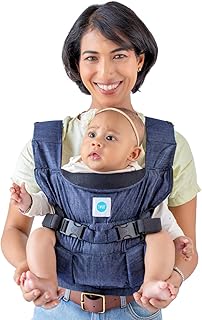


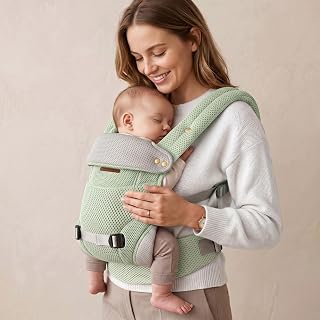

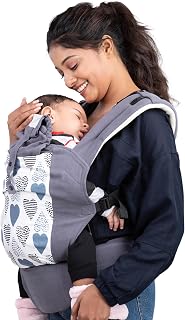


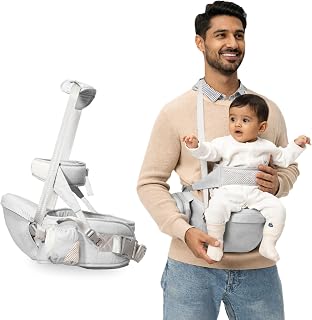


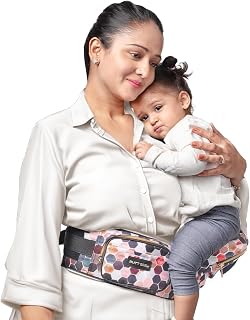

Choosing a baby carrier is less about finding the most expensive model and more about matching the carrier to your baby's age, size, development, your preferred carrying position, and the amount of time you expect to wear it. A carrier that works beautifully for a short newborn carry may not be the most comfortable option for a growing baby or toddler.
For Indian families, practical factors also matter. Warm weather, monsoon humidity, frequent travel, crowded streets, public transport, staircases, household chores, and the need to move between indoor and outdoor environments can all influence which carrier design makes sense. Before buying, compare the manufacturer's stated age and weight limits, supported carrying positions, adjustment system, fabric construction, washing instructions, and safety guidance rather than relying on appearance or a high customer rating alone.
This guide is intended as independent buying information. Product specifications, colours, prices, availability, seller policies, and customer ratings can change, so check the current product information and verified customer reviews before purchasing.
The terms baby carrier and baby sling are often used interchangeably, but they can describe substantially different designs.
A sling is not automatically safer or less safe than a structured carrier. Safety depends heavily on the design, the manufacturer's instructions, correct adjustment and the baby's position during use.
Safety should be the first filter when comparing babywearing products. Look for a carrier with clear manufacturer instructions, defined age and weight limits, secure closures where applicable, strong stitching, properly finished edges and an adjustment system that allows the child to remain securely positioned.
For sling-style products in particular, safe positioning deserves close attention. The U.S. Consumer Product Safety Commission identifies infant falls, structural problems and suffocation risks among hazards associated with sling carriers and recommends that a baby's face remain visible and unobstructed.
The CPSC's current sling-carrier guidance references ASTM F2907-19 and the U.S. federal sling-carrier regulation. These are useful examples of the level of structural integrity, occupant retention and safety information that consumers should expect from a properly documented product, although U.S. requirements should not be treated as proof of Indian regulatory compliance.
Newborns have limited head and neck control, so a newborn carrier must provide appropriate support without forcing the baby into an unsafe position. The manufacturer's newborn instructions are particularly important because different carrier designs have different minimum weights and positioning requirements.
A carrier advertised as suitable from birth should still be checked for the specific baby's weight and developmental stage. Do not rely solely on a generic phrase such as “newborn friendly.” Look for clear instructions showing how the newborn should be positioned, how the head is supported, and how the carrier should be tightened.
Young babies require frequent visual checks. The baby's airway should remain unobstructed and the face should remain visible. The CPSC has specifically warned about suffocation risks when an infant's face becomes covered or when the chin falls toward the chest.
As a baby grows, the ideal carrier can change. A model that feels comfortable at a few kilograms may become less comfortable when the child becomes significantly heavier. For this reason, the maximum weight rating should not be the only consideration.
Adjustability is one of the most important specifications for families hoping to use a carrier over an extended period. Shoulder straps, waist belts and the carrier panel should be capable of producing a secure fit without excessive slack or pressure points.
An adjustable carrier may also be more practical when multiple adults use the same product. However, adjustability adds moving parts, so each buckle, strap, slider and attachment point should be checked periodically.
Do not assume that “one size fits all” means that every caregiver will experience the same comfort. Body proportions vary considerably. Before purchasing, examine the manufacturer's adjustment range and compare it with your own height, waist size and preferred carrying position.
Fabric selection becomes especially important in India because babywearing can involve considerable heat and humidity. Both the caregiver and baby generate body heat, and a carrier with thick padding or multiple layers can feel substantially warmer during outdoor use.
Fabric alone does not determine whether a carrier will be comfortable. Panel construction, padding, strap width, ventilation, baby's clothing and the weather all influence the final experience.
A carrier can look lightweight while still retaining significant heat. When comparing products for Indian summers, examine where the fabric sits between the caregiver and child, whether ventilation panels are incorporated, how thick the padding is and whether the carrier permits appropriate airflow around the child's head.
For hot climates, avoid choosing a carrier purely because it has attractive colours or extensive padding. A practical design with appropriate ventilation can be more useful for daily wear than a heavily padded model that becomes uncomfortable outdoors.
The way a carrier distributes weight can have a major effect on caregiver comfort. Shoulder-only designs may feel simple and lightweight, while structured carriers with waist belts can distribute the child's weight over a larger area of the caregiver's body.
When comparing shoulder straps, consider:
For waist belts, inspect the fastening mechanism, adjustment range, padding and overall width. The belt should fit securely according to the manufacturer's instructions rather than simply being tightened as much as possible.
Parents often search for an “ergonomic” baby carrier, but the word alone does not tell you how a product will fit. A useful evaluation considers both the baby's positioning and the caregiver's comfort.
For the baby, examine whether the carrier provides the positioning described in the manufacturer's instructions and whether the child's legs, hips and back are appropriately supported for that particular design and developmental stage.
For the caregiver, look at whether the carrier distributes weight comfortably, whether the baby can be held close enough to avoid excessive pulling away from the body, and whether the straps and waist belt can be adjusted without creating painful pressure points.
If you have concerns about your baby's hips, spine, breathing or development, seek advice from an appropriately qualified healthcare professional rather than using marketing terminology as a substitute for individual guidance.
Not every carrier supports outward-facing carrying, and not every child is ready for every carrying position. Always follow the manufacturer's minimum age, developmental and weight requirements for each position.
Forward-facing carrying can change the balance and load on the caregiver and provides less direct visual access to the baby's face than inward-facing carrying. A carrier should never be used in a position simply because another model supports it.
When comparing products, treat “multiple carrying positions” as a specification to investigate rather than automatically considering it an advantage.
Back carrying can become particularly useful as babies grow heavier. It can reduce the feeling of having the child directly in front of the caregiver and may be practical for longer walks or household activities.
However, the correct age and developmental stage for back carrying vary by carrier. The manufacturer should provide explicit instructions. Caregivers should also be confident with the carrier before attempting more complicated carrying positions.
A ring sling can be an attractive choice for parents who want a compact carrier that is quick to pack and convenient for shorter periods of carrying. It can also be useful for a child who wants frequent up-and-down access.
A structured carrier may be preferable when the caregiver expects longer carrying sessions or wants a more defined waist-and-shoulder support system.
Wraps can provide a close, customisable fit, but the learning curve is usually greater. A structured carrier often has a shorter learning curve because buckles and predefined adjustment points make the intended configuration more obvious.
Neither design is universally better. A parent who enjoys learning wrapping techniques may prefer a wrap, while another caregiver may prioritise speed and repeatability.
Weight limits are among the most important specifications to check before purchase. Look for both the minimum and maximum recommended child weight and verify whether those limits change depending on the carrying position.
Do not interpret the maximum weight as a promise that the carrier will remain comfortable until that point. Comfort depends on the child's size, the caregiver's body, carrier construction and duration of use.
Also distinguish between a manufacturer's recommended weight range and a general maximum load claim made in marketing material. For baby products, the manufacturer's complete instructions should take precedence.
A carrier may fit one caregiver exceptionally well and another poorly. Before buying, consider who will use it most often and whether the product has enough adjustment range for everyone who will wear it.
For travel, portability can be just as important as maximum carrying capacity. A carrier may be useful for airports, railway stations, crowded markets, sightseeing, queues and situations where a stroller is difficult to manoeuvre.
Travel-focused buyers should compare packed size, carrier weight, ease of folding, cleaning requirements and whether the carrier can be put on and removed without complicated steps.
For air travel, remember that a baby carrier does not replace an airline's own safety procedures or instructions. Follow the relevant airline and airport requirements during boarding and flight.
In crowded Indian cities, a compact baby carrier can offer practical advantages over a stroller. A carrier keeps the child close to the caregiver and avoids many obstacles encountered on uneven pavements, narrow entrances and busy markets.
However, crowded environments increase the importance of checking the baby's position regularly. Heat, accidental contact with surrounding objects and the caregiver's reduced visibility should all be considered.
Baby carriers come into close contact with skin, clothing, food and outdoor surfaces, so easy cleaning is a meaningful buying consideration. Before purchasing, check whether the entire carrier is machine washable or whether some components require hand washing.
Second-hand baby carriers can look acceptable while having hidden wear. Because the carrier is responsible for supporting a child, inspect it more carefully than an ordinary piece of clothing.
If the carrier's history is unknown or important structural components are damaged, replacing it is generally a more sensible choice than attempting an uncertain repair.
Online marketplaces can make baby-carrier comparison convenient, but product pages should be examined critically. Before ordering, compare the manufacturer's product information with the marketplace listing.
A high rating can be useful, but baby carriers are highly dependent on individual fit. One caregiver may praise a carrier's comfort while another finds the same shoulder straps unsuitable.
Instead of looking only at the average rating, examine reviews for recurring comments about adjustment, fabric heat, buckle quality, washing, newborn suitability and long-term comfort.
Give greater weight to reviews that describe the child's approximate age and size, the caregiver's use case and how the product performed over time. Be cautious with reviews that contain no meaningful information beyond a short positive or negative statement.
When researching baby carriers available to Indian consumers, established brands can be useful starting points because their product documentation and model ranges are often easier to compare. Examples include BabyBjörn, Ergobaby, Chicco, R for Rabbit, LuvLap and Mee Mee.
Brand familiarity should not replace product-level evaluation. Different models from the same brand can have different construction, age ranges, carrying positions and adjustment systems. Compare the exact model rather than assuming that all products from a familiar brand offer the same features.
A simple specification checklist can make product comparison much easier. Record the following information for every model under consideration:
Good instructions should do more than show how to fasten a buckle. Ideally, they explain the supported positions, age and weight requirements, adjustment procedure, safety warnings, cleaning method and circumstances in which the carrier should not be used.
Illustrated instructions can be especially helpful for wraps and slings because the final position depends on how fabric is arranged around the caregiver and child.
If instructions are unclear, incomplete or contradictory, treat that as a reason to investigate further before using the product.
Certification claims should be checked carefully rather than accepted at face value. The Bureau of Indian Standards provides a “Know Your Standard” facility that allows users to search Indian Standards by standard number or product keyword. BIS also explains that certification is generally voluntary unless a product has been made subject to mandatory requirements through government notification.
For that reason, an online listing that simply says “BIS certified” should not automatically be treated as proof of a specific certification. Buyers should look for the exact standard, certification information and applicable product documentation where such claims are made.
International standards can also provide useful context. For example, CPSC guidance identifies ASTM-based requirements for sling carriers and soft infant carriers in the United States. These standards are not automatically Indian legal requirements, but they illustrate why structural integrity, occupant retention, secure fastening and clear safety instructions deserve attention.
Extra care is appropriate when a baby was born prematurely, has low birth weight, has respiratory difficulties, has particular medical needs or has a condition affecting muscle tone or development. The CPSC has specifically advised extra caution with certain vulnerable infants when using sling carriers.
In these circumstances, ask the child's paediatrician or another appropriately qualified healthcare professional for individual advice before choosing or using a carrier.
Price should be evaluated against the features that matter to your use case rather than treated as a direct measure of safety or comfort. A basic carrier can be sufficient for occasional short carries, while frequent users may value better adjustment, improved weight distribution, washable materials and a wider usable range.
Instead of setting a budget first and choosing the most feature-rich product within it, identify your essential requirements first. Then compare models that meet those requirements and examine the differences in construction and usability.
For daily use, prioritise a carrier that is easy to put on correctly, comfortable for the expected carrying duration, washable and adjustable for your child's changing size.
A complicated carrier that requires extensive setup may be less practical for a caregiver who needs frequent short carries. Conversely, a caregiver who regularly walks for longer periods may benefit from a structured waist belt and more substantial load distribution.
For quick errands, compactness and speed can be more valuable than extensive padding or a large number of carrying positions. Ring slings and lightweight structured carriers can be worth comparing for this purpose, provided the design is appropriate for the baby's age and weight.
For longer walks, investigate weight distribution, strap adjustment, waist-belt construction and ventilation. A carrier that feels comfortable for ten minutes may not remain comfortable after an hour.
Read customer feedback specifically for longer-duration use, but remember that comfort reports are subjective. If possible, try the carrier with your child before committing to extended walks.
For hot weather, prioritise breathable construction, appropriate ventilation and minimal unnecessary layers. Clothing also matters: a baby dressed in multiple layers can become hot even when the carrier itself is relatively breathable.
Check the baby's temperature and comfort regularly, especially during outdoor activities. A breathable carrier is helpful, but it does not eliminate the need to monitor the child.
During the monsoon, a carrier that can be cleaned easily and dried according to its care instructions can be especially practical. Consider how exposed the fabric is to rain, mud and wet clothing when deciding between a lightweight fabric carrier and a more structured design.
A wet carrier should be handled according to the manufacturer's care instructions. Do not store it while damp, as prolonged moisture can contribute to unpleasant odours or material deterioration.
Instead of comparing dozens of listings indefinitely, narrow the selection to three products that meet your basic requirements.
Then compare the exact specifications, current seller information, verified customer feedback and manufacturer's instructions for those three products.
There is no single best carrier for every family. The right choice depends on the baby's age and weight, caregiver body shape, carrying duration, climate, preferred carrying position, budget and ease of adjustment.
A structured carrier may be easier for caregivers who prefer buckles and defined support, while a sling can be compact and convenient for shorter carries. The better option is the one that fits the child and caregiver correctly and can be used safely according to its instructions.
Some carriers are designed for newborns and others are not. Check the exact manufacturer's minimum weight, minimum age and newborn-positioning instructions. Never assume that a carrier is newborn-safe simply because it is marketed as an infant carrier.
They can present specific positioning and suffocation risks if used incorrectly. The baby's face must remain visible and unobstructed, and the baby's chin should not be forced toward the chest. The CPSC recommends particular caution with very young infants.
There is no universal ideal limit. Choose a product whose manufacturer's recommended range comfortably covers your child's current size and expected period of use, while also considering whether the carrier remains comfortable as the child grows.
Cotton can be appealing for its familiar feel and everyday practicality, but fibre content alone does not determine comfort. Construction, ventilation, padding, clothing and climate all influence how warm a carrier feels.
Yes. A carrier can be particularly practical in crowded places, on uneven surfaces and during situations where a stroller is inconvenient. Portability, ease of adjustment and cleaning are useful travel considerations.
Follow the manufacturer's fitting instructions and check that the child is securely supported, the carrier is appropriately adjusted and the baby's airway and face remain unobstructed. If you are unsure about positioning, seek guidance from a qualified babywearing educator or healthcare professional.
Many adjustable carriers can be shared, but the fit should be checked every time the carrier is transferred to another caregiver. Differences in height, torso length and waist size can require substantial adjustment.
Inspect it before use and pay particular attention to seams, webbing, buckles, rings, snaps and adjustment points. More frequent inspection is sensible when the carrier is used heavily or washed often.
Ratings can be one useful input, but they should not be the deciding factor. Compare verified reviews with the manufacturer's specifications, safety instructions, weight range, carrying positions, construction and your own fit requirements.
No. A higher price does not automatically mean a carrier will be more suitable for your body or your child. Pay for features that solve a genuine need, such as better adjustability, weight distribution, ventilation, portability or easier cleaning.
The strongest way to choose among the best baby carriers and slings in India is to start with safety and fit, then narrow the options using comfort, climate, carrying position, maintenance and budget. Do not let a large feature list distract from the fundamentals.
Before purchasing, compare the exact model specifications, manufacturer's instructions and recent verified customer feedback. Check the current price and seller information because marketplace listings can change. Most importantly, make sure the carrier is appropriate for your baby's current age, weight and developmental stage.
A well-chosen baby carrier should make everyday carrying more convenient without requiring you to compromise on secure positioning, visibility of the baby's face, appropriate support or caregiver comfort.