

♥ Wishlist
Compare 23 verified Baby Car Seats for Safe and Comfortable Travel products in India. Reviews, ratings, pros, cons and buying advice updated for October 2026.


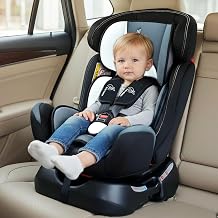


Choosing a baby car seat is fundamentally a safety decision, not simply a matter of comfort, appearance or price. The right seat should suit the child's age, size and stage of development, fit the vehicle correctly, and be installed exactly according to the manufacturer's instructions. For families in India, the choice also needs to account for different car sizes, seating layouts, road conditions, climate and the availability of compatible installation systems.
When comparing baby car seats in 2026, look beyond star ratings and product photographs. A useful comparison should consider the restraint type, child height and weight limits, harness design, installation method, rear-facing capability, padding, adjustment system, seat dimensions, materials, cleaning requirements and whether the seat can be installed securely in the intended vehicle.
Car seats are designed around particular stages of childhood rather than one universal size. Before choosing a model, check the manufacturer's stated minimum and maximum weight and height limits. Age can be useful as a general reference, but it should not replace the actual fit requirements specified for the seat.
Never select a seat solely because it is advertised as suitable for a particular age range. A child may be taller, shorter, heavier or lighter than another child of the same age. Always compare the child's current measurements with the product's official limits.
For babies and younger children, rear-facing travel is an important consideration because it supports the child's head, neck and torso during a crash. When comparing seats, check exactly how long the model permits rear-facing use and whether the stated limits can accommodate the child as they grow.
A seat that allows a longer rear-facing period can be attractive because it may reduce the need for an early transition. However, the maximum limits must be considered alongside the vehicle's available space and the manufacturer's installation requirements.
A technically advanced car seat is not useful if it cannot be installed correctly in your vehicle. Installation systems vary between models and vehicles. Depending on the seat and car, installation may involve the vehicle seat belt, ISOFIX-compatible connectors, or another manufacturer-approved method.
Before purchasing, inspect the vehicle owner's manual as well as the child-seat instructions. Confirm which seating positions are approved for child restraints and whether the intended position supports the installation method used by the seat.
ISOFIX can make installation more straightforward when both the vehicle and child seat are compatible. The system uses dedicated attachment points rather than relying solely on routing the vehicle seat belt around the restraint. Some products also include additional features such as support legs or top tethers, depending on their design.
Do not assume that an ISOFIX label automatically means universal compatibility. Check the specific seat instructions and vehicle compatibility requirements. The presence of ISOFIX anchor points in a car does not eliminate the need to follow the child-seat manufacturer's installation procedure.
Seat-belt installation remains an important option because not every vehicle or seating position provides ISOFIX. A good belt-installed seat should have clearly explained belt-routing instructions and should be capable of being secured firmly when installed according to the manufacturer's directions.
Whichever method is used, avoid combining installation methods unless the manufacturer explicitly permits the combination. More attachment points do not necessarily mean a safer installation if the product instructions do not allow them.
A five-point harness is designed to restrain the child at the shoulders, hips and between the legs. When comparing models, look for a harness that can be adjusted appropriately as the child grows. The straps should lie correctly over the child's body without twists.
Easy adjustment can be a practical advantage for everyday use, particularly when the child wears different layers of clothing during India's changing seasons. However, convenience should never come at the expense of correct harness tension and positioning.
Many modern seats incorporate additional structure or padding around the head and sides. These features can contribute to protection, but consumers should distinguish between meaningful safety engineering and marketing terminology. Examine the manufacturer's technical information and installation requirements rather than judging protection from the amount of visible padding alone.
Recline adjustment can affect the child's comfort and seating position. Some seats offer several positions for different stages or installation configurations. Make sure the chosen recline position is specifically approved for the child's size, orientation and installation method.
The buckle should be secure and practical to operate for the responsible adult while remaining difficult for the child to manipulate. Look for clear instructions concerning buckle positioning and harness adjustment. Avoid adding aftermarket covers, cushions or accessories unless they are specifically approved by the manufacturer.
India's warm climate makes breathable, washable materials particularly useful. A removable cover can simplify cleaning after spills and everyday use. Nevertheless, soft padding should not be confused with crash protection. Structural design, restraint performance, correct fit and installation remain more important than plush upholstery.
The shell, energy-management components, harness system, padding and covering materials all contribute to the overall design of a child restraint. Consumers should pay attention to the manufacturer's technical specifications and safety documentation rather than selecting a seat simply because it feels heavy or looks substantial.
A heavier seat is not automatically safer, and a lightweight seat is not automatically inferior. What matters is whether the product is designed, approved or tested according to applicable requirements and whether it can be installed correctly in the vehicle.
Safety standards are one of the most important areas to investigate before buying a child restraint. Product descriptions can contain broad claims such as “safe,” “premium protection” or “tested,” but those statements do not provide enough information by themselves.
Check the manufacturer's documentation for the specific regulatory or testing standard applicable to the product. Depending on the seat and market, consumers may encounter references to standards such as ECE R44/04, UN R129, or other applicable requirements. Do not assume that a reference to one standard means the product meets every other standard.
Where certification or compliance information is important to your purchasing decision, verify it against documentation supplied by the manufacturer or an authoritative regulatory source. Marketplace descriptions can contain incomplete or outdated specifications.
Even an appropriately selected car seat cannot perform as intended if it is incorrectly installed. Common installation problems include loose attachment, incorrect belt routing, unsuitable recline settings, incorrect tether use and placing the seat in a vehicle position that the manufacturer does not approve.
After installation, follow the manufacturer's instructions for checking movement and fit. The restraint should be installed according to the specified procedure rather than improvised based on what appears secure.
The child should sit in the restraint according to the manufacturer's positioning instructions. Harness straps should be routed through the correct slots for the child's orientation and size, and the harness should be snug without being excessively tight.
Bulky winter jackets can interfere with harness fit because thick material may create apparent tightness while leaving excessive space around the child's body. When travelling in cooler weather, follow appropriate manufacturer guidance for clothing and harness adjustment rather than placing thick layers underneath the harness.
Vehicle compatibility becomes especially important in compact hatchbacks and smaller sedans. A large child seat may require substantial front-to-back space when used rear-facing, potentially affecting the front passenger's legroom.
Before ordering a large seat, measure the available space and compare it with the manufacturer's dimensions. Also consider door clearance, seat-belt access, ISOFIX anchor position and the angle required for installation.
For a family using multiple vehicles, consider whether the seat needs to be transferred regularly. A model that works well in one vehicle may be inconvenient in another because installation systems and seating geometry differ.
Larger vehicles often provide more cabin space, but they still require careful compatibility checks. Third-row seating can introduce additional limitations, and not every seat position is necessarily approved for every child restraint.
Families with several children should also check the width of the seat. A restraint that appears compact on its own may make it difficult to install neighbouring seats or allow adults to access adjacent buckles.
A convertible seat can be useful for parents who want one product capable of serving multiple developmental stages. The main advantage is longevity, although a larger convertible model may be less convenient to carry outside the vehicle.
Infant carriers can be convenient when parents frequently move a sleeping baby between the car and another location, where the specific product design permits such use. Their suitability depends on the manufacturer's instructions and the child's size.
The most economical-looking option is not always the most practical over time. Consider how frequently the seat will be moved, how many vehicles will use it and how quickly the child is likely to outgrow each stage.
Price is an important constraint, but the cheapest seat should not automatically be considered the best value. Compare the applicable size limits, installation method, safety documentation, adjustability and expected period of use.
Customer ratings can reveal practical issues such as installation difficulty, packaging problems or cleaning concerns, but reviews are not a substitute for technical documentation. A high rating does not prove that a seat is suitable for a particular child or vehicle.
Parents sometimes focus on weight limits while overlooking physical dimensions. A seat can meet the child's size requirements yet be unsuitable for the available space in the vehicle.
Be cautious when a listing provides extensive marketing claims but little technical information. Before buying, look for a clearly identified manufacturer, model number, instruction documentation, applicable compliance information and reliable product specifications.
A used child restraint can have an unknown crash history, missing components, damaged parts or an uncertain manufacturing date. If considering a second-hand seat, verify its complete history, condition, model information and manufacturer's service-life guidance. If those details cannot be established, replacing it with a new, properly documented seat is the more cautious approach.
Instead of comparing products solely by headline features, use a consistent checklist. This makes it easier to identify which model actually suits your family.
Brand recognition can help narrow the search, but it should not replace product-level comparison. Established child-safety brands such as Chicco, Graco, Joie, Britax Römer, R for Rabbit and Mee Mee offer products across different categories and price segments. Availability and individual model specifications can vary, so compare the exact model rather than assuming every seat from a brand has identical features.
When browsing products from Amazon India or other trusted retailers, compare the manufacturer's model number, technical specifications and installation instructions with the information provided on the product page. This is particularly important when multiple versions of a similar-looking seat are sold.
For shoppers comparing baby car seats through Amazon India, the product listing should be treated as a starting point rather than the only source of technical information.
Regular maintenance helps keep a child restraint in usable condition. Follow the manufacturer's cleaning instructions because covers, harness components, padding and plastic parts can have specific care requirements.
Use only the cleaning method recommended by the manufacturer. Avoid aggressive chemicals or cleaning processes that could damage the fabric or alter the material's properties.
Periodically inspect harness webbing, buckles and adjustment mechanisms for visible damage, unusual wear or contamination. Do not attempt to repair or modify restraint components unless the manufacturer specifically provides an approved procedure.
Look for cracks, deformation, missing pieces or damage to the shell and installation components. If a restraint has been involved in a crash, consult the manufacturer regarding whether it should be replaced.
India's varied climate means a seat may be exposed to high temperatures, dust, humidity and frequent cleaning. Dark interiors can become particularly hot when a vehicle is parked outdoors, so parents should follow the manufacturer's guidance for storage and inspection.
Frequent short journeys can also mean repeated installation and removal. If the seat is moved between vehicles regularly, a straightforward installation procedure may be a practical advantage. Families should still perform the complete installation check each time rather than relying on memory.
A sensible purchasing sequence is to begin with the child, then the vehicle, and only then the product's extra features. First establish the child's current size and developmental stage. Next determine which restraint types and installation methods are compatible with the vehicle. Finally compare models that meet those requirements.
This approach prevents a common purchasing error: selecting an attractive seat first and attempting to make it work afterward. Features such as extra padding, cup holders, colours and decorative finishes are secondary when compared with correct restraint fit and installation compatibility.
The best value is not necessarily the product with the lowest purchase price. Consider the useful period during which the seat can safely accommodate the child, whether it can be installed in the family's vehicles, and whether the adjustment system remains practical as the child grows.
A convertible model may offer longer use, while a dedicated infant seat may provide different convenience benefits during the earliest stage. Compare the total ownership requirements rather than focusing only on the initial price.
There is no single best model for every family. The right choice depends on the child's size, vehicle, preferred installation method, budget and required period of use. Start by eliminating seats that are incompatible with the child or vehicle, then compare the remaining models on safety documentation, fit, installation and usability.
ISOFIX can make compatible installations easier, but it is not a reason to ignore vehicle compatibility or manufacturer instructions. A properly installed seat-belt system can also be an appropriate installation method when permitted by the seat and vehicle.
Rear-facing travel is an important consideration for babies and younger children because it provides a position designed to support the head, neck and torso in a crash. Follow the seat manufacturer's requirements for the child's size and the permitted orientation.
Some convertible seats are designed for multiple stages, but their usable period depends on the manufacturer's weight, height and configuration limits. Check the exact model rather than assuming every convertible seat covers the same stages.
Replacement timing depends on the manufacturer's stated service-life guidance, condition and history. A seat should also be evaluated after a crash and replaced when required by the manufacturer. Always inspect the exact model's documentation.
Bulky clothing can affect harness fit. Follow the manufacturer's guidance on clothing and harness positioning and avoid creating excessive space between the harness and the child's body.
Higher price does not automatically mean higher safety. Compare applicable standards, construction, child-size limits, installation system, vehicle compatibility and fit before considering premium convenience features.
Check whether the selected child seat is approved for installation using the vehicle's seat belt. Many restraints are designed around belt installation, but the exact procedure must be followed from the manufacturer's instructions.
Use caution. A used seat may have an unknown crash history, missing parts, expired service life or damage that is difficult to identify. If the complete history and condition cannot be verified, a new seat with clear documentation is generally the safer purchasing approach.
For Indian families comparing baby car seats in August 2026, the strongest buying decision is one that combines verified technical information with correct child fit and vehicle compatibility. Use customer ratings as supplementary evidence, compare the exact model specifications, verify the installation method, and prioritise a restraint that can be installed correctly every time the child travels.