

♥ Wishlist
Compare 282 verified Home Appliances Online in India for Everyday Living products in India. Reviews, ratings, pros, cons and buying advice updated for October 2026.




Choosing the right appliance in India is rarely just a matter of picking the product with the highest rating or the longest feature list. The better decision comes from matching capacity, power consumption, dimensions, controls, materials, maintenance requirements, after-sales considerations and everyday usage with the needs of your household.
This independent buying guide is designed for shoppers comparing appliances across different categories in India. Because “best” depends on the application, the ideal refrigerator for a large family may be completely unsuitable for a student living alone, while a compact mixer or air fryer may be preferable for one household but too small for another.
When comparing appliances, consider the product's specifications first and treat customer ratings as supporting information rather than the sole basis for a purchase. Brands such as LG, Samsung, Whirlpool, Bosch, IFB, Haier, Panasonic, Philips, Prestige, Bajaj, Havells and Crompton offer products across various Indian appliance categories, but the most suitable model still depends on its exact specifications and your requirements.
A good appliance should perform its primary function consistently while fitting comfortably into your home, electrical setup, budget and routine. A product can have advanced features yet be a poor choice if it consumes more power than expected, requires complicated maintenance or has a capacity that does not suit your household.
The phrase “appliance products” covers a very broad range of household equipment. Rather than assuming one universal winner, shoppers should compare products within their intended category.
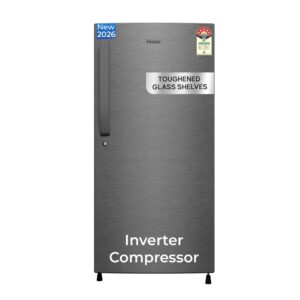
When comparing refrigerators, look beyond advertised storage capacity. Check the usable compartment arrangement, freezer configuration, shelf design, vegetable storage, door storage, cooling controls, dimensions and energy-efficiency information. A family that stores large containers may benefit from a different internal layout than a couple that primarily stores packaged foods and beverages.
Consider whether you need a single-door, double-door, multi-door or another configuration. Frost-free operation can reduce manual defrosting, while inverter-based systems may be relevant to shoppers prioritising efficient operation. Always compare the exact model specifications because features can differ substantially between models within the same brand.
Washing machine selection should begin with capacity and installation conditions. A smaller household may not need the capacity intended for frequent large loads, while a large family can benefit from having sufficient drum space to reduce the number of cycles required.
Compare fully automatic top-load and front-load designs according to your laundry habits, available space and preferred controls. Important specifications can include wash programs, spin speed, drum construction, water requirements, dimensions, noise information, child-lock functionality and cleaning or maintenance features.
Brands such as LG, Samsung, Bosch, IFB, Whirlpool and Haier have extensive washing-machine ranges in India. Compare individual models rather than assuming that one manufacturer's entire range has identical performance or features.
For an air conditioner, room size is one of the most important starting points. Buying an undersized unit can make it difficult to cool a room effectively, while selecting capacity without considering room characteristics can lead to unnecessary expenditure.
Compare cooling capacity, energy-efficiency information, inverter operation, operating temperature range, noise specifications, filter arrangements and installation requirements. Room orientation, sunlight exposure, ceiling height, insulation, occupancy and heat-producing appliances can also affect cooling requirements.
For Indian conditions, buyers should pay particular attention to the manufacturer's stated operating conditions and installation requirements rather than relying exclusively on generic recommendations based only on room area.
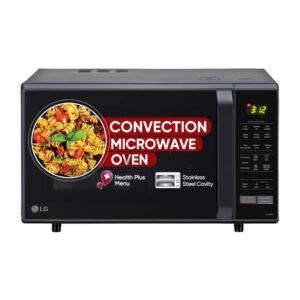
Microwave ovens vary considerably in functionality. A basic solo microwave may be suitable for reheating and straightforward cooking, while grill or convection models can provide additional cooking methods.
Compare internal capacity, power levels, automatic programs, control layout, child safety features, turntable design and cleaning convenience. If baking is important, check the exact convection functionality and included accessories rather than assuming every microwave with a “convection” label offers the same capabilities.
Air fryers are useful for shoppers who want compact countertop cooking with relatively straightforward operation. Capacity should be judged against the quantity of food normally prepared in one session. A very small basket may require multiple batches, while an oversized appliance can occupy valuable counter space.
Look at basket construction, temperature range, timer controls, cooking presets, cleaning requirements and the manufacturer's instructions for dishwasher use. Digital controls may provide convenience, but simple physical controls can also be preferable for shoppers who value straightforward operation.
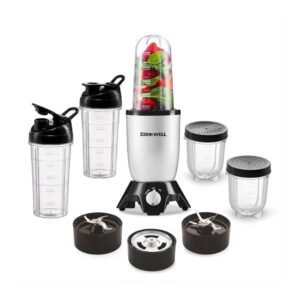
Indian kitchens often place heavy demands on mixer grinders because they may be used for spices, chutneys, batters, pastes and other preparations. Motor power is important, but it should not be considered in isolation.
Check the number and type of jars, jar capacities, blade materials, speed controls, overload protection, noise information, cord length and cleaning requirements. Consider whether the appliance is designed for dry grinding, wet grinding or both. A higher wattage alone does not guarantee that a particular machine will be the best fit for your kitchen.
An electric kettle is relatively simple compared with many large appliances, but useful differences remain. Compare capacity, heating power, automatic shut-off, boil-dry protection, handle design, lid mechanism, water-level visibility and the ease of cleaning mineral deposits.
For regular use, the shape of the opening can matter because it affects how easily the interior can be cleaned. Buyers in areas with hard water should pay particular attention to descaling requirements.
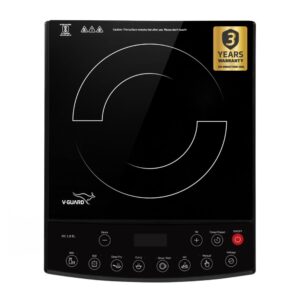
Induction cooktops should be evaluated according to cookware compatibility, power settings, temperature controls, preset programs, safety features and countertop requirements. Not every pan is suitable for induction cooking, so check cookware compatibility before purchase.
Features such as automatic shut-off, overheating protection and child-lock controls may be particularly useful in households where safety and unattended cooking prevention are priorities.
Water purifiers require more careful evaluation than many ordinary kitchen appliances because the appropriate purification technology depends on the characteristics of the incoming water. Do not select a purifier simply because it has the highest number of purification stages.
Consider the source of the water, relevant water-quality concerns, purification technology, storage capacity, flow rate, replacement-filter requirements, electricity requirements and installation conditions. RO, UV and UF technologies serve different purposes, so the right system depends on the water being treated.
Vacuum cleaner selection should reflect floor type, carpet use, furniture layout, pet hair, cleaning frequency and storage space. Compare suction-related specifications where provided, but also consider filtration, dustbin capacity, attachments, cord or battery configuration, noise and maintenance.
Cordless models can offer convenient movement, while corded machines may suit users who prefer longer uninterrupted cleaning sessions. Robot vacuums should additionally be evaluated for navigation, mapping, obstacle handling, charging behaviour and maintenance requirements.
Capacity should reflect actual household usage rather than the largest number available within your budget. More capacity can be useful, but a larger appliance can also require more floor or counter space and may be unnecessary for a small household.
Before comparing capacities, understand how the manufacturer defines the measurement. Refrigerator storage, washing-machine load, microwave cavity volume and air-conditioner cooling capacity are not directly comparable concepts.
Power consumption becomes particularly important for appliances that run frequently or for long periods. Check the official energy-efficiency information and product specifications available for the exact model.
For appliances carrying an Indian energy label, compare the information on the label rather than relying on a generic statement that one brand is always more efficient than another. Actual household electricity use can also depend on operating conditions, settings, usage frequency and installation.
For mixers, vacuum cleaners and other motor-driven appliances, motor wattage is only one specification. Build quality, airflow, blade design, thermal protection and intended operating conditions can influence practical performance.
For heating appliances, wattage can indicate electrical input but does not by itself establish overall cooking or heating performance. Compare the manufacturer's stated capabilities and operating modes.
Noise can be an overlooked buying consideration. This is particularly relevant for washing machines, vacuum cleaners, air conditioners, mixers and kitchen appliances used in open-plan homes.
Where manufacturers publish noise levels, compare measurements carefully and check whether the figure refers to a particular operating mode. Do not assume that two numbers measured under different conditions are directly equivalent.
Measure the intended installation area before buying. Record the available width, depth and height, then account for ventilation, door movement, hoses, electrical connections and access for servicing where applicable.
This is especially important for refrigerators, washing machines, dishwashers, air conditioners and built-in or semi-integrated kitchen appliances. A product that technically fits the available footprint may still be impractical if doors cannot open fully or connections cannot be reached.
For kitchen appliances, inspect the materials used for jars, containers, baskets, trays and other food-contact components. The manufacturer's specifications should clearly identify the intended use and cleaning instructions.
Stainless steel is widely used in kitchen appliances because of its durability and resistance to corrosion under appropriate conditions. However, the presence of stainless steel alone does not determine the quality of an appliance. Examine construction, thickness where specified, joint quality, lid design and cleaning requirements.
Plastic is common in appliance housings, handles, containers and accessories. Look for clearly stated material information and follow the manufacturer's temperature and cleaning instructions. Avoid assuming that every plastic component is designed for high-temperature use.
Glass can provide visibility and a premium appearance, but it should be evaluated together with the frame, hinges, seals and cleaning requirements. For ovens and refrigerators, inspect how the door opens and whether the surrounding space provides sufficient clearance.
Wi-Fi connectivity, smartphone controls, remote monitoring and automated programs can make some appliances more convenient, but smart functionality should not be treated as a substitute for good core performance.
Customer ratings can help identify recurring satisfaction or complaint patterns, but they do not replace specification checking. Ratings can combine reviews from different buyers with different expectations and usage conditions.
More watts do not automatically mean better performance. Consider the intended application, construction, operating modes and manufacturer's specifications before using wattage as the deciding factor.
Many appliance purchases go wrong because buyers measure the product but not the complete installation environment. Include door clearance, cables, pipes, ventilation and access space in your measurements.
An appliance that is difficult to clean may become inconvenient even if its primary performance is strong. Check filter cleaning, descaling, lint removal, dustbin emptying, drum care and other routine maintenance requirements before purchasing.
Brand reputation can be useful when narrowing choices, but different models within the same brand can have very different specifications. Compare the exact model number, not merely the manufacturer's name.
Check the appliance's electrical specifications and installation instructions. High-power equipment may have specific requirements relating to sockets, earthing, circuit capacity or installation.
Online product photographs can make appliances appear smaller or larger than they are. Always verify the stated dimensions and compare them with your available space.
When two products appear similar, use a structured comparison rather than relying on appearance or brand recognition.
Several established manufacturers have substantial appliance portfolios in India. LG, Samsung, Bosch, IFB, Whirlpool and Haier are prominent names across selected home-appliance categories, while Philips, Prestige, Bajaj, Havells and Crompton are also familiar brands in various kitchen and household appliance segments.
Brand selection should be treated as one part of the decision. The exact product model, specifications, intended use, installation requirements, service terms and maintenance needs are more useful decision factors than brand popularity alone.
Before purchasing, verify that the specific model is intended for the Indian market and review the manufacturer's current documentation. Product specifications, configurations and included accessories can change over time.
The purchase price is only one part of an appliance's cost. Appliances that consume electricity regularly can contribute to household running expenses for years, so energy efficiency deserves consideration alongside upfront price.
For refrigerators and air conditioners, operating efficiency can be particularly important because these appliances may run for extended periods. For washing machines, dishwashers and other appliances, water and electricity consumption should be considered together where relevant.
Do not calculate long-term savings from a generic efficiency claim. Use the exact model's available energy information and consider your expected frequency of use.
Air conditioners, vacuum cleaners, air purifiers and other appliances may rely on filters that need periodic cleaning or replacement. Follow the manufacturer's schedule rather than waiting until performance visibly deteriorates.
Mineral deposits can accumulate in kettles, coffee machines, water-related appliances and other equipment exposed to hard water. Use only cleaning or descaling procedures approved by the manufacturer.
Overloading washing machines, mixers, food processors and other equipment can interfere with proper operation. Follow the stated capacity and operating instructions.
Many appliances require airflow around specific components. Avoid blocking vents or placing equipment in unsuitable enclosed spaces when the manufacturer specifies clearance requirements.
Periodically check visible power cords and plugs for damage. Stop using an appliance if electrical components show signs of damage and seek appropriate professional assistance.
The user manual is often the most reliable source for cleaning intervals, compatible accessories, installation requirements and permitted operating conditions. Keep documentation available after purchase.
Reviews are most useful when treated as qualitative evidence rather than a simple numerical score. Start by looking for repeated comments about the same issue.
The lowest displayed price is not necessarily the lowest total cost. When comparing offers, consider installation charges where applicable, accessories, replacement filters or consumables, delivery-related conditions shown by the retailer, and any other stated costs.
Prices and availability can change quickly in India, particularly during major shopping events. Check the current price for the exact model before making a purchase rather than relying on an older price mentioned in an article or review.
Warranty terms can differ by product, component and manufacturer. Read the applicable warranty documentation for the exact model before purchasing.
Check what is covered, the duration of coverage, exclusions, installation conditions and whether particular components have separate warranty terms. For major appliances, also consider the availability of authorised service channels in your area.
An independent buying guide can help you compare specifications, but the manufacturer and retailer documentation should be treated as the final source for current warranty, installation and service conditions.
Prioritise compact dimensions, sensible capacity, straightforward controls and efficient use of electricity and water. Avoid paying for capacity that will rarely be used.
Focus on capacity, durability-related specifications, ease of cleaning and programs that reduce the need for repeated cycles. Larger households should also consider whether the appliance can handle peak usage comfortably.
Portability, installation simplicity and compact dimensions may matter more than premium built-in features. Check installation and electrical requirements before moving an appliance into a rental property.
Prioritise readable controls, simple operating procedures, accessible doors and handles, clear displays and safety features. Complex smart functions are not necessarily an advantage if they make everyday operation harder.
Start with the appliance's primary job. Identify the minimum features needed, establish a realistic budget, measure the installation area and then compare models using the same criteria. This prevents marketing features from dominating the decision.
There is no single appliance that can legitimately be described as the best choice for every Indian household. The right purchase depends on the interaction between performance, capacity, space, electricity consumption, features, maintenance and budget.
A premium appliance may be worthwhile when its additional capabilities solve a real problem. A simpler model may be the better choice when reliability, straightforward controls and lower purchase cost are the priorities. The objective is not to buy the appliance with the most features; it is to buy the appliance whose specifications best match the way it will actually be used.
There is no universally best brand across every appliance category. LG, Samsung, Bosch, IFB, Whirlpool, Haier, Panasonic, Philips, Prestige, Bajaj, Havells and Crompton are among the established names shoppers may encounter, but brand suitability depends on the specific category and model. Compare exact specifications, warranty terms, installation requirements and current customer feedback.
Start with the job the appliance must perform, then determine the required capacity, available space, electrical requirements and important features. Compare exact model specifications and maintenance requirements before considering price and customer ratings.
No. A higher price can reflect additional capacity, materials, controls, automation or smart functionality, but those features may not be valuable to every buyer. Compare what the additional cost actually provides.
No. Ratings are useful for identifying general customer sentiment, but they should be combined with technical specifications, warranty information, dimensions, maintenance requirements and feedback from buyers with similar needs.
No. Wattage describes electrical input rather than guaranteeing superior real-world performance. Compare wattage with the appliance's design, intended use, operating modes and manufacturer specifications.
Dimensions are critical. Measure the available space and also account for door opening, ventilation, cables, hoses and installation access. For large appliances, also consider whether the product can pass through doors, corridors and stairways before reaching its final location.
Compare capacity, loading design, wash programs, spin speed, dimensions, water requirements, noise information, drum features, maintenance requirements and warranty terms. Select the capacity according to household laundry volume rather than simply choosing the largest machine within the budget.
Compare usable storage, freezer arrangement, dimensions, shelf layout, cooling configuration, energy information and maintenance requirements. Check door clearance and ventilation space as carefully as the refrigerator's external dimensions.
Consider room characteristics, required cooling capacity, inverter operation, energy-efficiency information, operating conditions, noise, filtration and installation requirements. A qualified installation assessment can be valuable when room conditions make capacity selection uncertain.
Prices can change frequently, especially around major shopping events. Check the current price and exact model configuration immediately before purchase rather than relying on historical pricing.
They can be worthwhile when remote controls, monitoring or automation genuinely improve your routine. If those functions will rarely be used, a simpler appliance with strong core specifications may offer better value.
The safest way to choose an appliance is to compare the complete ownership picture rather than focusing on one specification. Capacity, dimensions, energy consumption, materials, controls, maintenance, installation requirements, warranty terms and customer feedback all contribute to the decision.
Use this guide as a framework for commercial comparison, then verify the exact model information from the manufacturer and reputable retailers before ordering. Product specifications, prices, configurations and availability can change, so current information should always take priority over older listings.
For 2026 purchases, focus on practical value: buy enough capacity for your household, choose features you will actually use, allow sufficient installation space, understand ongoing maintenance and compare the exact model rather than relying on brand reputation alone.