

♥ Wishlist
Compare 20 verified Washing Machines for Every Indian Home products in India. Reviews, ratings, pros, cons and buying advice updated for October 2026.


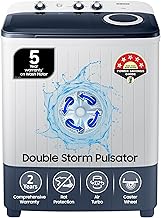


Choosing a washing machine in India is not simply a matter of selecting the model with the highest capacity or the longest feature list. The right machine depends on household size, available floor space, water conditions, electricity supply, laundry frequency, fabric-care requirements, drying expectations and the amount of manual effort you are willing to accept. A useful comparison should therefore look beyond headline features and examine the washing system, spin performance, programme selection, drum design, controls, maintenance requirements and long-term practicality.
This buying guide is designed to help Indian households compare washing machines across these factors. Brand names such as LG, Samsung, Bosch, IFB, Whirlpool, Panasonic, Haier, Godrej and Voltas Beko are commonly encountered when researching washing machines in India, but the best choice can vary considerably between models and price segments. Always compare the exact model specifications rather than assuming that every machine from a particular brand offers the same capabilities.
The most important decision is to identify the type of washing machine that fits your routine. Fully automatic top-load machines are generally straightforward to operate and can be convenient for households that prefer an easy loading position. Front-load machines typically require more attention to installation and door clearance, but they offer a different wash mechanism and are often considered by buyers who prioritise wash-program flexibility, fabric care and efficient use of water.
Semi-automatic machines remain relevant for buyers who want a lower purchase cost or greater control over transferring clothes between washing and spinning. They also require more manual involvement than fully automatic models. When comparing machines, consider not only the initial purchase decision but also how much time you spend loading, unloading, selecting programmes, managing water and dealing with partially dried laundry.
Front-load washing machines use a horizontally oriented drum and require clothes to be loaded through a front door. They are worth considering when wash quality, programme variety, fabric handling and water management are major priorities. The door and rubber gasket require regular care, particularly in humid environments, because trapped moisture can contribute to unpleasant odours if the machine is routinely closed immediately after a wash.
Installation also deserves attention. The machine needs sufficient space for the door to open fully, and the floor should be stable and reasonably level. Buyers should check the dimensions including practical clearance rather than measuring only the appliance body.
Top-load machines allow clothes to be added from above, which can be convenient where bending down to a front door is undesirable. They can also be easier to fit into certain compact laundry spaces. However, buyers should distinguish between different top-load washing systems because the internal mechanism, wash action and programme options can vary significantly.
A top-load machine may be a good fit for households that prefer simple controls, quick access to the drum and a familiar loading arrangement. Before purchasing, check the drum capacity, spin speed, programme selection, water-level management and whether the machine requires a minimum water pressure.
Semi-automatic models normally separate washing and spinning into different tubs. This design can suit buyers who are comfortable moving clothes manually and want flexibility over water use and wash cycles. The trade-off is convenience: washing is not as hands-off as it is with a fully automatic machine.
When considering a semi-automatic model, examine the size of both tubs, lint-filter arrangement, spin-drying capacity, drain hose positioning and overall footprint. The stated washing capacity and spinning capacity may not always be identical, so both figures should be checked.
Capacity is one of the easiest specifications to compare, but it should not be interpreted as a simple household-size formula. A washing machine's stated capacity refers to the maximum recommended dry laundry load under the manufacturer's specifications. Overloading the drum can reduce effective movement of clothing, interfere with detergent distribution and make it harder for the machine to rinse or spin properly.
Capacity should also match your washing frequency. A person who runs small loads several times a week may have different requirements from a family that prefers fewer, larger cycles. Selecting the largest available drum is not automatically the most economical choice if your normal laundry loads are much smaller.
Motor technology is an important comparison point, but the word “inverter” should not be treated as a guarantee of superior performance in every respect. Inverter-based systems can vary in design, control strategy and implementation. Buyers should consider the complete appliance, including motor control, noise characteristics, programme design, warranty terms and service arrangements.
A motor's stated technology also does not tell you everything about operating noise. Drum movement, vibration control, cabinet construction, load balancing and installation can all influence how the machine behaves during washing and spinning.
Modern washing machines can adjust drum movement and spin behaviour according to selected programmes and load conditions. Variable motor control can support different washing actions and spin profiles. This can be useful when switching between delicate garments, everyday clothing, towels and heavily soiled items.
Rather than choosing a machine solely because it advertises an inverter motor, compare the actual programme range and the manufacturer's technical specifications for the exact model.
Spin speed is frequently presented as an indication of drying performance, but the highest number is not necessarily the right target for every household. Higher-speed spinning can remove more water from suitable fabrics, potentially reducing the time required for subsequent air drying. However, delicate garments may require gentler treatment and lower spin settings.
Check whether the machine allows spin speed adjustment. This provides more flexibility than a machine with only one aggressive spin setting. In India, where clothes are often air-dried rather than placed in a tumble dryer, effective water extraction can be particularly useful, especially during humid or rainy periods.
Manufacturers often list a large number of programmes, but quantity alone does not determine usefulness. The important question is whether the available cycles correspond to the clothes you actually wash.
Do not assume that every programme is suitable for every fabric. Clothing labels should remain the primary reference for garment-care requirements.
Temperature options can influence cleaning performance, stain removal and fabric treatment. However, Indian households often wash a wide range of garments together, making programme selection more important than simply choosing the highest available temperature.
Before using warm or hot settings, check the garment-care label. Some fabrics, dyes and finishes can be damaged by unsuitable temperatures. A machine offering multiple temperature options can provide useful flexibility, but only when the user understands when each setting is appropriate.
The drum is central to how clothes are treated. Look for information about drum construction, perforation pattern, internal lifters or paddles and the manufacturer's stated approach to fabric care. Smooth or carefully designed drum surfaces may help reduce unnecessary snagging, but actual fabric treatment also depends on programme movement, load size, detergent and spin behaviour.
Drum size matters as well. A larger drum can make it easier to accommodate bulky items, but it does not mean every load should be filled to maximum capacity. Clothes need adequate space to move through the wash process.
Water availability is an important consideration in India. Some homes rely on overhead tanks, pumps or variable municipal supply, while others experience fluctuations in water pressure. Before buying a washing machine, check the installation requirements for the exact model.
A machine designed for a particular minimum inlet pressure may not perform as expected if your home's supply does not meet that requirement. If water pressure is a known issue, investigate models and installation guidance specifically suited to your plumbing conditions rather than assuming every washing machine will work identically.
Hard-water conditions can influence detergent performance and may contribute to mineral deposits over time. This is particularly relevant in areas where groundwater is commonly used. Washing machine maintenance should therefore account for local water quality.
Look for the manufacturer's recommendations concerning detergent quantity, drum cleaning and descaling or other maintenance procedures. Avoid adding cleaning chemicals that are not approved or recommended for the appliance.
The detergent format should be compatible with the machine and selected according to the manufacturer's recommendations. Liquid detergent can be convenient for some automatic machines, while powder detergent may be preferred by other households. Some washing machines provide dedicated detergent compartments or guidance for different formulations.
Using more detergent than necessary does not automatically produce cleaner clothes. Excess detergent can make rinsing more difficult and may leave residue in the machine or on fabrics. Follow the detergent manufacturer's instructions and the washing machine manufacturer's recommendations for dosage.
Noise performance is influenced by much more than the motor. A machine that is not properly levelled can vibrate excessively, particularly during high-speed spinning. Uneven flooring, incorrect installation, an unbalanced load or inadequate clearance can also affect perceived noise.
Before installation, identify a stable location with suitable access to water, drainage and electricity. Keep the appliance level and follow the installation procedure supplied with the exact model. If the machine begins producing unusual sounds or severe vibration, stop using it and investigate the cause rather than assuming the behaviour is normal.
Electricity consumption should be assessed using the appliance's official energy information and your expected usage pattern. A machine that consumes less electricity per cycle may not deliver the same overall household consumption if it is used substantially more often.
For a meaningful comparison, consider:
Indian buyers should check the latest applicable Bureau of Energy Efficiency labelling information for the exact model rather than relying on an old star-rating comparison or a generic statement about a brand.
Connected washing machines can provide features such as remote monitoring, notifications, cycle recommendations, diagnostics and integration with a manufacturer's mobile application. These capabilities can be useful for households that value automation, but they are not essential to achieving a satisfactory wash.
When comparing a smart model with a conventional model, ask whether you will genuinely use the connected features. A higher price may be justified when the additional controls solve a real problem, but connectivity should not compensate for weak capacity, unsuitable programmes, poor installation compatibility or inconvenient maintenance.
Load-sensing technology can adjust aspects of a wash according to the detected load. The exact behaviour varies between machines. Some models may adjust water levels, while others use sensors or programmed logic to influence cycle operation.
Do not interpret “automatic sensing” as meaning that the machine can perfectly identify every fabric type or soil level. Correct sorting, load sizing and programme selection remain important for good results.
Steam and hygiene-focused programmes are increasingly common in premium washing machines. Their usefulness depends on the exact technology and the garments being washed. A hygiene programme should not be treated as a universal replacement for normal laundering practices or as a guarantee that all microorganisms will be eliminated.
When comparing such features, read the manufacturer's technical description carefully. Pay attention to the programme conditions, intended use and any limitations rather than relying only on a marketing label.
One of the most common buying mistakes is measuring only the space where the machine body will stand. A practical installation measurement should include width, depth, height, door or lid clearance, hose routing, electrical access and space required to load laundry comfortably.
Brand reputation can be useful as an initial filter, but it should never replace model-level comparison. LG, Samsung, Bosch, IFB, Whirlpool, Panasonic, Haier, Godrej and Voltas Beko offer washing machines across different segments and configurations. Product lines can change, so specifications, programmes, dimensions and service terms should be verified for the exact model you are considering.
When comparing LG washing machines, examine the exact motor system, drum capacity, wash programmes, smart features, dimensions and installation requirements. Different LG series can target substantially different household needs.
Samsung offers washing machines with varying combinations of automation, programme options and connected features. Buyers should compare the actual specifications of individual models rather than selecting solely on the basis of brand or appearance.
Bosch washing machines are worth considering for buyers who place importance on programme design, construction details and premium appliance features. Compare capacity, dimensions, spin settings and maintenance requirements carefully before deciding.
IFB has a strong presence in the Indian washing-machine market, with models spanning different capacities and configurations. Check the exact wash programmes, water requirements, installation conditions and after-sales terms applicable to the specific model.
Whirlpool provides multiple washing-machine configurations for Indian households. Compare wash mechanism, capacity, control options, programme selection and installation requirements at model level.
Panasonic washing machines can appeal to buyers looking for practical features and different capacity choices. Review the exact technical specifications and local service arrangements before purchasing.
Haier offers washing machines across a range of configurations. Buyers should compare drum size, wash programmes, motor specifications, dimensions and maintenance features rather than judging a machine by its headline feature alone.
Godrej is another established name to consider when comparing washing machines in India. Check the exact model's capacity, wash technology, energy information, programme selection and installation requirements.
Voltas Beko offers washing machines aimed at different household requirements and price segments. Model-level comparison is particularly important when assessing capacity, programmes, spin settings, motor technology and practical installation constraints.
A larger drum is useful for appropriate loads, but buying significantly more capacity than your household requires can increase the appliance footprint and purchase cost without delivering a meaningful everyday advantage.
Energy efficiency is important, but a washing machine is a complete system. Compare wash performance features, capacity, programmes, water requirements, maintenance and expected usage alongside energy information.
A machine can be technically excellent and still be unsuitable for your home if the water pressure, drainage, electrical connection or available floor space is incompatible.
Twenty programmes are not necessarily more useful than ten well-designed programmes. Prioritise cycles that match your actual laundry routine.
Measure the operating space, not just the footprint. A front-load machine needs enough room for its door, while top-load models require unobstructed access above the appliance.
Every washing machine needs routine care. Buyers who dislike cleaning detergent compartments, filters, seals or drums should factor that into their purchasing decision.
When two machines appear similar, use a consistent comparison method. Start with capacity and physical dimensions, then compare wash technology, motor design, spin speed, programmes, water requirements, energy information, control options and maintenance features.
Specification sheets can appear complicated because manufacturers use different terminology. Focus first on figures that have a direct effect on your household routine. Capacity indicates the maximum laundry load under stated conditions. Dimensions determine physical compatibility. Spin speed provides information about water extraction. Programme lists indicate the machine's flexibility. Energy information helps assess electricity consumption.
Marketing terms such as advanced wash technology, AI-based washing, intelligent sensing or hygiene care should be investigated further. The useful question is what the feature actually changes during a wash cycle and whether that difference matters for your laundry.
Regular maintenance is essential for keeping a washing machine clean and operating properly. The exact maintenance schedule should follow the manufacturer's instructions, but common care practices include cleaning the detergent drawer, checking accessible filters, inspecting hoses, wiping the door seal where applicable and running an appropriate drum-cleaning cycle.
For front-load machines, moisture can remain around the door gasket after a cycle. Wiping accessible areas and allowing the interior to ventilate can help reduce persistent dampness and odours. Follow the manufacturer's recommendations for door position and cleaning.
Detergent and fabric-softener residue can accumulate inside dispensers. Periodic cleaning helps prevent buildup and keeps detergent compartments functioning properly.
Check inlet and drain hoses periodically for visible damage, deterioration, kinks or unusual leakage. Replace components according to the manufacturer's instructions when required.
Overloading can affect cleaning, rinsing and spinning. A correctly sized load allows garments to move through the wash process more effectively.
Even an expensive washing machine cannot compensate for poor laundry practices. Sort clothes according to colour and fabric requirements, empty pockets, close suitable zips and fasteners, follow garment labels and select an appropriate cycle.
Use the correct detergent quantity and avoid filling the drum beyond the manufacturer's recommended level. Very heavily soiled clothing may require pre-treatment or a suitable intensive programme rather than simply adding more detergent.
Prioritise compact dimensions, appropriate capacity, simple controls and efficient everyday programmes. A smaller household does not necessarily need a large premium machine with numerous specialised cycles.
Families should focus on capacity, cycle flexibility, spin performance, programme duration and ease of maintenance. A machine that can comfortably handle regular mixed laundry may be more useful than one designed primarily around specialist features.
If the machine is used repeatedly throughout the week, durability-related considerations, maintenance access, programme convenience and service availability become particularly important. Compare the manufacturer's usage guidance and warranty conditions for the exact model.
Measure the installation location carefully. Top-load models can be convenient where front-door clearance is restricted, while some front-load machines may work well under appropriate counters or within dedicated laundry areas. Always follow the installation clearances specified by the manufacturer.
Check the minimum water-pressure requirement before purchasing. If your household depends on an overhead tank or pump, confirm that the machine's inlet requirements are compatible with your plumbing setup.
Online shopping makes it easy to compare many washing machines, but the product page should be examined carefully before placing an order. Confirm the exact model number and compare the specifications with the manufacturer's documentation.
The cheapest washing machine may be appropriate for a buyer with straightforward requirements, while a more expensive model may make sense for a household that values additional programmes, automation, quieter operation, larger capacity or advanced controls. The important comparison is the value of the features you will actually use.
When checking today's prices, compare the same model number across trusted retailers and consider whether discounts change the overall value. Prices, offers, stock and delivery conditions can change, so they should be verified at the time of purchase rather than treated as permanent specifications.
Washing machines contain mechanical, electrical and electronic components, so warranty coverage deserves careful attention. Do not compare warranties solely by the number of years shown in promotional material. Check what is covered, whether coverage differs between the complete appliance and motor, what exclusions apply, and whether installation conditions affect coverage.
Local service accessibility is equally important. Before purchasing, check whether authorised service support is available in your area and review the manufacturer's current service terms. This can be particularly valuable for buyers living outside major metropolitan areas.
Premium features are worthwhile when they solve a genuine household problem. Useful upgrades may include a more suitable capacity, better programme flexibility, adjustable spin settings, practical load sensing, improved controls, useful fabric-care programmes or connectivity that you will actually use.
Features deserve less weight when they are primarily cosmetic or when they duplicate functions you rarely need. A well-matched washing machine with sensible controls can be a better purchase than a technically feature-rich model that does not suit your laundry routine.
A shortlist of three to five models is usually easier to evaluate than dozens of nearly identical options. Start with your non-negotiable requirements, remove incompatible machines and then compare the remaining models on performance, convenience, maintenance and ownership considerations.
There is no single best model for every family. Capacity, washing-machine type, available space, water supply, laundry frequency and preferred programmes should determine the choice. Compare models from brands such as LG, Samsung, Bosch, IFB, Whirlpool, Panasonic, Haier, Godrej and Voltas Beko according to the exact specifications that match your household.
Neither type is universally better. Front-load machines can be attractive for buyers who prioritise certain wash programmes, fabric-care controls and efficient use of water, while top-load machines can offer convenient loading and may suit different room layouts. The better option is the one that fits your requirements and installation conditions.
Choose capacity according to the size and frequency of your normal laundry loads. Avoid buying solely according to the number of people in the household. If you frequently wash large bedding, towels or other bulky items, also check the manufacturer's guidance for those loads.
An inverter-based motor can be a useful feature, but it should be evaluated alongside the entire machine. Compare the exact motor technology, noise and vibration characteristics, programmes, warranty and overall appliance design before deciding.
The appropriate spin speed depends on the laundry. Higher spin speeds can extract more water from suitable fabrics, while delicate garments may need gentler settings. Adjustable spin control can therefore be more useful than simply selecting the model with the highest advertised speed.
They can be worthwhile if you regularly use remote notifications, diagnostics, connected controls or other smart functions. If you mainly need dependable washing with straightforward controls, connectivity may not justify a significant price increase.
The correct frequency depends on the model, usage and manufacturer's instructions. Regularly clean accessible detergent compartments, seals and filters where applicable, and use the machine's recommended drum-cleaning procedure when required.
Use detergent that is suitable for your washing-machine type and follow the appliance and detergent manufacturer's instructions. Incorrect detergent or excessive quantities can create excess foam or residue and may affect rinsing.
Possible causes include an uneven floor, incorrect levelling, an unbalanced load or installation issues. Follow the manufacturer's installation instructions and stop using the appliance if vibration is severe or accompanied by unusual sounds.
Online purchasing can make specification and price comparison easier. Before ordering, verify the exact model number, dimensions, installation requirements, warranty terms, delivery conditions and current retailer information. Do not rely solely on a product title or promotional description.
The best washing machine for your home is the one that fits your laundry habits rather than the one with the longest specification sheet. Start with the machine type and capacity, then check installation dimensions, water requirements, wash programmes, spin options, motor technology, energy information and maintenance requirements. After narrowing the field, compare warranty conditions, authorised service availability and current prices from trusted retailers.
For an independent purchase decision, compare the exact model numbers, read the manufacturer's specifications and consider recent customer feedback without treating individual reviews as universal evidence. Product availability, prices, retailer offers and model line-ups can change throughout 2026, so verify these details immediately before purchasing.