

♥ Wishlist
Compare 49 verified Heat Guns for Home, DIY & Professional Use products in India. Reviews, ratings, pros, cons and buying advice updated for October 2026.


![1500-Watt, 220V Dual Temperature Control Heat Gun [HOT AIR BLOWER] With 50-400/550 C Temperature Control - BLUE (5)](https://m.media-amazon.com/images/I/31QSqvMdI5L._AC_UL320_.jpg)

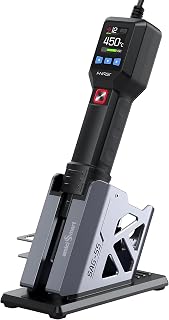


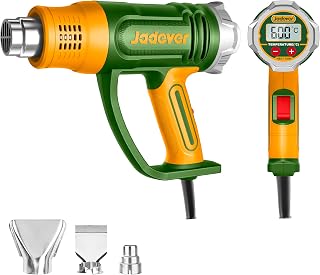


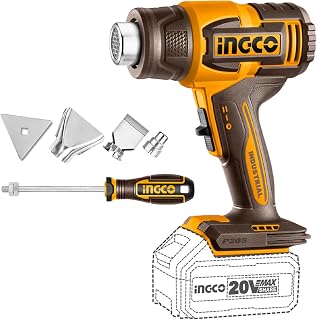


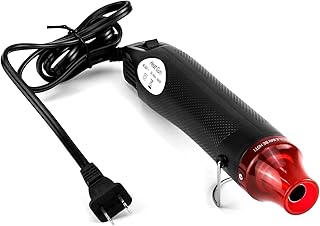

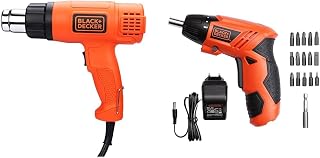


A heat gun is a deceptively simple tool: it uses an electric heating element and a fan to produce a controlled stream of hot air. The important buying decision is not simply choosing the model with the highest wattage. Temperature control, airflow adjustment, nozzle compatibility, thermal protection, ergonomics, power-cord quality and the intended application all affect how useful and safe a heat gun will be in practice.
For Indian buyers, the right choice also depends on whether the tool is intended for occasional household work, DIY projects, automotive applications, electronics-related work, paint removal, shrink wrapping, adhesive removal or regular workshop use. A compact basic heat gun can be sufficient for light jobs, while a professional-grade model can be worthwhile when precise temperature control, longer operating periods and better durability matter.
Before comparing brands such as Bosch, BLACK+DECKER, Stanley, Ingco and other established tool manufacturers, identify the work you expect to perform. Different applications place very different demands on a heat gun.
Temperature adjustment is one of the most important specifications to examine when comparing heat guns. Some basic models offer only a small number of predefined settings, while more advanced tools allow finer adjustment. The best configuration depends on how much control your application requires.
A high maximum temperature does not automatically make a heat gun better. For many jobs, the ability to select a lower setting is more important. A tool that only produces very hot air can make delicate work unnecessarily difficult.
Different materials respond differently to heat. Adhesives may soften at relatively modest temperatures, whereas paint stripping can require substantially more heat. Plastic, vinyl, electrical insulation and finished surfaces can be damaged when exposed to unnecessary heat for too long.
For this reason, buyers should consider the complete temperature range rather than looking only at the maximum figure. If the manufacturer provides separate temperature ranges for each operating mode, compare those figures carefully.
Temperature tells you how hot the air can become, while airflow determines how much hot air reaches the work area and how quickly heat is transferred. These two characteristics work together.
A very hot stream with excessive airflow may be difficult to control on a small workpiece. Conversely, insufficient airflow can make larger jobs slow and inefficient. A heat gun with multiple airflow levels can therefore be more versatile than a model that focuses exclusively on maximum heat.
Lower airflow is generally easier to control for concentrated work. Higher airflow can distribute heat over a larger area and may be useful when removing paint or warming a broad surface.
When comparing specifications, check whether the manufacturer states airflow in litres per minute or another measurement. Do not compare numbers from different manufacturers without checking whether they were measured under comparable conditions.
Heat guns commonly advertise their electrical power in watts. A higher wattage can indicate greater heating capability, but it should not be treated as a complete measure of performance.
A well-designed heat gun can provide useful performance through an efficient combination of heating-element design, fan performance, airflow management and temperature regulation. Two models with similar wattage can therefore behave differently in practical applications.
For occasional household use, choosing the highest-wattage model available is rarely necessary. Buyers should instead balance power with control, operating comfort and the workload for which the tool is intended.
Accessories can substantially change how useful a heat gun is. A model supplied with several purpose-specific nozzles may be more versatile than a seemingly similar model with fewer accessories.
Accessory compatibility is worth checking before purchase. Nozzles should fit securely and should be designed for the specific heat gun rather than improvised from unrelated tools. A buyer who expects to use specialized accessories should verify the manufacturer's compatibility information before ordering.
A heat gun operates at high temperatures, so construction quality matters. The outer housing should be designed to tolerate normal operating temperatures while keeping the user's grip area reasonably isolated from the hottest components.
Look for a robust housing, secure nozzle attachment, well-finished switches and a power cable appropriate for the tool's electrical load. Professional users should also pay attention to how easily the tool can be cleaned and whether replacement accessories are available.
The handle should provide a stable grip without forcing the wrist into an uncomfortable position. A rubberised or textured grip can be useful during prolonged work, although the actual ergonomic design matters more than the presence of a particular surface material.
A heat gun that feels balanced is easier to control. This becomes especially noticeable when the tool is held continuously for several minutes or when working at awkward angles.
Weight is not the only ergonomic consideration. Buyers should evaluate the overall balance of the tool, switch placement, handle shape, cable flexibility and whether the tool can be safely placed down between operations.
Heat guns generate substantial heat internally, making thermal management an important part of the design. Buyers should look for manufacturer information about overheating protection, cooling requirements and recommended operating conditions.
Even when a model includes thermal protection, that does not mean it can be operated indefinitely at maximum temperature. Follow the manufacturer's instructions regarding duty cycle, ventilation and cooling periods.
Turning a heat gun off immediately after high-temperature operation may leave the internal components extremely hot. If the manufacturer recommends a cooling period or a particular shutdown procedure, follow it. Proper cooling can reduce unnecessary thermal stress and help maintain the tool over time.
Because a heat gun is a high-power electrical appliance, electrical compatibility deserves attention before purchase. Check the voltage and electrical specifications stated by the manufacturer and make sure they are suitable for the intended Indian electrical supply.
Inspect the plug, cable and housing before every use. Do not operate a heat gun if the cable insulation is damaged, the plug is loose or the housing has suffered impact damage.
Heat guns can damage materials even when there is no visible flame. A surface can become hot enough to melt, scorch, ignite or release hazardous fumes. Material identification should therefore be part of the preparation for any heat-gun job.
Take particular care with plastics, painted surfaces, synthetic fabrics, insulation, adhesives, laminates and unknown materials. If you do not know how a material responds to heat, do not assume that it is safe to heat.
Heating coatings, plastics, adhesives or other manufactured materials can release fumes. Work in a well-ventilated area and follow the material manufacturer's safety guidance. If the job involves an old coating or an unidentified substance, investigate the material before applying heat.
Paint removal is one of the traditional applications for a heat gun. The basic principle is to soften the coating sufficiently that it can be lifted with a suitable scraper.
Successful paint removal depends on controlled movement rather than simply applying maximum heat. Keep the tool moving, observe how the coating responds and avoid concentrating heat on one location for too long.
Heat-shrink tubing requires controlled, even heating. A concentrated nozzle can help direct hot air around the tubing, but the tool should continue moving rather than remaining fixed in one place.
Excessive heat can damage the tubing, the insulation underneath it or nearby components. For electrical work, use only materials and procedures appropriate for the electrical application, and never treat a heat gun as a substitute for proper electrical repair practices.
Heat can soften many common adhesives, making stickers, labels and residue easier to remove. The challenge is protecting the surface underneath.
Start conservatively with a lower setting where possible. Warm the adhesive gradually, test a corner and increase the temperature only if necessary. This approach is particularly important on painted surfaces, plastic housings, laminated furniture and finished wood.
Plastic forming requires considerably more care than basic adhesive removal. Different polymers soften and deform at different temperatures, and overheating can permanently damage the material or produce unwanted fumes.
Identify the plastic whenever possible and follow guidance appropriate to that material. Apply heat gradually and evenly, and use a suitable former or jig when the shape needs to be repeatable.
Heat guns can be useful for selected automotive DIY tasks, including certain adhesive-removal jobs, heat-shrink applications and controlled warming of components. However, automotive environments contain many heat-sensitive plastics, wiring systems, coatings and combustible materials.
A buyer intending to use a heat gun around a vehicle should prioritise controllable temperature, manageable airflow and good ergonomics rather than maximum heat alone. Keep the tool away from fuel, fuel vapours and other flammable substances.
A household hair dryer and a heat gun both produce warm air, but they are designed for fundamentally different purposes. A heat gun can produce substantially higher temperatures and is intended for technical and workshop applications.
A hair dryer should not be treated as a safer substitute for every heat-gun task, nor should a heat gun be used for applications intended for a personal-care appliance. Choosing the correct tool for the job is the safer approach.
A general-purpose heat gun and a hot air rework station can look similar in concept, but their intended applications are different. Rework stations are designed for controlled work on electronic components and typically provide more specialised temperature and airflow management.
For general household work, paint removal, adhesive softening and heat-shrink applications, a conventional heat gun may be appropriate. For precision electronics work, choose equipment specifically designed for that application and follow appropriate electrical and component-handling procedures.
The highest temperature number can look impressive, but it does not tell you how controllable the tool is. A broad temperature range and useful lower settings may provide greater real-world versatility.
Temperature without appropriate airflow control can make delicate work harder. Consider whether the job requires concentrated or broad heating.
More wattage is not automatically better. Excessive heat can increase the risk of damaging the workpiece, particularly when the tool is being used by a beginner.
If your projects require a particular nozzle, verify that it is supplied or officially compatible with the chosen model.
A tool that is uncomfortable to hold can become frustrating during longer jobs. Weight, balance and handle design should be evaluated alongside electrical specifications.
Consumer and professional tools can have different intended workloads. Read the manufacturer's operating instructions instead of assuming that a high-powered model is suitable for uninterrupted operation.
For a tool expected to remain in service for years, consider whether accessories, service information and replacement components are realistically obtainable in your market.
A useful comparison should go beyond star ratings. Customer feedback can help identify recurring concerns, but specifications and intended use should remain central to the decision.
Customer reviews are useful when read systematically. Instead of focusing only on the average rating, look for recurring comments about heat consistency, switch operation, airflow, cable quality, noise, durability and accessory fit.
Give more weight to reviews that explain the application and operating conditions. A buyer using a heat gun occasionally for household repairs has different expectations from someone operating the tool regularly in a workshop.
The distinction between professional and DIY tools is primarily about expected workload, durability, control and convenience rather than a simple label.
A homeowner who uses a heat gun several times per year may reasonably prioritise value, straightforward controls and useful accessories. A tradesperson or workshop user may place greater importance on robust construction, precise control, thermal management and long-term serviceability.
A straightforward model with sensible temperature and airflow settings can be sufficient. Do not pay for specialist features that you will never use.
More durable construction, better control and a design intended for repeated operation become more important. Brands such as Bosch and Stanley have established positions in the broader power-tool market, while brands such as BLACK+DECKER and Ingco also offer tools aimed at DIY and workshop users. Always compare the specifications of the specific model rather than assuming that every product from a brand has the same quality or features.
Heat guns require relatively little routine maintenance, but correct storage can protect the tool and its accessories.
Stop using a heat gun if there is visible damage or abnormal operation. Electrical tools that generate high temperatures should not be operated simply because they still appear to function.
For general household use, versatility is usually more valuable than extreme specifications. A useful home heat gun should provide enough heat for common tasks while remaining reasonably easy to control.
Prioritise multiple temperature or operating levels, practical airflow control, a comfortable grip and commonly useful nozzles. If the tool will be stored for long periods between uses, compact dimensions and a sensible storage solution can also be worthwhile.
DIY users often perform a wider variety of tasks, so flexibility becomes important. Consider models that provide more than one heat setting, multiple airflow options and accessory support.
If your projects involve different materials, a controllable tool can help reduce the chance of overheating a workpiece. Beginners should favour predictable operation over maximum specifications.
Workshop users should consider the expected frequency and duration of operation. Build quality, thermal management, switch durability, cable construction, accessory compatibility and ergonomics can become more important than a small difference in maximum temperature.
For professional or commercial work, review the manufacturer's operating instructions and technical documentation carefully. A tool should be selected according to the actual workload rather than simply its advertised power rating.
When two models have similar wattage and temperature ranges, use secondary criteria to make the decision. Compare airflow adjustment, nozzle selection, control layout, grip design, cable quality, thermal protection, warranty terms and the manufacturer's documentation.
If the prices are close, the model offering better control and more appropriate accessories may provide greater value. If one model costs considerably more, determine which additional features solve a real problem for your intended applications.
Value is not the same as the lowest purchase price. A low-cost heat gun can be good value when it meets the user's needs and is used only occasionally. Conversely, an inexpensive tool can become poor value if it lacks the controls or durability required for frequent work.
When comparing products, pay for features that directly improve your use case: controllable heat, appropriate airflow, useful accessories, comfortable handling and dependable construction. Avoid paying extra merely for a higher maximum specification that you are unlikely to use.
For a meaningful product comparison, create a specification checklist rather than judging products from marketing claims alone. The following fields are particularly useful when evaluating the best heat guns available to Indian consumers.
Power-tool brands frequently sell several products with similar names. Specifications can differ substantially between models, versions and markets. A product described simply as a brand's “heat gun” is therefore not specific enough for a purchasing decision.
Before ordering, compare the exact model number, rated power, temperature settings, airflow specifications and included accessories. This is particularly important when product listings use stock photographs or abbreviated descriptions.
Online marketplaces can contain incomplete or inconsistent product descriptions. An independent buying guide should therefore encourage readers to verify important specifications before purchase.
There is no single heat gun that is best for every Indian buyer. The appropriate choice depends on the intended application, required temperature range, airflow control, frequency of use, accessories and budget. For occasional DIY work, a straightforward adjustable model may be sufficient, while frequent workshop use can justify a more robust professional-oriented tool.
There is no universal wattage requirement. A suitable power rating depends on the workload and design of the tool. Compare wattage alongside temperature range, airflow, controls and intended duty cycle instead of treating wattage as a quality score.
No. Higher maximum temperature can be useful for demanding applications, but lower controllable settings are essential for delicate materials. The best tool is the one that provides enough heat for the job while giving you adequate control.
Yes, heat guns are commonly used to soften certain paint coatings before mechanical removal. The surface, coating type and surrounding materials must be suitable for the application, and adequate ventilation and protective measures should be used.
Heat can soften many adhesives and make labels easier to remove. Begin with a conservative setting and avoid prolonged heating, particularly on plastic, painted, laminated or finished surfaces.
Yes. A heat gun can provide controlled hot air for heat-shrink tubing. Use an appropriate temperature and keep the tool moving to heat the tubing evenly without damaging the insulation or surrounding components.
Yes. Heat guns can soften or melt some plastics, but the required temperature varies by material. Identify the plastic where possible and follow appropriate material-specific guidance. Excessive heating can deform the material and may produce hazardous fumes.
A general-purpose heat gun is not automatically suitable for precision electronics work. Electronic components can be damaged by excessive temperature or uncontrolled airflow. For delicate electronics, use equipment specifically designed for hot-air rework and follow appropriate technical procedures.
There is no universal runtime. The permitted operating duration depends on the specific model and manufacturer instructions. Check the stated duty cycle and cooling requirements instead of assuming that a heat gun can operate continuously at maximum output.
Heat guns are high-power electrical tools compared with many small household appliances, although actual energy consumption depends on the rated power and operating time. Using the tool for shorter periods and at the appropriate setting can reduce unnecessary energy use.
There is no single correct temperature because adhesives and substrates differ. Start with the lowest useful setting, observe the response and increase gradually when necessary. This approach helps reduce the risk of damaging the surface underneath.
The appropriate temperature depends on the tubing material and manufacturer's specifications. Follow the tubing manufacturer's guidance rather than selecting a heat setting solely from a generic heat-gun temperature chart.
They can be worthwhile when the additional cost provides features you actually need, such as better control, stronger construction, improved ergonomics or accessories for frequent work. For occasional household tasks, a simpler model may provide better value.
Established power-tool manufacturers such as Bosch, BLACK+DECKER and Stanley can be considered alongside other recognised tool brands. The brand should not replace model-level comparison: check the exact specifications, warranty conditions, accessories and intended application before deciding.
For most users, multiple settings are useful because different jobs and materials require different levels of heat. Adjustable settings also make it easier to work conservatively on heat-sensitive surfaces.
Routine maintenance is generally limited to keeping the tool clean, inspecting the cable and housing, protecting the nozzle from contamination and storing the unit correctly. Always follow the specific maintenance instructions supplied with the product.
The best heat gun is not necessarily the hottest, most powerful or most expensive model. A strong buying decision starts with the work you actually intend to perform and then matches temperature control, airflow, accessories, ergonomics, electrical requirements and build quality to that workload.
For an occasional home user, prioritise simplicity, controllability and sensible accessories. For a DIY enthusiast, look for greater versatility and multiple operating settings. For frequent workshop use, place more emphasis on durability, thermal management, ergonomics and manufacturer support.
Before making a purchase, compare the exact model specifications, read recent customer feedback, verify what accessories are included and check current pricing from trusted Indian retailers. Specifications and availability can change, so the final purchasing decision should always be based on the current product listing and manufacturer information rather than an older comparison alone.