

♥ Wishlist
Compare 30 verified Mixer Grinders and Blenders for Indian Kitchens products in India. Reviews, ratings, pros, cons and buying advice updated for October 2026.


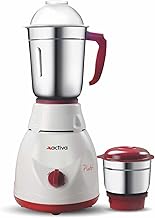


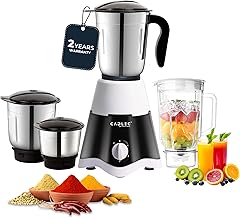


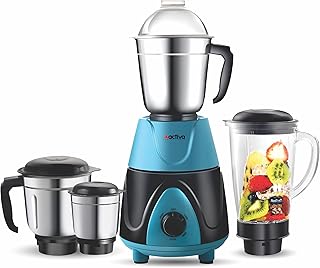


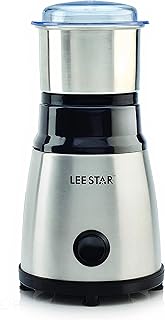


Choosing a mixer grinder or blender is less about buying the most powerful appliance and more about matching the machine to the way you cook. Indian kitchens often require several different tasks from one appliance: grinding whole spices, preparing chutneys, making wet pastes, blending smoothies, preparing batters, and processing ingredients for everyday meals. A model that performs exceptionally well for one task may not be equally convenient for another.
For this reason, compare the complete specification rather than judging a product by motor wattage alone. Motor power, jar design, blade construction, speed control, overload protection, noise, build quality, cleaning convenience, replacement parts, and the intended workload all matter. A good buying decision should also consider the number and size of jars supplied, because jar capacity can make a substantial difference when preparing food for a family.
The terms mixer grinder and blender are sometimes used interchangeably, but the appliances are designed around somewhat different priorities.
If your main requirement is traditional Indian food preparation, a conventional mixer grinder with dedicated grinding jars is often more appropriate than choosing a blender based solely on its ability to produce smooth beverages.
Wattage is one of the most visible specifications on a mixer grinder, but it should not be treated as a direct measurement of overall performance. Higher motor power can be useful for demanding grinding jobs, particularly when the appliance is used frequently or processes tougher ingredients. However, motor design, blade geometry, jar loading, thermal management and construction also influence results.
For light household use, an unnecessarily powerful appliance may add cost and noise without providing a meaningful advantage. For regular preparation of hard spices, larger quantities or tougher ingredients, a stronger motor can provide greater headroom. The most sensible approach is to match motor capacity to workload rather than automatically choosing the highest wattage available.
Blades need to withstand repeated contact with ingredients and should maintain their cutting and grinding performance over time. Stainless steel is widely used because it offers a practical combination of durability and resistance to corrosion.
Blade shape is also important. A blade intended for dry grinding may be designed differently from one intended for blending or wet ingredients. When comparing models, look at the stated purpose of each jar and blade assembly rather than assuming that every blade is equally effective for every preparation.
Jar capacity should reflect the quantity you normally prepare. A compact jar can be convenient for spices and small chutney portions, while a larger jar is more useful for family-sized preparations.
Do not assume that the stated jar capacity represents the recommended working quantity. Safe operating levels can vary according to the ingredient and appliance design. Follow the manufacturer's instructions rather than filling a jar to its absolute physical capacity.
Stainless-steel jars are common in mixer grinders intended for grinding and Indian cooking applications. Transparent or translucent blending jars can make it easier to monitor consistency while processing. Whatever the material, examine the lid fit, handle construction, sealing arrangement and overall rigidity.
A well-designed jar should be comfortable to hold and should not require excessive force to attach or remove. The lid should remain secure during normal operation, while seals and removable components should be straightforward to clean.
Multiple speed settings can provide more control than a simple on/off switch. Lower speeds can be useful for controlled blending, while higher speeds may be appropriate when ingredients require more intensive processing.
A pulse function can also be valuable because it allows short bursts of power without continuously running the motor. This can help with coarse processing and gives the user greater control over texture.
Overload protection is an important feature for household mixer grinders. If the motor is subjected to excessive resistance, an overload mechanism can help protect the appliance from damage. This does not mean the appliance should routinely be overloaded. Ingredients should still be prepared according to the manufacturer's recommendations.
Two appliances with similar motor ratings can behave differently because of their jar and blade geometry. The internal shape of a jar influences how ingredients circulate, while the position and shape of the blades affect how ingredients are pulled toward the cutting area.
A jar that works well for liquids may not be ideal for small amounts of dry spices. Likewise, a wide jar can be convenient for cleaning and certain wet preparations but may behave differently from a narrower grinding container.
When comparing the best mixer grinders in India, examine the intended use of each supplied jar. A useful combination is often more valuable than simply having the largest possible number of containers.
Dry grinding is particularly relevant to Indian cooking. Whole spices, roasted ingredients, coffee beans where permitted by the manufacturer, and other dry ingredients can require different grinding characteristics.
For dry ingredients, avoid overfilling the jar. Smaller batches can often be easier to process evenly, and following the manufacturer's recommended quantity helps prevent unnecessary strain on the motor.
Wet grinding involves ingredients with added water or moisture and is commonly associated with chutneys, pastes and other Indian preparations. Jar shape, blade clearance and motor capability can all affect consistency.
Do not judge wet-grinding performance from wattage alone. The interaction between the blade, jar and ingredients is what ultimately determines how effectively the contents circulate and break down.
For smoothies, shakes and other liquid preparations, blending performance depends on blade design, jar shape and the ability to create consistent circulation. A blender-oriented appliance may be preferable when beverages are the primary use case.
If you want one appliance for both Indian grinding and beverage preparation, carefully examine whether the supplied jars and blade assemblies are actually designed for both tasks.
Mixer grinders are mechanical appliances and some operating noise is normal. However, noise and vibration can affect how pleasant an appliance is to use, especially in households where the machine is operated frequently.
A stable base, properly fitted jar and balanced rotating assembly can help reduce unnecessary movement. Buyers should also consider countertop space. An appliance that is difficult to store or repeatedly move in and out of a cabinet may become inconvenient even if its technical specifications look impressive.
Never operate a mixer grinder with a damaged jar, cracked lid, exposed electrical components or deteriorated power cord. Avoid placing hands or utensils inside a moving jar, and disconnect the appliance from power before cleaning or handling blades.
More jars can be useful, but a large accessory count should not automatically be considered better value. A household that regularly prepares chutneys, spice powders and wet pastes may benefit from several purpose-specific containers. Someone who mainly makes smoothies and occasional sauces may prefer a simpler configuration.
Before buying, list the tasks you perform during a normal week. Then check whether the included jars cover those tasks without requiring unnecessary accessories. Also consider whether replacement jars, lids and blade assemblies are realistically obtainable through the manufacturer's support network or authorised channels.
Established brands can be useful starting points when researching reliability, specifications and after-sales support. Names commonly encountered in the Indian mixer-grinder market include Philips, Preethi, Sujata, Bajaj, Butterfly, Bosch, Havells and Prestige.
Brand reputation should not replace product-level comparison. Different models from the same manufacturer can have substantially different motor capacities, jar configurations, controls and intended workloads. Compare the exact model and specification rather than choosing solely because a brand is familiar.
Prioritise a dependable motor, practical jar combination, stainless-steel grinding capability, convenient controls and accessible replacement components. If the appliance will prepare chutneys, spice mixes and wet pastes regularly, dedicated grinding jars are especially useful.
A compact model can make sense when quantities are modest and the appliance is not used for long or demanding sessions. Look for a balanced combination of motor capability and useful jar sizes rather than paying for capacities you rarely need.
Larger families should pay closer attention to jar capacity, motor endurance and the manufacturer's stated operating limits. A larger container can reduce the number of batches required, but it should not be overloaded simply to save time.
If beverages are the primary use, consider a blender-oriented design with a suitable liquid jar, effective ingredient circulation and convenient pouring. A traditional mixer grinder can blend liquids, but a dedicated blender may offer a more purpose-built experience depending on the model.
Frequent grinding of demanding ingredients calls for careful attention to motor capacity, blade construction, jar design, overload protection and recommended duty cycle. Read the manufacturer's operating instructions before using any appliance for prolonged or particularly heavy grinding.
A higher wattage number does not automatically mean that one appliance will deliver better results for every preparation. Treat wattage as one specification within a broader evaluation.
Extra jars and attachments are valuable only when they serve a genuine purpose. Unused accessories occupy storage space and can make cleaning and organisation more complicated.
Mixer grinders contain components that can eventually require replacement. Before purchasing, investigate whether jars, lids, couplers, blades and other commonly replaceable parts are supported for the particular model.
Warranty coverage can vary by product and component. Check exactly what is covered, the duration of coverage and any exclusions before purchase. Do not assume that every part of an appliance has identical warranty treatment.
Measure the available area if the appliance will remain on the kitchen counter. Consider its height under cabinets, jar storage requirements and the space needed to safely operate it.
Cleaning requirements differ between products. Follow the manufacturer's instructions for washing jars, lids, blades and electrical components. The motor housing should never be immersed in water.
When two models appear similar, compare them in a fixed order rather than relying on whichever specification looks most impressive.
Customer reviews can reveal practical information that a specification sheet cannot, but they should be interpreted carefully. Look for repeated observations across a meaningful range of reviews rather than treating one unusually positive or negative comment as definitive.
Useful review signals include comments about jar durability, noise, ease of cleaning, motor behaviour, coupler wear, lid fit, customer support and long-term everyday convenience. Reviews that describe the user's workload are particularly useful because a product used occasionally for smoothies may behave very differently from one used frequently for demanding grinding.
When reading marketplace feedback, separate product performance from delivery, packaging or seller-specific complaints. These can be relevant to a purchase but may not accurately describe the appliance itself.
Rinse or clean jars after use according to the manufacturer's instructions. Dried food residue can become harder to remove and may affect seals or create unpleasant odours.
The electrical base should be cleaned externally using an appropriate method specified by the manufacturer. Keep water away from electrical openings, switches and power connections.
If the appliance begins behaving differently, inspect accessible wear components such as couplers and seals for signs of deterioration. Replace components using compatible parts rather than improvised alternatives.
Follow the recommended operating intervals and allow the appliance to rest when instructed. Continuous operation beyond the intended duty cycle can generate excessive heat and place unnecessary stress on the motor.
Purpose-specific jars are supplied for a reason. Using the appropriate container can improve processing and reduce unnecessary mechanical strain.
Motor wattage indicates electrical power consumption under the relevant operating conditions, but actual household energy use depends on how long and how frequently the appliance operates. A powerful appliance used for short periods may not necessarily consume more household electricity than a less powerful machine that needs significantly longer processing time.
For everyday efficiency, focus on suitable batch sizes, correct ingredient preparation and avoiding unnecessary repeated processing. Cutting very large or hard ingredients into suitable pieces when permitted by the manufacturer can also make processing more manageable.
There is no single best mixer grinder for every Indian household. The right choice depends on cooking frequency, grinding requirements, family size, preferred jar capacity, budget and the importance of features such as speed control and overload protection. Compare exact models rather than choosing solely by brand or wattage.
The appropriate wattage depends on workload. Lower-powered appliances can be adequate for lighter household tasks, while frequent or demanding grinding may justify a more powerful motor. Motor wattage should always be considered alongside jar design, blade construction, operating limits and intended use.
Neither is universally better. A mixer grinder is generally more versatile for many Indian cooking tasks, while a blender can be preferable when smoothies, shakes and other liquid preparations are the primary requirement. A multifunction appliance can be a compromise for households that need both capabilities.
Stainless-steel jars are popular for grinding applications because they are durable and practical for many Indian cooking tasks. However, jar material alone does not determine performance. Capacity, shape, blade assembly, lid design and ease of cleaning also matter.
There is no ideal number for everyone. Choose enough jars to cover your regular tasks without paying for accessories that will rarely be used. A small grinding jar plus one or more practical general-purpose jars can be more useful than a large accessory collection.
Many mixer grinders can process smoothies and similar drinks when used according to their instructions. If smoothies are your primary requirement, compare the appliance's blending jar, blade design and liquid-processing guidance with those of dedicated blenders.
Overload protection is a useful safety and motor-protection feature, particularly for appliances used for demanding grinding. It should not be viewed as permission to exceed recommended quantities or operating times.
Philips, Preethi, Sujata, Bajaj, Butterfly, Bosch, Havells and Prestige are among the established names worth including in an Indian mixer-grinder comparison. The exact model remains more important than the logo, so compare specifications, warranty terms, reviews and replacement-part support for the specific appliance.
Only if you expect to use them. Additional attachments can increase versatility, but they can also increase storage and cleaning requirements. Focus on the functions you actually need.
There is no universal replacement interval. Blade condition depends on usage, ingredients, cleaning and the particular appliance. Replace damaged or significantly worn components according to the manufacturer's guidance rather than following an arbitrary schedule.
Reviews are useful but should be combined with manufacturer specifications, warranty information, safety instructions and current retailer details. Pay particular attention to repeated feedback from buyers whose usage pattern resembles your own.
A useful independent buying guide should distinguish between specifications and actual buying priorities. Rather than declaring a product universally superior, compare models according to the jobs they are designed to perform, the household workload they can reasonably accommodate and the practical ownership factors that matter after purchase.
For August 2026, shoppers should verify the current model specification, included accessories, warranty conditions, retailer information, verified customer feedback and today's price before making a final decision. Product listings can change, and the same model name can occasionally appear in different configurations, so checking the exact variant is essential.
The best choice is ultimately the mixer grinder or blender that fits your cooking style, quantity requirements, available kitchen space and budget without paying for capabilities you will not use.