
♥ Wishlist
Compare 58 verified Bookshelves for Home & Organised Storage products in India. Reviews, ratings, pros, cons and buying advice updated for October 2026.






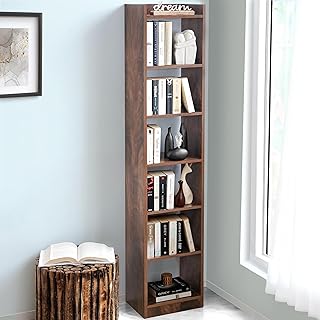


Choosing a bookshelf is not simply about finding a unit with enough shelves. The right bookshelf needs to suit the available floor or wall space, the quantity and weight of books you own, the room's style, and the way you intend to organise books and other belongings. In Indian homes, where bedrooms, living rooms, study areas and compact apartments can have very different space constraints, these factors can make a significant difference to long-term satisfaction.
When comparing the best bookshelves in India, look beyond photographs and headline ratings. Pay attention to dimensions, shelf construction, material, weight capacity where specified, assembly requirements, stability, finish, ventilation, cleaning requirements and the retailer's current return conditions. A visually attractive bookshelf that is too deep for a small room or too lightly constructed for a large collection may not be a practical choice.
Measure the exact area where the bookshelf will stand before comparing models. Record width, height and depth rather than relying on approximate measurements. Also consider skirting boards, electrical sockets, doors, windows, curtains and nearby furniture.
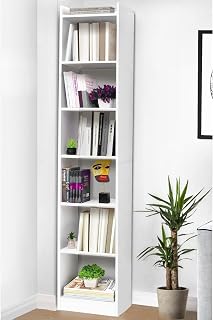
For a small bedroom or apartment, a narrow vertical bookshelf can make better use of available wall area than a wide horizontal unit. For a spacious living room, a wider low-profile bookcase may provide easier access and a more balanced appearance.
Books vary considerably in height and thickness. Paperback novels, school textbooks, large-format art books, encyclopaedias and hardbound reference books do not necessarily fit comfortably on the same shelf arrangement.
Before buying, consider the largest books in your collection. Adjustable shelves are particularly useful because they allow the interior space to be changed as your collection evolves. Fixed shelves can still be perfectly practical, but the spacing should be checked carefully against the books you intend to store.
The material has a major effect on appearance, weight, durability, maintenance and price. Common bookshelf constructions available in India include engineered wood, particle board, MDF-based panels, plywood, solid wood and metal.
Engineered wood bookshelves are widely used because they can offer a combination of affordability, consistent appearance and relatively straightforward assembly. Depending on construction and surface treatment, they can resemble different wood finishes while being easier to manufacture in standard shapes.
Check the thickness of panels and shelves rather than judging quality solely by the printed wood-look finish. Edge treatment is also worth inspecting because exposed or poorly finished edges can affect appearance and resistance to everyday wear.
Medium-density fibreboard can provide a smooth surface suitable for painted or laminated finishes. It is commonly used in furniture where a uniform appearance is desired. Its performance depends heavily on construction quality, thickness, fastening and protection from moisture.
MDF-based furniture should generally be kept away from prolonged water exposure. This is particularly important in areas where floors may become wet during cleaning.
Particle board is often used in budget-oriented furniture. It can be suitable for moderate everyday use when properly constructed, but the quality of the board, edge finishing and fasteners matter considerably.
Pay particular attention to screw retention and moisture exposure. Repeated assembly and disassembly can also be a consideration with some engineered-board constructions.
Plywood is made from layers of wood veneer and can offer useful strength-to-weight characteristics. The actual performance depends on the plywood grade, thickness, construction and quality of the complete bookshelf.
Do not assume that every product described as plywood has the same specifications. Check the manufacturer's stated material and construction details before comparing it with MDF or particle-board alternatives.
Solid-wood bookshelves can provide a traditional appearance and substantial construction. They may be particularly attractive in classic, rustic or premium interiors.
Wood can respond to changes in humidity and temperature, so finish quality and maintenance remain important. A solid-wood bookshelf can also be significantly heavier than an engineered-wood alternative, which matters when positioning it in an upper-floor room or moving it later.
Metal bookshelves can work well in industrial, minimalist, office and contemporary interiors. Open metal frames can also make a room feel less visually crowded.
When considering a metal bookshelf, examine the frame design, shelf material, joints, finish and anti-rust considerations. The suitability of a metal unit for a particular environment depends on its construction and surface treatment.
Open shelves provide quick access and make it easy to see your collection. They are useful for books that are regularly used and can also display plants, photographs, collectibles and decorative objects.
Closed designs use doors, drawers or enclosed compartments to hide some of the contents. They can create a tidier appearance when the furniture is used to store a mixture of books, paperwork and miscellaneous household items.
Adjustable shelving can be one of the most useful features for a growing library. A shelf layout that works for novels today may be unsuitable after adding textbooks, folders or large-format books.
When comparing adjustable systems, check how the shelves are supported. Small shelf pins, metal supports and locking mechanisms can vary in design. Also consider whether the adjustment increments are practical for your collection.
Books are deceptively heavy. A bookshelf that looks spacious can become heavily loaded once filled from one end to the other. The manufacturer's stated load information should therefore take priority over assumptions based on appearance.
If a listed weight capacity is available, check whether it applies to the complete unit or to an individual shelf and whether any conditions are specified. Avoid treating an unspecified capacity as unlimited.
Long shelves deserve particular attention because a shelf can experience bending when heavily loaded. A shorter shelf span, thicker panel or additional central support can improve structural performance depending on the design.
Stability should be considered alongside storage capacity. A tall, narrow bookshelf has a higher centre of gravity than a low, wide unit. Uneven flooring, heavy books positioned high on the unit and accidental pushing can increase the risk of tipping.
Where the manufacturer provides an anti-tip or wall-anchoring system, follow the supplied installation instructions. Use appropriate hardware for the wall construction rather than assuming that one fixing method is suitable for every wall.
A compact bookshelf is often preferable in bedrooms where floor space is limited. A narrow vertical model can provide useful storage without occupying the same footprint as a large bookcase. If the bookshelf is positioned beside a desk, verify that its depth does not obstruct the chair or walking area.
Living-room bookshelves often perform two jobs: book storage and display. Wider designs with a mixture of open compartments can work well when you want to combine books with photographs, plants or decorative pieces.
Prioritise accessibility, shelf spacing and structural strength. A study bookshelf may need to accommodate textbooks, reference books, files and stationery rather than only standard novels.
Safety should receive particular attention. Avoid placing a tall unsecured bookshelf where children can climb on it. Rounded or well-finished edges, stable construction and appropriate anchoring can be important considerations.
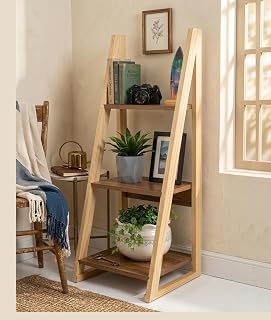
Ladder designs usually become narrower toward the top and can provide a lightweight visual appearance. They can be attractive in modern interiors, although stability and wall positioning should be checked carefully.
Cube-style units divide storage into individual compartments. They can be useful for combining books with baskets, storage boxes and decorative objects. Their modular appearance also suits contemporary rooms.
Traditional multi-tier bookcases provide straightforward book storage. They are often the easiest design to compare because the main considerations are dimensions, shelf spacing, construction and stability.
Corner units are designed to use otherwise difficult-to-furnish areas. Measure the corner carefully, particularly if the walls are not perfectly square or if nearby furniture needs clearance.
Wall-mounted shelving can preserve valuable floor space. However, installation becomes a major consideration. The wall type, fixing method and combined weight of the shelves and contents must be appropriate for the installation.
Colour and finish should be evaluated according to the room rather than in isolation. White and light finishes can complement bright interiors, while walnut, oak-look and darker finishes can create a warmer or more traditional appearance.
Consider how the surface will look under the lighting in your room. Online product photographs can appear different from the actual finish because of photography, display settings and lighting conditions. Where appearance is important, check the manufacturer's colour description and current product images before ordering.
Many bookshelves supplied online require some level of assembly. Before purchasing, check whether assembly is required, what tools are needed, whether instructions are supplied and whether the design can realistically be assembled in the intended room.
Large furniture can be difficult to manoeuvre through narrow staircases, corridors and doorways even when its final dimensions appear suitable. Check the packaged or assembled dimensions when those measurements are provided.
More shelves do not automatically mean more useful storage. Closely spaced shelves may be excellent for paperbacks but inconvenient for tall books. Compare the usable shelf dimensions instead of simply counting tiers.
A bookshelf that is too deep can consume unnecessary floor space. Conversely, an unusually shallow shelf may not adequately support larger books. The ideal depth depends on your collection and room layout.
Maximum height is not always the best choice. Tall furniture requires greater attention to stability and may be inconvenient if the upper shelves are difficult to reach.
Book collections can place significant continuous load on furniture. Compare published load specifications whenever available and avoid making assumptions based solely on shelf thickness or appearance.
Engineered wood products can be particularly vulnerable to prolonged moisture exposure. Avoid placing unsuitable furniture directly against damp walls or in locations where water regularly reaches the base.
A bookshelf should ideally account for some future growth. Buying a unit that is already completely full may mean replacing it sooner than expected.
When comparing several products, create a simple specification checklist rather than relying on star ratings alone. Customer ratings can provide useful signals, but they should be considered alongside dimensions, materials, construction and the specific needs of your room.
Brand familiarity can make specification checking easier, but it should not replace product-level comparison. Established furniture and home-storage brands such as IKEA, Wakefit, Nilkamal, Pepperfry and Urban Ladder offer different furniture categories and design approaches. Availability, construction, dimensions and warranty terms can vary by individual product, so always verify the current listing details.
Amazon also carries bookshelves from numerous manufacturers and sellers. For any marketplace purchase, examine the exact seller, current specifications, customer feedback, delivery information and applicable return conditions rather than assuming that all products under a familiar brand name are identical.
Compact homes require a different approach to storage. Instead of maximising the number of bookshelves, focus on storage efficiency per square metre of usable floor area.
Vertical units, corner shelving and wall-mounted designs can help make better use of available space. Furniture with multiple functions can also be useful where a bookshelf needs to share a room with a work desk, television unit or other storage.
For particularly small rooms, measure the walking clearance after placing the bookshelf. A unit that fits against a wall but makes the room difficult to move around in may be less practical than a smaller alternative.
Textbooks and reference books can be substantially heavier than ordinary paperbacks. Buyers with large academic collections should pay special attention to shelf length, thickness, support structure and manufacturer load specifications.
Where a bookshelf has long unsupported shelves, avoid assuming that it will perform equally well under heavy continuous loading. Shorter compartments or additional vertical supports may provide a more suitable configuration.
Regular maintenance helps preserve both appearance and structural condition. Dust shelves with a soft, dry or appropriately damp cloth according to the manufacturer's care instructions. Avoid saturating engineered-wood surfaces with water.
Organisation should reflect how frequently you use your books. Everyday reading material can remain at eye level, while reference books used less often can occupy higher or lower shelves.
You can organise books alphabetically, by subject, author, colour, size or frequency of use. For a mixed storage unit, keep heavier books on lower shelves and avoid creating excessive weight on one side of the furniture.
The terms bookshelf and bookcase are often used interchangeably in online furniture listings. In practical buying terms, the more useful distinction is the configuration: open shelving, enclosed cabinets, wall-mounted shelving, modular compartments or a freestanding multi-tier unit.
Rather than focusing on terminology, compare the actual dimensions, storage arrangement, materials and installation requirements of the product.
Customer reviews can be useful when they reveal recurring issues that are difficult to identify from photographs. Look for patterns rather than focusing on a single highly positive or negative comment.
Useful review details include comments about assembly clarity, stability, actual dimensions, finish quality, shelf strength, missing components and long-term usability. Reviews that describe the product's specific use case are generally more informative than comments that only discuss delivery or appearance.
Also check whether recent reviews continue to describe the same product configuration. Marketplace listings can change over time, so specifications should always be verified against the current listing.
The cheapest bookshelf is not necessarily the best value, and the most expensive model is not automatically the most durable. Value depends on how well the furniture satisfies your requirements over its expected period of use.
For a temporary rental home, an affordable engineered-wood unit may make more sense than a heavy premium bookcase. For a permanent home library, stronger construction, better adjustability and a finish that suits the room may justify spending more.
Compare the complete package rather than the headline price. Assembly requirements, dimensions, storage capacity, construction, installation needs and applicable retailer policies can all influence the practical value of a bookshelf.
For an informed purchase in India, start with your room rather than a particular brand. Measure the space, count the books you need to store, identify the largest and heaviest items, and decide whether you want open display or enclosed storage.
Then shortlist products that satisfy those physical requirements. Compare their materials, shelf spacing, load information, construction and stability features. Finally, check current customer feedback, retailer terms and today's price before making a decision.
There is no single bookshelf that is ideal for every Indian home. The best choice depends on room dimensions, storage requirements, book size, preferred material, design, budget and installation needs. A compact unit may be best for a bedroom, while a wider or heavier construction may be preferable for a dedicated home library.
The best material depends on the intended use. Solid wood can suit buyers seeking a traditional premium appearance, plywood can offer a useful combination of strength and weight, and engineered wood can provide a practical option across many modern furniture designs. Compare the actual construction and specifications rather than selecting solely by material name.
Neither is universally better. Wooden and engineered-wood shelves can blend naturally with residential interiors, while metal designs can offer a contemporary or industrial appearance. The better option depends on required load, room style, maintenance preferences and construction quality.
An adjustable bookshelf can be more versatile because shelf height can be changed for different book sizes. It is particularly useful for collections that contain a mixture of novels, textbooks and large-format books.
The appropriate depth depends on the books and objects being stored. Standard books may work well on relatively shallow shelving, while large-format books need more depth. Measure your largest books and compare that measurement with the usable shelf depth stated in the product specifications.
Placing heavier books lower can help keep the centre of gravity lower and can make a tall unit easier to manage. Always remain within the manufacturer's specified load limits.
Tall or top-heavy furniture may benefit from appropriate anti-tip anchoring. Follow the manufacturer's instructions and use fixing hardware suitable for the wall type. Never assume that a single fixing method is appropriate for every wall construction.
Yes. Narrow vertical bookshelves, compact cube units and appropriately installed wall-mounted shelving can work well in smaller bedrooms. Measure the complete footprint and walking clearance before choosing a model.
Check dimensions, material, shelf spacing, load information, assembly requirements, stability provisions, current customer feedback, seller information, return conditions and the latest product specifications. Also compare the product's actual storage capacity with your collection rather than judging by photographs alone.
The frequency depends on the room and household conditions. Regular dusting helps keep books and surfaces cleaner, while spills should be addressed immediately. Follow the furniture manufacturer's care instructions for the specific finish and material.
The best bookshelf in India is the one that fits your room, accommodates your collection safely and matches the way you actually use your space. A strong buying decision comes from comparing measurable characteristics such as dimensions, shelf spacing, construction, stability and capacity rather than choosing solely from appearance or star ratings.
For August 2026, shoppers should verify the current product listing before purchase because prices, availability, sellers, specifications and customer feedback can change. Use this guide as a framework for comparing shortlisted bookshelves and choose the model whose construction and configuration best match your specific storage needs.