

♥ Wishlist
Compare 56 verified Rotary Tools for Cutting, Grinding, Polishing and DIY Projects products in India. Reviews, ratings, pros, cons and buying advice updated for October 2026.


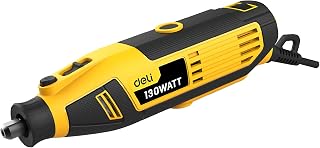


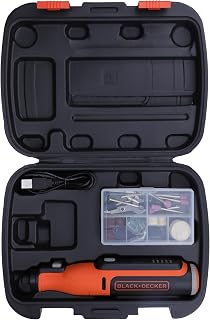


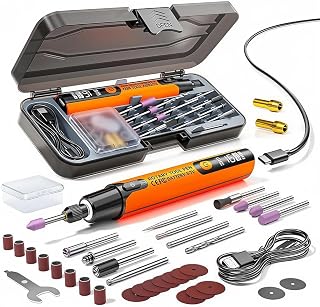


A rotary tool is a compact, high-speed power tool designed for detailed work where control, precision and access matter more than the high torque of a conventional drill. Depending on the accessory fitted, one tool can handle jobs such as cutting, grinding, sanding, polishing, engraving, drilling small holes, deburring and light material removal.
For Indian buyers, choosing the right rotary tool involves more than comparing the advertised wattage or the number of accessories in the box. Motor behaviour, speed control, collet compatibility, accessory quality, ergonomics, heat management, power source and the availability of replacement accessories can have a much greater effect on practical usability.
This buying guide is intended to help compare rotary tools across different specifications and use cases. Models from established manufacturers such as Dremel, Bosch, Black+Decker, Makita and DEWALT can be considered alongside other reputable options, but the exact specification, included accessories, warranty terms and current availability should always be checked for the particular model being considered.
The versatility of a rotary tool comes from its high-speed rotating spindle and interchangeable accessories. A single machine can perform very different tasks when the appropriate attachment is installed.
A rotary tool and a drill may both rotate accessories, but they are designed around different priorities. A drill generally provides substantially more torque at lower speeds and is intended for tasks such as drilling larger holes and driving fasteners. A rotary tool normally prioritises compact size, high rotational speed and fine control.
If the main requirement is assembling furniture, drilling large holes or driving screws, a drill or cordless drill is usually the more appropriate tool. If the work involves engraving, small grinding operations, detailed sanding, polishing or precision cutting, a rotary tool can be considerably more suitable.
Some buyers purchase a rotary tool expecting it to replace a drill. This is one of the most common buying mistakes. The two tools can overlap in a few applications, but they are not interchangeable for every task.
Power ratings can be useful for understanding a tool's general capability, but wattage alone does not determine performance. Motor design, speed regulation, load behaviour, cooling and accessory efficiency all influence how a rotary tool performs in real applications.
A compact tool intended for engraving and occasional light finishing does not necessarily need the same motor capacity as a model expected to perform repeated cutting or grinding. Instead of selecting the highest wattage available, match the motor's intended workload to your applications.
Variable speed is one of the most useful features on a rotary tool. Different accessories and materials require different operating speeds, and using the highest setting for every job can produce poor results or unnecessary heat.
A tool with a broad, usable speed range is generally more versatile than one that offers only a few fixed settings. Smooth electronic speed control can also make it easier to maintain consistent results.
The maximum no-load RPM printed in a specification sheet does not tell the entire story. A rotary tool can spin very quickly without necessarily maintaining its speed effectively when pressure is applied.
For demanding applications, look for information about electronic speed regulation or constant-speed technology where it is provided by the manufacturer. The ability to maintain a more consistent speed under reasonable load can improve control and finish quality.
The collet is the component that holds the accessory shaft. Compatibility is important because the tool's usefulness depends heavily on the accessories that can be securely fitted to it.
Before purchasing, check the supplied collet sizes and determine whether commonly available accessories in India are compatible. If an adapter or alternative collet is required for a particular accessory, confirm that it is officially compatible with the tool.
Do not assume that every accessory marketed as a rotary-tool accessory will fit every machine. Shaft diameter, collet size, maximum operating speed and accessory design all matter.
A large accessory count can make a product look attractive, but quantity should not be confused with usefulness. A kit containing dozens of low-quality or highly specialised accessories may be less valuable than a smaller kit containing dependable cutting, sanding, grinding and polishing accessories.
When comparing kits, identify the accessories you will actually use. Also check whether replacement discs, sanding bands, grinding stones, brushes and other consumables can be sourced conveniently.
Rotary tools are often used for detailed work where the operator may hold the tool for extended periods. Shape, diameter, weight distribution, grip texture and switch placement can therefore affect practical comfort.
A very powerful tool can be frustrating if it is bulky or difficult to control. Conversely, an extremely compact model may be easier to handle but may not be the best choice for prolonged heavy-duty work.
Excessive vibration can reduce precision and make detailed work uncomfortable. It can also make an accessory appear to wobble even when the accessory itself is correctly installed.
When comparing products, pay attention to manufacturer information concerning vibration, construction and accessory retention. Properly tightening the collet and using compatible, balanced accessories are also important for smooth operation.
High-speed operation generates heat, particularly during continuous cutting, grinding and sanding. Ventilation openings and the motor's cooling design can therefore influence how comfortably a tool can be used.
Avoid blocking ventilation openings while working. If the tool becomes unusually hot, smells of overheated insulation or behaves abnormally, stop using it and allow it to cool before investigating the cause.
Both formats have legitimate advantages.
For cordless models, compare battery voltage, battery platform, charging arrangement, included batteries and the availability of compatible replacement batteries. A bare-tool price can look attractive if a battery and charger are not included, so compare complete system costs rather than the tool price alone.
RPM means revolutions per minute and indicates how quickly the spindle rotates. Rotary tools commonly operate at very high rotational speeds compared with conventional drills.
High RPM is not automatically better. The appropriate speed depends on the accessory, material, operation and manufacturer's instructions. A cutting disc, sanding drum, polishing accessory and wire brush can behave very differently at the same speed.
Excessive speed can increase heat, damage a workpiece, accelerate accessory wear or reduce control. Insufficient speed can also produce inefficient cutting or sanding. The best rotary tool is therefore one that gives the operator useful speed control rather than simply the highest advertised RPM.
For general household projects, prioritise versatility, manageable size, variable speed and a practical selection of accessories. A moderate-power model from an established manufacturer can be more useful than an oversized professional machine if the majority of jobs involve light cutting, sanding, polishing and minor repairs.
Woodworkers may use rotary tools for carving, detail sanding, shaping, trimming and finishing. Speed control is particularly important because different woods and accessories respond differently to heat and cutting speed.
For larger-scale stock removal, however, a router, jigsaw, oscillating tool or other dedicated woodworking machine may be more appropriate.
Metalworking applications can place greater demands on the motor and accessories. Consider a tool with good speed control, adequate cooling and a secure collet system.
Use accessories specifically intended for the metal and operation involved. Cutting and grinding accessories have maximum speed ratings that must not be exceeded.
Engraving and craft applications benefit from a lightweight body, precise speed adjustment and a comfortable grip. Maximum motor power may be less important than controllability.
A rotary tool can be useful for small-area cleaning, deburring, polishing and detail work around components. Buyers should distinguish between occasional detail work and demanding material removal, because the latter may require a larger grinder or specialist power tool.
Accessories determine much of a rotary tool's practical usefulness. Before buying a large accessory kit, understand the purpose of the most common attachment types.
Cutting discs are designed for slicing through suitable materials rather than grinding side surfaces. Use only discs compatible with the tool and intended material, and follow the accessory manufacturer's speed and safety requirements.
Grinding stones are useful for light material removal, shaping and smoothing suitable surfaces. Their hardness, shape and abrasive composition should match the intended application.
Sanding drums are useful for controlled material removal and shaping, particularly in wood and other compatible materials. Replacement sanding bands are consumables, so availability matters when evaluating a kit.
Felt wheels and similar accessories can be used with appropriate polishing compounds for small surfaces. Polishing generally requires patience and controlled speed rather than simply maximum RPM.
Wire brushes can assist with light cleaning and surface preparation. Operators should select the appropriate brush type and speed and take care to control loose wires and debris.
Small drill bits can extend a rotary tool's usefulness for precision work, but they should not be treated as a substitute for a dedicated drill when larger holes, deeper drilling or high torque is required.
Specialised bits can be useful for decorative work, carving and engraving. The bit profile should be selected according to the material and the desired cut.
Even a capable rotary tool can deliver disappointing results when fitted with an unsuitable or poorly balanced accessory. Accessories rotate at high speed, so manufacturing quality, balance, shaft straightness and correct installation matter.
When comparing a multi-accessory kit, consider the quality and usefulness of the included consumables rather than counting them. A kit with fewer accessories can be the better choice if replacement parts are easier to source and the included attachments match your actual applications.
When comparing shortlisted models, use the same criteria for each product. Looking only at price can produce a misleading comparison.
Maximum RPM is not a universal performance score. A useful rotary tool should provide appropriate control across different operations.
Accessory quantity can be a marketing feature rather than a measure of long-term value. Identify the attachments required for your projects first.
Accessory compatibility can become a major limitation if the supplied collet system does not support the accessories you intend to use.
A compact rotary tool is not necessarily intended to operate continuously under heavy pressure. Allow appropriate cooling periods and avoid forcing the motor through material.
Rotary tools are excellent for detailed work but are not ideal for every cutting, drilling or grinding task. Selecting the correct tool for the job improves efficiency and can reduce unnecessary wear.
For cordless products, consider battery and charger costs. For any rotary tool, consider replacement accessories and consumables. A lower purchase price does not necessarily mean lower ownership cost.
High-speed rotary accessories can produce sharp fragments, dust and sparks depending on the operation. Read the tool and accessory instructions before use and use the protective equipment appropriate for the material and task.
Routine maintenance can help preserve performance and reduce avoidable problems. Maintenance requirements vary by model, so the manufacturer's instructions should take priority.
Good technique can matter as much as the specification of the machine. Allow the accessory to do the work instead of applying excessive pressure. Heavy pressure can slow the motor, generate heat and reduce accessory life.
For precision work, begin at a conservative speed and increase it only when appropriate for the material and accessory. Maintain a stable grip and avoid twisting a cutting disc in the cut.
For sanding and grinding, make controlled passes rather than attempting to remove a large amount of material in one movement. This approach generally provides better control over the finished surface.
First-time buyers should generally prioritise controllability and versatility over extreme specifications. A variable-speed model with a dependable collet system and a useful selection of basic accessories can provide a good foundation for learning.
Beginners should also consider how easily replacement consumables can be obtained. A tool is much more useful when the accessories needed for routine projects can be replaced without difficulty.
Frequent users should evaluate the tool as part of a complete working system. Important considerations include motor behaviour under load, ergonomics, vibration, heat management, accessory compatibility, service support and the availability of replacement parts.
For professionals, productivity can matter more than the lowest initial purchase price. A model that is comfortable, predictable and compatible with the accessories already used in a workshop may be a more practical choice than a cheaper tool with an incompatible ecosystem.
Brand reputation can be useful when comparing power tools, but the individual model still needs to be evaluated on its own specifications. Established names such as Dremel, Bosch, Black+Decker, Makita and DEWALT offer different tool ranges and accessory ecosystems.
Do not assume that every model from a well-known brand is automatically the best choice for every user. Compare the exact model number, included accessories, power source, speed control, collet compatibility, warranty conditions and intended workload.
The right power level depends on workload. For engraving, craft work and occasional light finishing, compact models may be sufficient. For repeated grinding, cutting and material removal, buyers should look for a model designed for a more demanding workload.
Instead of asking only “How many watts does it have?”, ask whether the tool is designed for the duration and type of work you expect to perform. Motor capacity, cooling, speed regulation and accessory choice work together.
Customer feedback can reveal practical issues that are not obvious from specification tables, but reviews should be interpreted carefully. Give more weight to repeated comments about the same specific issue than to isolated complaints or enthusiastic one-line ratings.
Look for useful details such as long-term reliability, heat during operation, accessory quality, ease of changing attachments, ergonomics, battery performance where applicable and whether the supplied accessories match the listing.
Also check whether reviews appear to refer to the exact model and configuration being considered. Product listings can sometimes contain multiple variants, so model-specific feedback is more useful than a generic rating.
A useful comparison should consider the complete package rather than the headline specification. For example, two similarly priced tools may differ substantially if one includes a battery and charger while the other is sold as a bare tool.
A rotary tool is versatile, but versatility has limits. A dedicated tool may be preferable when the job requires high torque, deep drilling, large-scale sanding, heavy grinding or rapid removal of substantial material.
For larger cutting jobs, consider a tool specifically designed for the material and cut. For larger holes, a drill is normally more suitable. For heavy metal grinding, an angle grinder may be more appropriate. For extensive woodworking, dedicated saws, routers or sanders can provide better productivity.
Focus on a reputable manufacturer, variable speed, basic accessory compatibility and adequate ergonomics. Avoid selecting a product solely because it contains an unusually large number of accessories.
Look more closely at speed regulation, motor behaviour, vibration, accessory quality and the long-term availability of consumables. This is also the point where comparing corded and cordless systems can become important.
Prioritise durability, cooling, ergonomics, accessory ecosystem, service considerations and suitability for extended workloads. Total ownership cost becomes more important than the initial purchase price.
There is no single best rotary tool for every buyer. The right choice depends on the work involved, desired speed control, power source, accessory compatibility, frequency of use and budget. Compare the exact specifications of shortlisted models rather than choosing solely by brand or accessory count.
Yes. A rotary tool can be useful for detailed DIY tasks such as light sanding, polishing, engraving, deburring and suitable small cutting jobs. Its compact form makes it particularly useful when precision is more important than high torque.
No. Although some rotary tools can accept small drill bits, they are generally intended for high-speed precision work rather than the higher-torque drilling and screw-driving applications handled by conventional drills.
No. The appropriate RPM depends on the accessory, material and operation. Excessive speed can cause overheating, premature accessory wear or loss of control. Variable speed is generally more useful than simply having the highest possible maximum RPM.
They can be worthwhile when portability and freedom from a power cable are important. However, compare the complete battery platform, including the battery and charger, rather than evaluating the bare tool price alone.
Variable speed is highly useful because different accessories and materials require different operating conditions. It provides greater control for delicate work and helps the user select an appropriate speed for the task.
There is no ideal number. A smaller collection of useful, compatible accessories can be more valuable than a very large assortment containing attachments you will rarely use. Prioritise accessory quality, compatibility and replacement availability.
Some rotary tools can perform suitable small metal-cutting operations when paired with an accessory specifically designed for that material and application. Always follow the tool and accessory manufacturer's operating limits and safety instructions.
Suitable rotary-tool cutting accessories can be used for certain small and detailed wood-cutting applications. For long, straight or substantial cuts, a dedicated saw is normally more appropriate.
Yes. Appropriate polishing wheels and compounds can be used for small-area polishing. Controlled speed and light pressure are important because excessive heat can damage some surfaces.
There is no universal runtime because it depends on the specific model, workload, accessory, operating speed and environmental conditions. Follow the manufacturer's instructions and allow the tool to cool when required.
Check the exact model number, power source, speed range, collet compatibility, included accessories, package contents, warranty terms and current customer feedback. For cordless models, confirm whether the battery and charger are included.
Not necessarily. A more expensive model may offer features that are valuable for frequent or demanding users, while a simpler model may be sufficient for occasional DIY work. Match the tool to your workload rather than assuming price alone determines suitability.
The best rotary tool is the one that matches the work you actually intend to do. Start with your applications, then compare motor capability, variable speed control, ergonomics, collet compatibility, accessory quality, power source and long-term ownership considerations.
For occasional DIY use, prioritise ease of handling and useful accessories. For detailed craft and engraving work, controllability and a comfortable grip become especially important. For frequent cutting and grinding, pay closer attention to motor performance, cooling, accessory compatibility and durability.
Before purchasing, compare the exact model specifications and package contents, read current customer feedback for that model, and check the manufacturer's warranty and support terms. Prices, stock, seller offers and included accessories can change, so verify the current listing details at the time of purchase.
This approach makes it easier to distinguish a genuinely suitable rotary tool from a product that looks attractive mainly because of a high accessory count or an impressive headline RPM figure.