

♥ Wishlist
Compare 49 verified Sanders Orbital Belt for Smooth Surface Finishing products in India. Reviews, ratings, pros, cons and buying advice updated for October 2026.


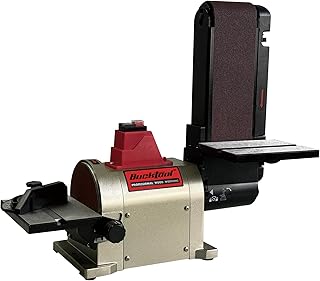
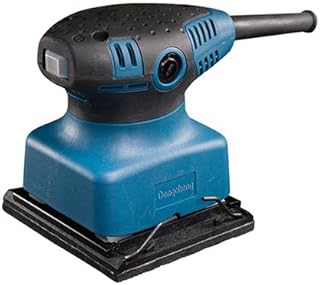


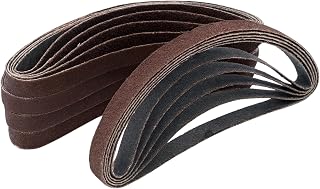


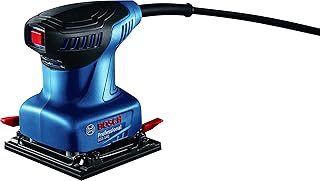

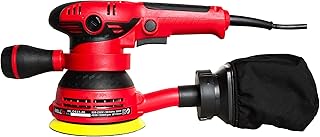


Choosing a sander is not simply a matter of selecting the highest-rated model. Orbital sanders, random orbital sanders and belt sanders are designed for different jobs, and the right choice depends on the material, amount of stock you need to remove, desired surface finish, working area and frequency of use. A tool that is excellent for smoothing a wooden tabletop may be inconvenient for aggressive material removal, while a powerful belt sander can be excessive for delicate finishing work.
For buyers in India, it is also worth considering the electrical specification, dust collection arrangement, replacement abrasive availability, ergonomics and the type of work normally carried out in a workshop or at home. Brands such as Bosch, Makita, DEWALT, Black+Decker and Stanley offer different approaches to sanding, but specifications should always be checked for the particular model rather than assuming that every tool from a brand has the same features.
The three categories are often grouped together in search results, but their working characteristics are substantially different.
If your main requirement is furniture finishing, surface preparation and general DIY work, a random orbital or orbital sander may be more practical than a belt sander. If the priority is quickly removing substantial amounts of material from a broad, flat surface, a belt sander can be the more appropriate category.
Motor power provides an indication of the tool's electrical input and potential working capacity, but it should not be treated as a direct measurement of sanding performance. Two machines with similar wattage can behave differently because of motor design, transmission efficiency, sanding mechanism, speed control and overall construction.
For occasional DIY sanding, an extremely high-powered machine may not provide a meaningful advantage. For demanding workshop use, sustained operation and aggressive stock removal, motor capability becomes more important. Compare motor power alongside the machine's intended application rather than using wattage alone to rank products.
Variable-speed control is valuable when working with different materials and finishes. Higher speeds can be useful for efficient sanding, while lower speeds can provide greater control in situations where excessive heat or aggressive abrasion could damage the surface.
When comparing models, check whether the advertised speed refers to no-load speed and whether the manufacturer specifies a speed range. Do not assume that a higher maximum RPM automatically means better results.
Sanding dimensions affect both coverage and abrasive compatibility. Common random orbital sanders use circular discs, while belt sanders use elongated abrasive belts. Larger sanding areas can cover more surface with each pass, but the machine may also become heavier and less convenient for detailed work.
Before purchasing, verify the exact abrasive size required by the model and investigate whether compatible replacement abrasives are readily available. A low-cost machine can become less economical if its abrasives are difficult to source or unusually expensive.
Dust extraction is one of the most important practical features of a modern sander. Sanding produces fine particulate material that can spread throughout a workshop and settle on nearby surfaces.
Look for a dust bag, dust box or extraction port that matches your intended setup. If you already own a compatible shop vacuum, check the port dimensions and supplied adapters before buying. A sanding tool with excellent extraction can be much easier to use indoors than one that leaves large quantities of dust in the work area.
Sanding often involves repetitive movements, so ergonomics can matter as much as headline specifications. Examine the handle arrangement, trigger position, grip surface, balance and overall weight.
A compact tool may be preferable for overhead or vertical work, whereas a larger machine can make sense for broad horizontal surfaces. If a sander is difficult to control comfortably, its theoretical performance becomes less useful.
A belt sander is a specialist tool for fast material removal. It can be particularly effective when restoring wooden doors, preparing boards, removing old coatings or levelling relatively large surfaces. Because the abrasive belt moves continuously, the machine can remove material considerably faster than a finishing-oriented orbital sander.
Check the exact belt dimensions before purchase. Abrasive belts are not universally interchangeable, and the required size should be treated as a key ownership consideration.
Also consider the available grit range. Coarse belts are useful for rapid removal, whereas finer grades are more appropriate for subsequent smoothing. A useful sanding setup normally involves changing grit progressively rather than trying to perform every stage with one abrasive.
Belt tracking keeps the abrasive correctly positioned during operation. A machine with an effective tracking mechanism is easier to manage because the belt is less likely to move toward one edge during sanding.
When comparing specifications, distinguish between automatic and manually adjusted tracking systems. Buyers who expect frequent belt changes may particularly value a straightforward adjustment mechanism.
Higher belt speed can contribute to rapid sanding, but aggressive sanding is not always desirable. Excessive pressure can increase heat, accelerate abrasive wear and produce an uneven surface.
Let the machine's abrasive do the work rather than forcing it into the material. This is particularly important when sanding softwood, veneer or surfaces where removing too much material could permanently alter the shape.
A random orbital sander is one of the most versatile choices for woodworkers and DIY users because it can handle surface preparation and finishing while generally producing fewer obvious sanding patterns than a basic orbital movement.
Most modern random orbital sanders use hook-and-loop sanding discs. This makes abrasive changes convenient, but buyers should still check the required disc diameter and hole configuration. Dust-extraction holes can affect how effectively dust is pulled away from the sanding surface.
The random motion is particularly useful when a smooth finish is required before painting, staining or applying another surface treatment. The final result still depends heavily on sanding technique, abrasive quality and progression through appropriate grits.
Random orbital sanders are primarily suited to broad surfaces. They are not automatically the best tool for narrow corners, inside edges or intricate profiles. A detail sander or hand sanding block may complement the machine when the project includes difficult-to-reach areas.
The abrasive grit is just as important as the machine. Selecting an inappropriate grit can waste time or damage the workpiece.
There is no universal grit sequence for every project. A previously painted hardwood surface, unfinished softwood and veneered furniture can require very different approaches. Always avoid unnecessarily aggressive sanding on thin veneer and delicate edges.
Safety should be part of the buying decision as well as the operating procedure. Read the manufacturer's instructions before first use and use the protective equipment recommended for the specific application.
For general woodworking, there is no single machine that is ideal for every stage. A belt sander can quickly flatten and remove material from large boards, while a random orbital sander is usually more appropriate for refining the surface before finishing.
For furniture restoration, consider whether the project requires aggressive removal of an existing coating or primarily surface preparation. If removing old paint or varnish, verify that the coating and substrate can safely be sanded and take appropriate precautions regarding dust and potentially hazardous old finishes.
For small DIY projects, a compact orbital or random orbital model may provide the best balance between versatility, storage requirements and ease of control.
Sanding metal requires a different approach from sanding wood. Abrasive selection, machine suitability, heat generation and the nature of the metal all matter.
Before using a wood-focused sander for metalwork, confirm that the manufacturer permits the intended application. Certain sanding tools and abrasives are designed specifically for particular materials. Excessive heat can affect both the workpiece and abrasive, while metal dust and particles create additional safety considerations.
For substantial metal grinding, shaping or weld preparation, a purpose-designed power tool may be more suitable than a general-purpose finishing sander.
Brand reputation can be useful as an initial filter, but the individual model should determine the final decision. Bosch, Makita, DEWALT, Black+Decker and Stanley each have products spanning different tool categories and user requirements.
When comparing two models from established manufacturers, look beyond the brand name. Compare power, speed control, sanding dimensions, weight, dust extraction, abrasive availability, included accessories and the manufacturer's stated application.
Online listings can contain a large amount of specification information, but not every headline feature has equal practical value. Before buying, read the complete specification and distinguish manufacturer-provided information from seller-added descriptions.
The lowest purchase price is not necessarily the lowest ownership cost. A sander can require replacement discs or belts, dust bags, accessories and eventually service or replacement components.
When comparing prices, consider the complete operating ecosystem. A slightly more expensive machine may make sense if its abrasives are easier to source, its ergonomics are better suited to long projects and its specifications match your workload. Conversely, paying substantially more for professional-grade capabilities may not be worthwhile for occasional household sanding.
Regular maintenance can help keep a sanding tool performing consistently. Always follow the manufacturer's maintenance instructions for the particular model.
Furniture restoration often requires more control than raw sanding speed. A versatile random orbital sander can be useful for broad surfaces, while hand sanding remains valuable around profiles, corners and delicate details.
For old furniture, first determine what coating is present and whether sanding is an appropriate removal method. Avoid assuming that every painted or coated surface is safe to sand without additional precautions. Once the substrate is prepared, progressively finer abrasives can be selected according to the desired finish and subsequent coating.
For occasional home projects, usability is usually more important than maximum industrial performance. A compact orbital or random orbital sander with effective dust collection, straightforward abrasive changes and comfortable handling can cover many common tasks.
Consider storage as well. If the tool will be used only a few times each year, a bulky specialist machine may provide less practical value than a versatile model that can handle several common applications.
A belt sander is powerful, but that does not make it universally better. It may be a poor choice when the job requires highly controlled finishing, intricate shapes, narrow corners or minimal material removal.
If your primary objective is preparing a smooth surface for paint or clear coating, a random orbital sander may be easier to control. If you frequently work on small components, a smaller sanding solution may also be more appropriate.
A random orbital sander is often the better all-round option when one tool needs to cover several stages of woodworking. It can handle initial smoothing with an appropriate abrasive and then move toward finer finishing grades.
Its versatility makes it particularly relevant for DIY furniture projects, cabinet work, refinishing and general woodworking where rapid stock removal is not the only objective.
A random orbital sander is a strong general-purpose choice for many woodworking and DIY applications because it can combine material smoothing with finishing capability. However, the best category depends on the specific project.
Neither is universally better. A belt sander is generally intended for faster and more aggressive material removal, while an orbital sander is better suited to controlled smoothing and finishing. Choosing between them should be based on the work rather than headline power.
Only if the particular machine and abrasive are suitable for that application. Check the manufacturer's instructions and select abrasives specifically intended for the material and task.
The starting grit depends on the condition of the surface and the amount of material that needs to be removed. Start with the least aggressive grit that can accomplish the required task, then progressively move to finer abrasives.
Variable speed can be worthwhile if you work with different materials or require greater control over sanding intensity. For very occasional basic sanding, it may be less important than good ergonomics and compatible abrasives.
Not necessarily. Wattage is only one specification. Motor efficiency, sanding mechanism, speed, build quality, ergonomics, dust extraction and the intended application also influence practical performance.
It is highly useful for cleaner working conditions and better visibility of the sanding surface. Buyers should compare the actual dust-collection arrangement and compatibility with extraction equipment rather than assuming that every dust port performs identically.
A corded model can be convenient for extended work where continuous power is important, while a cordless model can provide greater freedom of movement. Cordless buyers should consider battery compatibility, runtime, charging requirements and whether batteries and chargers are included.
There is no universal replacement interval. Abrasive life depends on the material, grit, pressure, sanding area and abrasive quality. Replace an abrasive when it becomes ineffective, damaged or excessively worn rather than following an arbitrary schedule.
No. The right value depends on matching the tool to the workload. A professional machine can offer capabilities that justify its cost for frequent users, while an occasional DIY user may gain more value from a simpler model with suitable specifications and readily available consumables.
Start by identifying the dominant task: rapid stock removal, general surface preparation or final finishing. Then eliminate models that use unsuitable abrasive sizes, lack the required speed control or do not provide a practical dust-extraction solution.
Once the shortlist is established, compare ergonomics, accessories, replacement abrasive availability and verified customer feedback. The most suitable product is the one whose specifications and operating characteristics fit the work you actually intend to perform, not necessarily the model with the longest feature list.
Before making a purchase, verify the current specification, seller information, included accessories, customer feedback and current price because online product listings and availability can change over time.