

♥ Wishlist
Compare 57 verified Impact Wrenches for Automotive and Workshop Jobs products in India. Reviews, ratings, pros, cons and buying advice updated for October 2026.






![ENON 410Nm Cordless Impact Wrench 1/2 inch, 20V Brushless Motor, 2 x 3.0Ah Batteries & Fast Charger, High Torque Impact Gun for Car & Bike Wheel/Lug Nuts & Auto Repair, [5 Sockets +Bit] (XE-BL2032)](https://m.media-amazon.com/images/I/71JnNkH4h6L._AC_UL320_.jpg)




An impact wrench can make jobs such as removing wheel nuts, loosening stubborn fasteners, assembling machinery and carrying out automotive repairs considerably easier than using a conventional hand wrench. However, the best impact wrench for one buyer may be a poor choice for another. The right model depends on the type of work, required torque, power source, battery platform, operating environment, tool size, ergonomics and the fasteners you regularly handle.
For buyers in India, it is particularly important to compare the complete specification rather than choosing a tool solely because it advertises the highest torque figure. Maximum breakaway torque, fastening torque and usable torque in real applications are not interchangeable measurements. A compact cordless impact wrench may be ideal for occasional vehicle maintenance, while a higher-powered model may be more appropriate for workshop use, heavy equipment or demanding mechanical work.
This guide is intended to help you evaluate impact wrenches available in the Indian market and compare specifications more intelligently. Brands commonly encountered in this category include Bosch, Makita, DEWALT, Milwaukee, Stanley, Ryobi, Ingco and other established power-tool manufacturers. Availability, model numbers, included accessories and specifications can vary by seller and over time, so always verify the exact product configuration before purchasing.
An impact wrench is a powered fastening tool designed to apply rotational force to nuts and bolts. Unlike a standard drill or driver, an impact wrench uses a hammer-and-anvil mechanism to deliver repeated bursts of rotational impact. This allows the tool to loosen or tighten fasteners that may be difficult to handle with continuous rotational force alone.
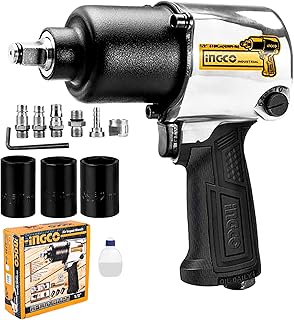
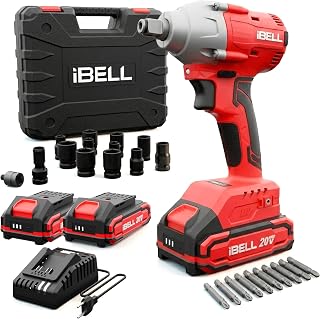
Impact wrenches are available in corded electric, cordless battery-powered and pneumatic versions. Cordless models are particularly convenient for automotive work because they do not require an electrical cable or air compressor. Pneumatic impact wrenches remain useful in workshops where a suitable compressed-air system is already available.
The drive size is another important characteristic. Common sizes include 1/4-inch hex systems on lighter impact drivers, followed by square-drive impact wrenches using sizes such as 3/8 inch, 1/2 inch, 3/4 inch and 1 inch. The appropriate drive size should match the type and size of sockets and fasteners you expect to use.
An impact wrench is primarily designed for nuts and bolts and normally uses a square drive for impact-rated sockets. It is the more appropriate choice when the main task involves automotive fasteners, wheel nuts, mechanical assemblies or larger bolts.
An impact driver generally uses a hexagonal bit holder and is designed primarily for screws and smaller fasteners. It can provide substantial rotational force in a compact package, but it is not a direct replacement for a dedicated impact wrench when working with automotive wheel nuts or larger nuts and bolts.
A drill driver is designed around drilling and controlled screwdriving. Its adjustable clutch and continuous rotation make it useful for many general-purpose jobs, but it does not provide the same impact mechanism or socket-oriented design as a dedicated impact wrench.
For a homeowner who only occasionally drills holes and drives screws, an impact wrench may be unnecessary. For someone regularly working on cars, motorcycles, agricultural equipment or machinery, a dedicated impact wrench can be much more practical.
Torque is one of the most important specifications, but it should never be considered in isolation. Manufacturers may publish different torque measurements, including fastening torque, tightening torque, breakaway torque or nut-busting torque. These figures are produced under particular testing conditions and should not automatically be interpreted as the torque available in every real-world situation.
A tool advertising extremely high breakaway torque may be excellent for removing stubborn fasteners, but that does not mean it should be used to tighten every fastener at its maximum setting. Many mechanical fasteners have specific torque requirements, and final tightening may need to be performed with an appropriate torque wrench.
Revolutions per minute indicate how quickly the output rotates, while impacts per minute describe the frequency of hammer impacts. Higher numbers can help with speed, but maximum figures are not necessarily better for every task.
A variable-speed trigger and multiple operating modes can be more useful than simply choosing the tool with the highest advertised RPM. Controlled operation is especially valuable when working with smaller fasteners or components that could be damaged by excessive force.
The square-drive size determines which sockets can be used. A 1/2-inch drive is a common choice for general automotive work because it offers a useful balance between accessibility and the ability to handle relatively substantial fasteners.
A 3/8-inch drive can make more sense for lighter mechanical applications where compactness is important. Larger 3/4-inch or 1-inch drive tools are generally aimed at substantially heavier fastening work and can be unnecessarily large for routine passenger-vehicle maintenance.
Cordless impact wrenches are sold across several battery-voltage platforms. Voltage alone does not determine the performance of a tool. Motor design, electronic control, battery capacity, battery chemistry, gearing and overall engineering all influence practical performance.
Instead of choosing a cordless model solely by voltage, compare the complete tool ecosystem. If you already own compatible batteries from a reputable power-tool platform, buying a bare-tool version may sometimes make more sense than purchasing a second charger and another battery system.
Battery capacity is commonly expressed in ampere-hours. A higher-capacity battery can generally provide more stored energy, although actual runtime depends on workload, battery condition, tool efficiency and operating conditions.
Larger batteries can also add weight. For occasional wheel changes, a compact battery may provide a better ergonomic balance than the largest available pack. For intensive workshop use, additional capacity can reduce interruptions.
Brushless motors are common in higher-end cordless power tools. Their design eliminates conventional motor brushes and can support efficient operation, reduced maintenance requirements and sophisticated electronic control.
A brushless motor does not automatically make one impact wrench better than every brushed alternative. Consider the entire tool, including torque control, thermal management, battery ecosystem, ergonomics, warranty terms and availability of replacement batteries and accessories.
Weight matters more than many buyers initially expect. An impact wrench is often used in awkward positions, under vehicles or around machinery where the user's wrist and forearm may become fatigued.
A physically larger model may deliver more capability but can be inconvenient in confined engine bays. A compact model may sacrifice some peak performance while being considerably easier to position around suspension components, motorcycle parts and other restricted areas.
Multiple electronic modes can make an impact wrench more versatile. Lower settings can help prevent unnecessary over-tightening, while higher settings can be useful for loosening stubborn fasteners.
Look for controls that are easy to operate without repeatedly removing gloves or changing hand position. Some tools provide selectable modes through a physical switch, while others use electronic controls or companion systems depending on the platform.
One of the most important buying considerations is not maximum power but control. A powerful impact wrench can remove a stubborn nut quickly, but unrestricted use at maximum output can damage threads, studs, nuts, bolts or mating components.
For wheel installation and other safety-critical assemblies, the impact wrench should generally be treated as a removal and preliminary-fastening tool unless the manufacturer and vehicle or equipment requirements specifically permit controlled torque use. Final tightening should follow the fastener or vehicle manufacturer's specified torque procedure, often using a calibrated torque wrench.
This distinction is particularly important for users who purchase a high-torque cordless impact wrench because of impressive specifications. More torque is useful when a fastener is difficult to remove; it is not a substitute for accurate torque measurement when a specific final tightening value is required.
Pneumatic impact wrenches remain relevant for professional workshops, tyre shops and industrial environments that already have a suitably sized compressor, air receiver, hoses and fittings. Their suitability depends on the entire compressed-air installation rather than the wrench alone.
A pneumatic tool can be a poor purchase for a home user who does not already have a compressor capable of supplying the required air volume and pressure. In that situation, the additional equipment can make the complete setup less convenient and potentially more expensive than a suitable cordless tool.
When comparing pneumatic models, consider required air pressure, air consumption, compressor capacity, hose diameter, couplings and duty cycle rather than looking only at the wrench's torque rating.
Corded impact wrenches can be useful where continuous mains-powered operation is more important than portability. They avoid battery charging and battery replacement, but the power cable restricts movement and requires access to a suitable electrical supply.
For fixed workshop tasks, a corded model can be practical. For roadside work, outdoor vehicle repairs or jobs where the vehicle is far from a mains outlet, cordless equipment is usually more convenient.
For passenger cars, a 1/2-inch square-drive cordless impact wrench is often the most versatile category to investigate. The ideal specification depends on the vehicle and intended work rather than on a universal torque number.
For routine automotive use, consider:
Wheel nuts are only one potential use. An impact wrench can also assist with suspension components, brackets, underbody fasteners and other mechanical tasks, provided the correct sockets, procedures and torque specifications are followed.
Motorcycle maintenance often benefits from a compact tool because access around the engine, frame, wheels and suspension can be restricted. A very high-powered industrial impact wrench may be unnecessarily bulky for many motorcycle applications.
Buyers should pay particular attention to controllability. Small fasteners can be damaged by excessive impact force, so adjustable modes and careful technique are valuable. Always follow the motorcycle manufacturer's service specifications for critical fasteners.
A homeowner does not necessarily need a professional-grade high-torque impact wrench. If the tool will be used only a few times each year, a compact and reasonably powered model may provide a better balance of cost, weight and convenience.
Consider the jobs you realistically expect to perform. If the tool will primarily be used for occasional vehicle maintenance, portability and control may matter more than maximum torque. If it will also be used on agricultural equipment, heavy machinery or large structural fasteners, a higher-capacity tool may be justified.
Professional users should evaluate the tool as part of a working system rather than as an isolated purchase. Downtime, battery availability, serviceability, ergonomics and compatibility with existing tools can have a greater practical impact than a small difference in headline specifications.
A professional comparison should include:
Brand reputation can be useful when evaluating power tools, but it should not replace model-level research. Different manufacturers offer tools aimed at different users, and specifications can vary substantially within the same brand.
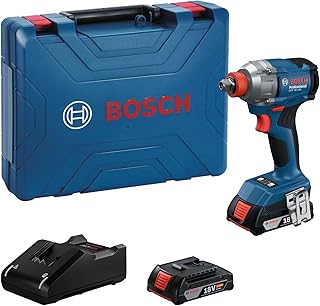
Bosch has a broad power-tool portfolio and is a familiar name among DIY users and professionals. When considering a Bosch impact wrench, compare the exact model, battery platform, drive size, torque specifications and included accessories rather than relying on the brand name alone.
Makita is widely associated with cordless professional power tools. Buyers considering a Makita impact wrench should pay attention to the battery ecosystem, tool size, electronic control features and compatibility with batteries they already own.
DEWALT offers cordless tools across multiple professional applications. Its impact-wrench range includes different sizes and performance classes, making exact model identification especially important when comparing specifications.
Milwaukee is another established power-tool brand with a broad cordless ecosystem. Its impact wrenches span compact and high-output applications, so buyers should compare the particular model's drive size, battery platform, control features and intended workload.
Stanley is a recognised tool brand with products covering professional and general-purpose applications. As with any brand, evaluate the individual impact wrench specification and the suitability of its battery or power system for your intended use.
Ryobi's cordless ecosystem can be attractive to DIY users who want multiple tools sharing a common battery platform. Check the exact Indian-market model and battery configuration before making a purchase.
Value-focused manufacturers can offer useful specifications at competitive positioning, but buyers should pay closer attention to local service arrangements, battery availability, spare parts, charger compatibility and long-term support. A lower initial purchase price is less attractive if replacement batteries or service become difficult to obtain.
When two models appear similar, compare them in a consistent order instead of focusing on one headline specification.
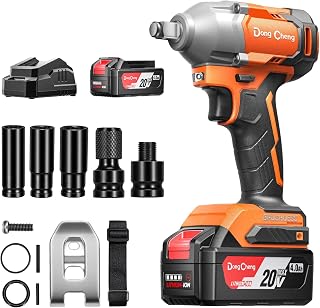
Cordless power tools are often sold in more than one configuration. A bare-tool package may contain the impact wrench without a battery and charger. A kit may include one or more batteries, a charger and a carrying case.
The cheaper-looking option is not necessarily the cheaper complete solution. If you do not already own compatible batteries, calculate the cost of obtaining the battery and charger required for normal use.
Conversely, users already invested in a compatible battery ecosystem may prefer a bare tool. This can avoid duplicate chargers and reduce the number of battery platforms maintained in the workshop.
An impact wrench should be paired with sockets designed for impact-tool use. Conventional chrome hand-tool sockets are not automatically appropriate for repeated impact-wrench operation. Impact sockets are engineered for the shock loading associated with impact mechanisms.
Socket drive size must match the wrench. A 1/2-inch drive wrench requires compatible 1/2-inch drive sockets, while the socket's individual size must match the fastener.
For automotive work, a useful socket selection can include commonly encountered metric sizes, but the exact sizes needed depend on the vehicle and task. Avoid purchasing a large socket set simply because it contains more pieces; focus on quality, compatibility and the sizes you actually use.
Metric fasteners are common across modern vehicles and machinery, so an impact-wrench setup intended for use in India will generally benefit from a suitable metric impact-socket collection. Nevertheless, the correct socket size should always be confirmed rather than guessed.
A socket that is slightly too large can round the corners of a fastener. A damaged fastener can turn a simple repair into a much more difficult job, especially when the fastener is located in a confined area.
Peak torque can be useful for comparison, but maximum advertised torque should not be the sole purchasing criterion. A compact tool with good control may be more useful for everyday work than a heavier model with substantially more peak output.
A cordless tool is only as practical as its battery system. Check the cost and availability of compatible batteries and chargers before committing to a platform.
The names are similar, but the tools are designed around different accessories and applications. Confirm whether the product uses a square-drive socket interface or a hex-bit holder.
Peak performance is less useful if the tool becomes uncomfortable during extended work. Compare the complete operating weight rather than considering the bare tool alone.
Use sockets and accessories appropriate for impact tools. The accessory should be compatible with the drive size and intended application.
An impact wrench is designed primarily for rapid powered fastening and loosening. It should not automatically be treated as a precision torque-measuring instrument.
Before selecting a cordless ecosystem, investigate whether replacement batteries, chargers and other compatible tools can realistically be obtained when needed in India.
Read the manufacturer's instructions before operating the tool. Wear appropriate eye protection and use suitable work clothing and footwear for the environment. Keep hands, loose clothing and cables away from moving components.
Use the correct socket and ensure it is fully seated on the fastener. Avoid using damaged sockets, adapters or extensions that are not appropriate for impact applications. Inspect the tool and battery before use and stop operating it if there are signs of damage, overheating or abnormal behaviour.
When working on a vehicle, use appropriate lifting equipment and support the vehicle correctly. An impact wrench does not make an improperly supported vehicle safe to work underneath.
Good maintenance can help preserve tool performance and reduce avoidable problems. Keep ventilation openings clear and remove accumulated dust and debris according to the manufacturer's cleaning instructions.
Inspect the square drive, retaining mechanism, trigger, housing and battery connection regularly. Do not continue using a tool with damaged components simply because it still operates.
For cordless models, store batteries according to the battery manufacturer's instructions. Avoid exposing battery packs to inappropriate temperatures, moisture, impact or other conditions that could damage the cells or protective electronics.
Pneumatic models require maintenance appropriate to their air system and manufacturer's recommendations. Moisture, contamination and inadequate air preparation can affect pneumatic-tool performance.
Battery-powered tools require more consideration than corded tools because the battery is a consumable component of the overall system. Long-term ownership should therefore include the availability and cost of replacement packs.
A buyer choosing between two otherwise similar cordless impact wrenches should consider not only today's kit contents but also the likely need for additional batteries in the future. This is particularly relevant for professional users who may cycle multiple battery packs throughout the working day.
Brushless technology is generally associated with newer and higher-end cordless tools. Because the motor does not use traditional carbon brushes, brushless systems can offer advantages in efficiency, electronic control and maintenance.
However, buyers should not assume that the presence of a brushless motor automatically makes a tool suitable for every application. The complete specification remains important. A properly matched brushed model can still be adequate for occasional light-duty work, while a frequent professional user may have stronger reasons to choose a brushless platform.
Compact impact wrenches are easier to carry and can access restricted areas. They are often attractive for passenger vehicles, motorcycles and general maintenance where extreme torque is not routinely required.
High-torque models are designed for demanding fastening and loosening work. They can be valuable when dealing with large fasteners, heavy machinery or stubborn assemblies, but increased capability can come with additional size and weight.
The best choice is therefore the smallest and lightest tool that comfortably meets the requirements of the work rather than simply the most powerful model available.
Wheel removal is one of the most familiar applications for an impact wrench. For this use, buyers should prioritize adequate removal capability, controllability, socket compatibility and convenient handling.
During installation, avoid relying on the impact wrench alone to establish the final torque unless the specific tool, mode and procedure are designed and specified for that purpose. Vehicle manufacturers provide torque specifications for wheel fasteners, and those specifications should be followed.
Agricultural machinery and heavy equipment can involve substantially larger fasteners and more difficult working conditions than passenger vehicles. In these environments, a higher-output wrench, larger drive size and durable construction may become more important.
Before purchasing, identify the largest fasteners you actually need to remove and the physical access available around them. A large wrench can provide greater capability but may be difficult to position around machinery components.
Indian users may encounter a wide range of working environments, from home garages and urban workshops to dusty outdoor locations and agricultural settings. The tool should therefore be selected according to its actual operating environment.
Customer reviews can provide useful information, but buyers should distinguish between comments about the product itself and comments about delivery, packaging or seller experience. A review stating that a parcel arrived late does not necessarily tell you whether the impact wrench performs well.
Look for repeated observations concerning battery runtime, ergonomics, socket retention, heat during extended use, trigger control, charging behaviour and long-term durability. Give greater weight to detailed reviews that describe the application and conditions rather than short comments based only on first impressions.
Also check whether reviews refer to the exact model and configuration you intend to purchase. Similar-looking products can have different generations, batteries, drive sizes and specifications.
Rather than choosing the first product with the highest rating, divide your shortlist according to use case. A homeowner who performs occasional maintenance has different priorities from a mechanic using the tool every working day.
Look for a compact cordless impact wrench with sensible torque, good control and an affordable battery ecosystem. Avoid paying for industrial-level performance that you are unlikely to use.
A versatile 1/2-inch cordless model can be a practical category to consider. Look for variable speed, multiple modes, suitable battery capacity and a manageable form factor.
Professional users should place greater emphasis on durability, thermal management, battery availability, service support, ergonomics and consistent performance under repeated use.
When working with large fasteners, focus on the appropriate drive size, verified torque capability, construction quality and the availability of suitable impact sockets and accessories.
An impact wrench is a specialized tool. If your work primarily involves drilling holes, driving screws or assembling furniture, a drill driver or impact driver may be more appropriate.
Likewise, if you need precise final torque for critical fasteners, an impact wrench should generally be paired with an appropriate torque-measuring tool rather than being used as the sole means of achieving a specified torque value.
The total ownership cost of a cordless impact wrench includes more than the initial price. Consider batteries, chargers, impact sockets, replacement accessories, maintenance and the expected service life of the platform.
A slightly more expensive tool may provide better value if it fits an existing battery ecosystem and avoids duplicate equipment. On the other hand, a high-priced professional model may be unnecessary for someone who uses an impact wrench only a handful of times each year.
When comparing current offers in India, check the exact kit contents and current seller information rather than assuming that every listing for a particular model contains the same accessories.
There is no single best impact wrench for every Indian buyer. The appropriate choice depends on the intended application, torque requirement, drive size, power source, budget, battery ecosystem and frequency of use. A compact cordless model can be preferable for occasional automotive work, while a higher-output model may be more suitable for demanding workshop applications.
Neither technology is universally better. Cordless tools offer portability and eliminate the need for an air compressor, while pneumatic tools can be highly practical in workshops that already have suitable compressed-air infrastructure. Compare the complete operating setup rather than the wrench alone.
The required capability depends on the vehicle and the fasteners being serviced. Instead of selecting a tool based solely on one advertised torque number, consider the manufacturer's torque definitions, the required removal capability, the drive size and the need for controlled fastening.
No. Higher torque can be valuable for stubborn fasteners, but excessive output can make controlled fastening more difficult and may damage components when used incorrectly. A tool with multiple modes and suitable control can be more useful than one selected solely for maximum output.
Yes, impact wrenches are commonly designed for loosening and installing nuts and bolts, including many automotive wheel fasteners. The correct impact socket should be used, and final wheel-fastener tightening should follow the vehicle manufacturer's specified procedure.
Impact-rated sockets are the appropriate choice for impact-wrench operation. Conventional hand-tool sockets are not automatically designed for the repeated shock loading produced by an impact mechanism.
A 1/2-inch square drive is a versatile category for many automotive applications, while smaller or larger drives can be more appropriate for different fastener sizes and working environments. Choose the drive size based on your actual socket and fastener requirements.
For frequent cordless use, brushless technology can offer useful advantages in efficiency, electronic control and maintenance characteristics. For occasional DIY use, the value depends on the price difference and the features provided by the complete tool.
If you already own compatible batteries and a charger, a bare tool can be convenient. If you are entering a new battery platform, a complete kit may be more practical because it provides the essential battery and charging equipment. Always compare the complete cost of ownership.
Runtime varies significantly according to battery capacity, tool efficiency, fastener size, material, operating mode and frequency of use. Manufacturer specifications and real-world feedback for the exact model can provide a more useful indication than a generic runtime expectation.
Generally, no. An impact wrench is primarily a powered fastening and loosening tool. When a fastener requires a specified final torque, use the appropriate torque-control procedure and equipment recommended by the vehicle or equipment manufacturer.
Compact dimensions, manageable weight, variable speed and controlled operating modes can be particularly useful. Motorcycle fasteners vary considerably, so the tool should be used carefully and according to the manufacturer's service specifications.
Not necessarily. Price often reflects factors such as motor technology, battery ecosystem, construction, electronics, accessories and professional-duty capability. The best value comes from matching those characteristics to your actual workload.
Inspect the tool regularly and follow the maintenance schedule and cleaning instructions provided by its manufacturer. More frequent inspection is sensible when a tool is exposed to heavy dust, moisture, vibration or intensive professional use.
Impact-wrench technology continues to span a wide range of cordless, corded and pneumatic products, so buyers should resist selecting a model from a headline specification alone. For an informed purchase in India, compare the exact model number, torque measurement method, drive size, battery configuration, dimensions, operating modes, accessories and long-term support.
For most buyers, the strongest shortlist is not necessarily the one containing the ten most powerful tools. It is the shortlist containing tools that are appropriate for distinct use cases, with enough performance for the intended work and practical ownership characteristics for the Indian market.
Before placing an order, verify the current product specification, kit contents, seller information, warranty terms and return conditions. Product availability, configurations and pricing can change, so information shown on a retailer listing should be checked at the time of purchase.
The best impact wrench for you is the one that combines adequate torque, appropriate drive size, useful control, manageable weight and a practical power system for your workload. For occasional DIY and vehicle maintenance, portability and battery convenience may be more important than extreme output. For professional workshops and heavy mechanical applications, durability, sustained performance, battery availability or compressed-air infrastructure can become much more important.
Use the specifications and buying criteria in this guide to compare the shortlisted products on their actual capabilities rather than choosing solely by ratings, price or maximum torque. A careful comparison of the complete tool, accessories and long-term ownership requirements can help you select an impact wrench that remains useful well beyond the initial purchase.