

♥ Wishlist
Compare 55 verified Electric Screwdrivers for Fast and Precise Screwdriving products in India. Reviews, ratings, pros, cons and buying advice updated for October 2026.


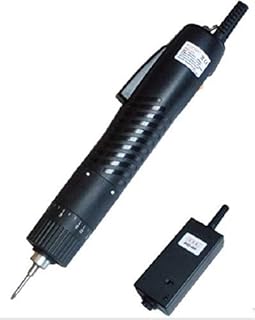


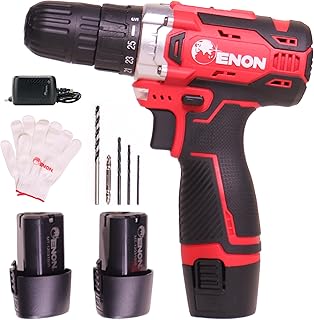


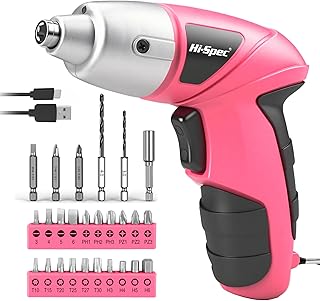


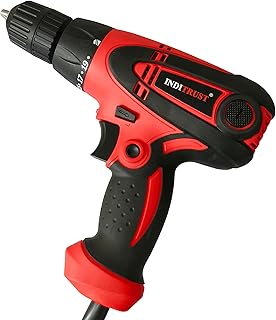


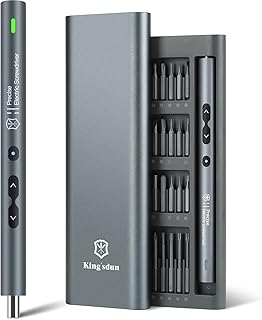


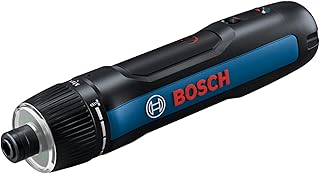

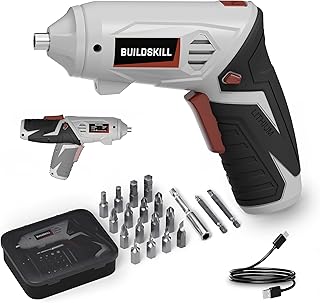
Choosing an electric screwdriver is less about finding the most powerful motor and more about matching the tool to the type of work you actually perform. A compact cordless screwdriver can be ideal for assembling furniture, tightening cabinet hardware and handling routine household jobs, while a higher-torque drill-driver is more appropriate when screws must be driven repeatedly into wood or other tougher materials.
Before buying, compare torque, speed control, battery system, chuck or bit-holder design, ergonomics, charging method, included accessories and the manufacturer's stated specifications. Customer ratings can provide useful information about ownership, but specifications should be checked separately because a large accessory bundle does not necessarily mean that the tool itself is better.
Electric screwdrivers and cordless drills overlap considerably, but they are designed with different priorities. A dedicated electric screwdriver generally focuses on controlled screwdriving, compact dimensions and ease of handling. A cordless drill-driver usually offers a wider operating range and can handle drilling as well as screwdriving.
If your primary requirement is inserting and removing ordinary screws, buying the most powerful tool available may add unnecessary weight and cost. For mixed drilling and fastening work, however, a drill-driver can provide greater versatility.
Torque determines how much rotational force the tool can apply to a screw. Higher torque can be useful for longer or larger fasteners, but maximum torque alone does not determine how controllable or suitable a screwdriver will be for everyday work.
For furniture and light household tasks, controllability can be more important than maximum power. A clutch or adjustable torque setting helps prevent over-tightening and reduces the risk of damaging screw heads, fittings or softer materials.
Variable speed is valuable because different jobs require different levels of control. Lower speeds are useful when starting a screw, positioning a fastener or working with delicate fittings. Higher speeds can make repetitive fastening faster when the application permits it.
A good buying decision should therefore consider whether the tool provides practical speed control rather than simply looking for the highest advertised rotational speed.
A reliable forward-and-reverse switch is essential for removing screws as well as installing them. The control should be easy to operate without accidentally changing direction while holding the tool.
Different electric screwdrivers use different systems for holding bits. A magnetic bit holder can make quick bit changes convenient, while a chuck provides greater flexibility for compatible accessories.
Check the specification before purchasing replacement bits or accessories. A tool that includes many bits is only useful if those bits match the fastening jobs you expect to perform.
Battery-powered screwdrivers provide freedom from a power cable, making them convenient around furniture, cupboards and other locations where access to a socket may be inconvenient.
Battery capacity should be considered alongside the tool's size and intended workload. A larger battery may provide longer operating time but can also increase overall weight. For short household tasks, a compact battery can be preferable. For extended professional use, battery runtime and the availability of additional compatible batteries become more important.
Charging arrangements vary between models. Some compact screwdrivers use integrated rechargeable batteries, while other cordless tools use removable battery packs.
An electric screwdriver can have strong specifications and still be uncomfortable to use. Weight distribution, grip shape, trigger placement and the position of the battery can significantly affect handling.
For overhead work or furniture assembly, a lighter tool can reduce hand and wrist fatigue. A balanced design is also helpful when driving screws into awkward locations because the user can maintain better control over the bit.
Consider whether the screwdriver can be comfortably held with one hand, whether the controls are accessible and whether the grip provides enough stability without requiring excessive force.
A built-in LED can improve visibility when working inside cabinets, underneath furniture or in other poorly illuminated areas. It is a useful convenience feature, although the presence of an LED should not outweigh fundamental considerations such as torque control, battery performance and build quality.
Buyers should also consider the position of the light. A light that illuminates the area close to the bit is generally more useful than one positioned where the user's hand or the tool body can easily create shadows.
The performance of a screwdriver depends partly on the quality and suitability of the bit being used. Even a capable motor cannot compensate for a poorly fitting bit.
Common household fastening work may involve Phillips, slotted, Torx and hex-related bits, among others. The right selection depends on the fasteners used in your furniture, fixtures, appliances and projects.
A compact electric screwdriver is often the most practical option for occasional household use. Its smaller body can make it easier to operate inside cupboards and around furniture panels.
A larger cordless drill-driver generally makes more sense when you need higher torque, longer operating time, drilling capability or compatibility with a broader range of accessories.
Motor design is another specification worth understanding when comparing cordless tools. Traditional brushed motors use physical brushes that make electrical contact with the rotating motor assembly. Brushless motors use electronic control instead.
Brushless technology is commonly associated with improved motor efficiency, reduced mechanical wear and potentially better battery utilisation, although the overall value depends on the complete tool design and intended workload.
A brushless model is not automatically the best choice for every household. For occasional light-duty screwdriving, a simpler tool may be perfectly adequate. For frequent use, the additional performance characteristics of a brushless platform can become more relevant.
For buyers who already own cordless tools, battery compatibility can be an important purchasing criterion. Tool ecosystems from brands such as Bosch, DEWALT, Makita, BLACK+DECKER and Stanley can include multiple compatible tools, although compatibility must be verified for the exact product and battery platform.
Do not assume that batteries from different brands or even different battery families within the same brand are interchangeable. Check the manufacturer's stated compatibility before purchasing a bare tool or additional battery.
A clutch allows the user to select a lower or higher fastening threshold rather than applying maximum motor force continuously. This is particularly useful when working with screws in materials that can be damaged by excessive force.
For example, driving a screw too aggressively into particleboard, MDF or softer wood can strip the material or cause the screw to sink too deeply. Excessive force can also damage the screw head.
For precision household work, a screwdriver with practical clutch adjustment can therefore be more useful than a model that simply advertises a higher maximum torque figure.
External plastic does not automatically indicate poor quality, because modern power tools use engineered polymers for weight reduction and insulation. Instead of judging durability from appearance alone, examine the overall construction and manufacturer's specifications.
For demanding work, established tool ranges from Bosch Professional, Makita, DEWALT and other recognised power-tool manufacturers may deserve closer comparison. For occasional household use, compact consumer-oriented ranges can provide a more appropriate balance of convenience and capability.
Customer reviews are useful, but they should not be treated as a substitute for technical specifications. A review saying that a screwdriver is “powerful” does not establish its measured torque, while a complaint about battery life may reflect a demanding use case rather than a defect.
When evaluating reviews, look for repeated observations from customers who use the product in circumstances similar to your own.
It is also sensible to separate comments about packaging, delivery and seller service from observations about the actual tool. For an independent product comparison, the latter are usually more useful.
More torque is not automatically better. Excessive power can make a tool harder to control for small screws and delicate materials.
A tool that feels manageable for a few minutes may become tiring during a long assembly session. Compare the complete working weight, including the battery where applicable.
Accessory quantity can make a package look attractive, but the useful question is whether the included bits match your actual fastening requirements.
If you expect to buy more cordless tools later, choosing a compatible battery platform can reduce duplication. Conversely, an occasional user may not need a large ecosystem at all.
Impact drivers are designed for applications requiring substantial fastening force. For simple household assembly, their additional capability may not be necessary.
Not every screwdriver is appropriate for every material or application. Always follow the manufacturer's operating instructions and select accessories suitable for the material and fastener.
Furniture assembly typically benefits from control rather than extreme power. Useful characteristics include a compact body, low-speed control, adjustable torque, forward and reverse operation, a comfortable grip and an integrated light.
A clutch is especially useful because furniture fasteners can be damaged by over-tightening. If the furniture manufacturer specifies a particular fastening procedure, follow those instructions rather than relying solely on the power tool's settings.
For general household maintenance, versatility becomes more important. Look for a model that can handle common screw types, provides adjustable speed and torque, and offers a practical battery solution.
If your repair work also involves drilling pilot holes, a cordless drill-driver may provide better value than buying a dedicated screwdriver and a separate drill.
DIY users should think beyond individual projects and consider how frequently the tool will be used. A tool that supports a broader accessory range and belongs to a compatible battery platform can become more valuable over time.
Read the manufacturer's instructions before operating any electric screwdriver. Use the correct bit, maintain a stable grip and keep the bit aligned with the screw head.
For electrical, structural or other specialist work, use appropriate professional guidance rather than treating a consumer electric screwdriver as a substitute for specialised equipment.
Basic maintenance can help preserve tool performance. Keep the exterior clean, prevent dust and debris from accumulating around moving parts, and inspect the bit holder, chuck and battery contacts periodically.
Worn bits should be replaced because damaged tips can slip and damage screw heads. Batteries should be charged, stored and transported according to the manufacturer's instructions rather than using a generic storage routine for every battery chemistry.
Keep the screwdriver and accessories in a dry, reasonably protected environment. Avoid exposing the tool or battery to conditions outside the temperature and storage limits specified by the manufacturer.
Brand comparison should focus on the specific tool rather than assuming that every product from a particular manufacturer has identical characteristics.
These brands should be evaluated by model-specific specifications, included equipment and intended use rather than brand reputation alone.
The lowest purchase price is not necessarily the lowest long-term cost. Compare what is included and what you may need to buy separately.
A bare cordless tool can appear inexpensive when the battery and charger are sold separately. Conversely, an oversized accessory kit may cost more without providing meaningful value for your particular use.
A dedicated electric screwdriver is a sensible choice for people whose main requirement is controlled fastening. It can be particularly convenient for furniture assembly, household fittings, cabinets and routine screwdriving tasks.
It may be less suitable if your projects regularly require drilling holes, working with large fasteners or performing demanding construction work. In those situations, a drill-driver or impact driver may provide more appropriate capability.
A cordless drill-driver is generally the more versatile choice for users who want one tool for drilling and screwdriving. It can make sense for DIY enthusiasts and homeowners who expect their tool to handle a wider range of projects.
The trade-off is typically greater size and weight compared with a compact screwdriver. If most of your work consists of small screws, the additional capability may not be necessary.
An impact driver is worth considering when fastening requirements regularly exceed what a compact screwdriver can comfortably handle. Its operating characteristics are intended for demanding fastening applications and can be particularly useful for longer or larger fasteners.
For simple furniture assembly, however, an impact driver can be unnecessary. Its greater fastening capability also makes careful control and adherence to the fastener and material manufacturer's recommendations important.
There is no single best electric screwdriver for every buyer. The right choice depends on the intended workload, required torque, battery preference, ergonomics, accessory compatibility and budget. Compare the exact model specifications and recent customer feedback before purchasing.
Yes. A suitable electric screwdriver can make repetitive fastening considerably more convenient for tasks such as assembling furniture, installing hardware and handling routine household repairs. Choose a model with enough torque and control for the materials and fasteners involved.
The appropriate torque depends on the application. Light household tasks generally benefit from controllable torque rather than simply the highest available output. Larger fasteners and tougher materials may require a more powerful drill-driver or impact-oriented tool.
For many household applications, cordless operation is convenient because there is no power cable restricting movement. A corded tool can still be appropriate where continuous power is more important than portability. Compare the intended workload and operating environment before choosing.
Brushless motors can offer advantages in efficiency, mechanical wear and overall motor design, particularly for frequent use. For occasional light-duty work, however, the value of brushless technology should be considered alongside the complete price, ergonomics and features of the tool.
Some electric screwdrivers can perform limited drilling-related tasks when compatible accessories and operating conditions allow it, but a dedicated drill-driver is normally the more appropriate choice when drilling is a regular requirement. Check the manufacturer's stated capabilities before using a screwdriver for drilling.
No. The bit must be compatible with the tool's holder or chuck and appropriate for the fastener. Always check the manufacturer's compatibility information and use the correct bit type and size.
Neither is universally more important. Torque affects fastening capability, while battery capacity affects potential operating time. A user assembling furniture occasionally may value compactness and control, while someone completing extended DIY projects may place greater emphasis on battery runtime and platform compatibility.
Battery runtime varies significantly according to battery capacity, motor efficiency, load, screw size, material and frequency of operation. Manufacturer specifications can provide a useful reference, but actual runtime depends on how the tool is used.
Only if the accessories are relevant to your work. A smaller collection of suitable, durable bits can be more useful than a large assortment containing profiles you rarely use.
That depends on the workload and the specific model. Professionals should consider durability, duty cycle, battery ecosystem, ergonomics, serviceability and replacement accessories in addition to basic torque and speed specifications.
Compare the details that are often overlooked: weight, balance, clutch behaviour, speed control, battery arrangement, charging convenience, bit compatibility, included accessories and the long-term usefulness of the manufacturer's battery platform.
The best electric screwdriver is the one that provides the right combination of control, power, comfort and convenience for your actual workload. Do not select a model solely because it has the highest torque, the largest accessory kit or the most impressive-looking specification sheet.
For occasional household use, compact dimensions and easy handling can be more valuable than heavy-duty performance. For frequent DIY, a versatile cordless drill-driver and a well-supported battery platform may offer better long-term value. For demanding fastening, compare specialist high-torque options instead of expecting a small screwdriver to perform every job.
Before purchasing in India, verify the exact model number, manufacturer's specifications, included battery and charger, accessory compatibility and current customer feedback. Compare the complete package across trusted retailers and check the latest price and availability at the time of purchase, because these details can change.