

♥ Wishlist
Compare 55 verified Angle Grinders for Cutting, Grinding & Polishing products in India. Reviews, ratings, pros, cons and buying advice updated for October 2026.


![KHADIJA AG-601R 4-Inch/100MM 850-Watt Angle Grinder Red (Blade not included) (AG-601R [Front Switch])](https://m.media-amazon.com/images/I/51DXaMRx4ML._AC_UL320_.jpg)
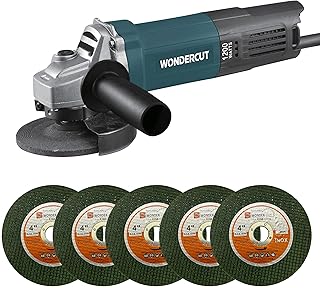


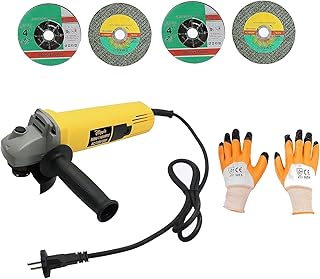


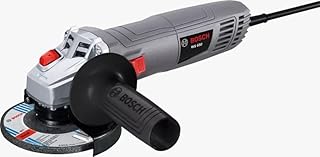


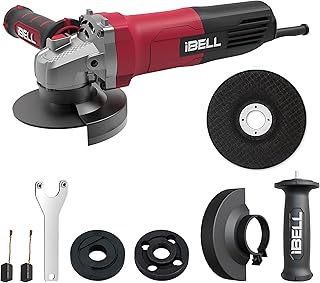


Choosing the right angle grinder in India involves more than comparing motor wattage or looking at the star rating on a shopping page. An angle grinder can be used for cutting metal, grinding welds, removing rust and paint, sharpening and shaping suitable materials, polishing with the correct attachment, and carrying out masonry or tile-related work when the tool and accessory are appropriate for the application.
For this reason, the best angle grinder is not necessarily the most powerful or most expensive model. The better choice is the grinder whose power, disc size, speed, handling, safety features, accessories, durability and intended workload match the job. A compact grinder may be preferable for occasional household repairs, while a heavier-duty model can make more sense for regular fabrication, workshop or construction work.
Before comparing individual models, identify how you expect to use the tool. A grinder intended primarily for occasional cutting is subject to different demands from one used for prolonged grinding or fabrication work.
Disc diameter is one of the first specifications to compare because it affects the type of work the grinder can perform. Common consumer and professional categories include compact grinders designed around smaller discs and larger machines intended for more demanding applications.
A smaller grinder is generally easier to maneuver in confined spaces and can be less tiring during detailed work. A larger grinder can accommodate larger discs and may be better suited to heavier cutting and grinding tasks, but increased size and weight can make precise control more difficult.
Do not assume that a larger disc automatically means a better grinder. The correct size depends on the job, material, depth of cut required, available workspace and the manufacturer's specifications.
Always match the accessory to the grinder. Check disc diameter, bore size, maximum permitted RPM and the intended material or application. A cutting disc, grinding wheel, flap disc, wire brush and polishing accessory are not interchangeable simply because they physically fit the spindle.
The maximum speed marked on an accessory should be compatible with the grinder's operating speed. Never use an accessory outside its rated application or speed range.
Motor wattage is useful when comparing angle grinders, but it should not be treated as a complete measure of performance. Two grinders with similar nominal wattage can feel different in real use because of motor design, gearing, cooling, electronics, weight, speed characteristics and overall construction.
Higher power can be beneficial when the tool regularly encounters resistance during heavy grinding or cutting. However, excessive size and weight can reduce handling comfort for jobs that require frequent repositioning or overhead work.
For commercial investigation, compare wattage alongside the manufacturer's stated speed, disc capacity, weight, control features, thermal protection, construction and intended duty rather than selecting a model solely because it has the highest number.
Rotational speed is another important specification. Different accessories and materials can require different operating conditions, and the permissible speed of the accessory must always be respected.
A fixed-speed grinder can be perfectly suitable for common cutting and grinding applications. A variable-speed model can provide greater flexibility for applications where lower speeds are appropriate, particularly when using compatible polishing or finishing accessories.
Variable speed should not be confused with unlimited compatibility. The accessory manufacturer's instructions remain important, and reducing the speed does not make an unsuitable accessory safe to use.
Angle grinders are high-speed power tools and deserve more attention to safety than many ordinary household appliances. A good buying decision should therefore consider safety controls as part of the product specification rather than treating them as optional extras.
Feature availability varies by model and market, so verify the manufacturer's specifications for the exact version being considered.
A grinder can have excellent specifications on paper and still be uncomfortable to use. Weight distribution, grip diameter, switch position, auxiliary-handle placement and vibration all influence control.
For short cutting jobs, raw weight may not be a major concern. During repeated grinding, however, a heavy or poorly balanced tool can become tiring. If the grinder will be used overhead, in awkward positions or for extended periods, ergonomics should receive particular attention.
Look for a design that allows a secure grip without forcing the operator's wrist into an uncomfortable position. A two-position or multi-position auxiliary handle can be useful when the manufacturer provides it.
Corded grinders remain attractive for users who need continuous access to mains electricity and do not want to manage battery charging. They can be particularly practical in workshops where a power outlet is readily available.
Cordless grinders offer freedom from a power cable and can be convenient at sites where mains access is limited. However, the overall system cost can include batteries and a charger, and operating time depends on battery capacity, workload and the specific platform.
When comparing cordless products, do not compare the bare tool price with the complete price of a corded grinder. Check whether the package includes a battery and charger and whether compatible batteries are already owned.
Traditional brushed motors use replaceable carbon brushes, while brushless motors use electronic commutation. Brushless designs can offer advantages in efficiency, heat management and maintenance requirements, although the actual benefit depends on the complete tool design and workload.
A brushless grinder is not automatically the best choice for every buyer. For occasional use, a conventional grinder may provide sufficient performance at a lower overall purchase cost. For frequent professional use, the reduced brush maintenance and characteristics of a brushless platform may make the additional investment more attractive.
Durability depends on the complete construction rather than a single material. Important areas include the gearbox housing, spindle assembly, bearings, switch mechanism, motor housing, cooling passages and protection around the motor.
Metal gearbox housings can provide useful structural strength and heat-transfer characteristics, while high-quality engineered polymers can reduce weight and provide electrical insulation. What matters is how these materials are integrated into the tool.
For frequent workshop use, examine whether replacement components, accessories and authorised service support are realistically available in India. A grinder that can be serviced appropriately may have greater long-term practical value than a superficially cheaper tool that is difficult to maintain.
Switch design affects both convenience and control. A conventional slider switch can be convenient for certain continuous operations, while a paddle-style design may offer a different method of controlling the tool.
There is no universal best switch type. Consider where the switch is positioned, whether it is easy to operate while wearing appropriate protective equipment, and whether the control arrangement suits the way the grinder will be held.
One angle grinder can support many tasks when compatible accessories are used, but the accessory determines much of the tool's application.
Accessory selection should always follow the instructions supplied with both the grinder and accessory. Never remove or defeat a protective guard merely to accommodate an accessory.
For metal cutting, the most important considerations include disc compatibility, tool control, guard positioning, motor capacity, visibility of the cutting area and the operator's ability to maintain a stable stance.
Thin cutting discs are designed differently from grinding wheels. A cutting disc should be used for cutting rather than side-loading it as a grinding wheel. Excessive pressure can increase the risk of accessory damage and reduce cutting control.
When evaluating a grinder for regular metal fabrication, also consider how easy it is to change discs, how securely the accessory mounts, how comfortable the handle position is and whether the tool's weight is appropriate for repeated work.
Surface preparation often requires a different accessory from metal cutting. Wire brushes and suitable abrasive accessories can be used for compatible cleaning tasks, but they can create significant debris and should be selected according to the material and surface.
For delicate surfaces, an aggressive grinder may remove too much material. A variable-speed model may provide additional control for certain compatible finishing applications, but the accessory's own limitations must still be followed.
Grinding masonry, concrete and similar materials can generate substantial airborne dust. This makes dust control an important consideration when selecting equipment and planning the work area.
Some professional grinders are designed to work with dust-extraction systems or compatible guards. If masonry work is part of the intended use, investigate the manufacturer's dust-management options rather than assuming that any standard angle grinder is equally suitable.
Appropriate respiratory protection, eye protection and other personal protective equipment should be selected for the actual task and material. Follow applicable workplace safety requirements where the tool is being used professionally.
Brand reputation can be useful when comparing power tools, but it should not replace model-level research. Product ranges can differ significantly even within the same manufacturer.
Brand names alone do not establish that one model is better than another. Compare the exact model number, specifications, package contents, intended application and service arrangements before purchasing.
A useful comparison should go beyond price and customer rating. Create a simple specification checklist for every model under consideration.
High wattage can be useful, but it does not tell you everything about handling, durability, speed control or suitability for the intended application.
A powerful grinder that is unnecessarily heavy for your work can become tiring. For frequent handheld use, balance and ergonomics deserve equal consideration.
Low purchase cost does not necessarily mean low total cost. Consider accessory compatibility, serviceability, replacement parts and the expected workload.
Disc diameter, bore, speed rating and application must all be compatible. Physical fit alone is not sufficient.
Cutting, grinding, brushing and polishing require different accessories. Using the wrong accessory can compromise both results and safety.
Two listings can describe apparently similar grinders while supplying different accessories. Check exactly what is included before comparing final value.
For a tool intended for regular professional use, access to appropriate servicing and replacement parts can be more important than a small difference in the initial purchase price.
Product specifications can appear confusing when shopping online. Focus on the specifications that directly relate to your application rather than trying to maximise every number.
If choosing a battery-powered grinder, investigate the complete ecosystem rather than the tool alone. A cordless platform can be particularly attractive when you already own compatible batteries from the same system.
Check whether the listing is for a bare tool or a complete kit. Battery capacity, charger availability and the number of batteries supplied can materially change the practical value of a cordless package.
For heavy or prolonged work, consider whether carrying spare batteries is practical. For occasional jobs, a single battery may be sufficient, depending on workload and battery capacity.
There is no single wattage that is best for every Indian buyer. The appropriate power level depends on disc size, material, workload and how aggressively the tool will be used.
For light household work, a compact model may provide a better balance of control and convenience. For regular fabrication or construction tasks, greater motor capacity can be beneficial. Professional users should also consider the manufacturer's intended duty and service provisions rather than relying solely on the rated wattage.
Regular care can help preserve performance and identify problems early. Maintenance requirements vary by model, so the manufacturer's instructions should take precedence.
Grinding performance is influenced by technique as well as motor power. Excessive pressure can reduce control and cause unnecessary heat. Allow the abrasive accessory to perform the work while maintaining a stable grip and suitable working angle.
For surface finishing, choose the correct abrasive grade and accessory rather than attempting to achieve every finish with a coarse grinding wheel. For cutting, maintain appropriate control and avoid twisting or side-loading a cutting disc.
Before placing an order, verify the exact model number rather than relying only on the product title. Marketplace titles can contain broad marketing terms that do not accurately communicate every specification.
Customer feedback can reveal useful information, but individual reviews should not be treated as laboratory testing. Look for recurring observations rather than relying on a single enthusiastic or negative comment.
Reviews are most useful when they discuss specific characteristics such as vibration, handling, switch operation, heat during use, accessory compatibility, packaging or long-term ownership. Be cautious of reviews that provide little information beyond a star rating.
Also distinguish between dissatisfaction with a retailer, delivery experience or packaging and an actual product-performance issue. For technical buying decisions, manufacturer specifications and consistent patterns in customer feedback provide more useful evidence than isolated comments.
The cheapest angle grinder can be appropriate when the tool will only be used occasionally for light work. However, frequent users should consider the cost of accessories, batteries where applicable, maintenance and potential downtime.
A higher-priced grinder can make sense when it provides features that genuinely matter for your workload, such as improved ergonomics, stronger construction, electronic protection, a brushless motor or compatibility with an existing professional battery platform.
Do not pay more simply for features you will never use. The best value comes from matching the tool to the actual workload.
A well-rounded angle grinder combines appropriate power with controllability, safe accessory compatibility, useful ergonomics and dependable construction. It should be powerful enough for the intended work without being unnecessarily cumbersome.
For most buyers, the ideal shortlist is created by eliminating unsuitable models first. Remove grinders that do not support the required disc size, lack necessary safety features, have unsuitable power or speed characteristics, or do not fit the intended working environment. Then compare the remaining models on handling, specifications, accessories, serviceability and total value.
When comparing the best angle grinders in India, start with the job rather than the brand or price. Identify the materials you will work on, the accessories you need, the frequency of use and whether portability matters. Then compare exact model specifications.
A sensible purchase decision should consider disc diameter, motor power, RPM, weight, ergonomics, guard design, switch arrangement, spindle compatibility, safety electronics, corded or cordless operation, package contents and after-sales service considerations.
Before purchasing, compare the current specifications from the manufacturer with the marketplace listing and check recent customer feedback for the exact model. Prices, seller availability, bundles and included accessories can change, so verify the current listing before making a final decision.
The best angle grinder depends on the intended application, workload and budget. A compact DIY grinder can be preferable for occasional household work, while a more robust professional model may be appropriate for frequent fabrication or construction use.
Choose the disc size based on the work you need to perform. Smaller grinders are generally easier to maneuver, while larger models are intended for applications requiring larger compatible discs. Always follow the manufacturer's specified accessory size.
Not necessarily. Higher power can help with demanding workloads, but weight, ergonomics, motor design, cooling, durability and control also affect suitability.
Neither is universally better. Corded models are convenient for sustained work near a suitable power supply, while cordless models provide greater mobility. Compare the complete cordless package, including batteries and charger, rather than the bare tool alone.
Bosch and Makita are established power-tool brands, but the quality and suitability of a purchase should be evaluated at the individual model level. Compare the exact specifications, intended use, safety features and service arrangements.
Yes, when the grinder and cutting accessory are specifically suitable for the material and application. Use a compatible cutting disc within its rated speed and follow the manufacturer's instructions.
Some grinders can be used with compatible polishing accessories, but the accessory's speed rating and intended application must be followed. Variable-speed capability can be useful for certain finishing tasks.
A suitable grinder can support multiple applications when the correct accessory is installed for each task. The accessory, guard arrangement and operating instructions must be appropriate for the specific job.
At minimum, use task-appropriate eye and face protection and consider hearing, respiratory and other protective equipment according to the material and working environment. Follow the grinder and accessory manufacturers' safety instructions and applicable workplace requirements.
Service intervals vary by model and workload. Follow the manufacturer's maintenance instructions. Frequent professional use generally warrants more attention to inspection and servicing than occasional household use.
Variable speed is most useful when you have a genuine need for different operating speeds and compatible accessories. If the grinder will mainly perform straightforward cutting and grinding tasks, a suitable fixed-speed model may be sufficient.
Check the exact model number, disc diameter, rated speed, power specification, weight, safety features, switch design, included accessories, battery and charger status where applicable, warranty information supplied by the manufacturer, seller details and current customer feedback.
This guide is intended to help Indian shoppers compare angle grinders using practical criteria rather than relying on a single specification, brand name or rating. Product availability, prices, seller listings, package contents and specifications can change over time. Always verify the current details for the exact model before purchasing.
Recommendations should be treated as purchase guidance rather than a substitute for the manufacturer's operating instructions. For power tools, safe operation depends on using the correct accessory, maintaining the equipment properly and following the instructions supplied with the specific grinder and accessory.