

♥ Wishlist
Compare 67 verified Dining Tables for Stylish and Comfortable Dining Spaces products in India. Reviews, ratings, pros, cons and buying advice updated for October 2026.


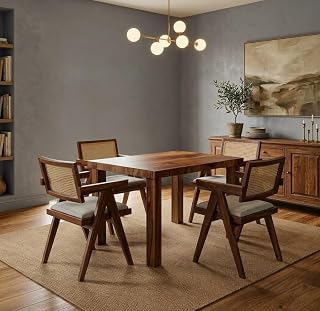


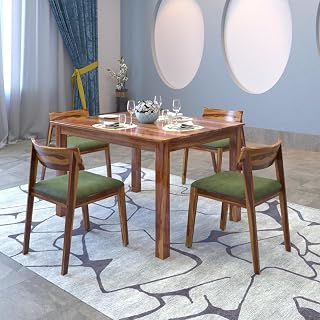


A dining table is one of the most frequently used pieces of furniture in an Indian home. It may serve as a place for everyday meals, family conversations, homework, working from home, entertaining guests and, in smaller homes, even as a multifunctional workspace. For that reason, choosing the best dining table is not simply a matter of selecting the most attractive design. The right choice should balance available floor space, seating capacity, construction quality, tabletop material, maintenance requirements, comfort, stability and overall value.
When comparing dining tables in India, start with the dimensions of the room rather than the appearance of an individual product. A table that looks compact in photographs can occupy considerably more space once chairs are positioned around it. There should be enough clearance for people to sit down, pull chairs backward and walk around the table without repeatedly bumping into furniture or walls.
This guide is designed to help shoppers compare dining tables on practical criteria. Product specifications, dimensions, materials, construction details and customer feedback should be checked carefully before purchase because configurations, finishes and availability can change.
A compact two-seater can be useful in studio apartments, small kitchens, bedrooms converted into dining areas and homes where a full dining set would consume too much floor space. Round and square designs are particularly useful when flexibility is important. Before buying, check whether the stated seating capacity refers to comfortable everyday seating or simply the maximum number of chairs that can physically fit.
A four-seater is one of the most practical configurations for a small family. Rectangular tables generally provide a familiar arrangement, while round tables can make movement easier in compact rooms. A four-seater should not be judged solely by the number of chairs advertised. Examine the usable tabletop area and the amount of legroom available beneath it.
A six-seater is appropriate for families that regularly eat together or frequently accommodate guests. These tables require more careful room planning because both the table and chairs need additional clearance. Rectangular six-seater designs are common, although extendable and oval options can provide greater flexibility.
Larger dining tables work best in spacious dining rooms and open-plan living areas. Before selecting one, measure the complete furniture footprint, including chairs pulled away from the tabletop. Large tables can become inconvenient when there is insufficient space to move around them, even when the tabletop itself fits within the room.
One of the most common purchasing mistakes is measuring only the tabletop. The practical footprint includes the chairs and the circulation area around them. A chair needs space to move backward when somebody sits down, and people need a clear path to reach the table.
Measure the proposed table location from multiple directions. Account for walls, kitchen counters, cabinets, doors, balconies and other furniture. Sliding doors and frequently used passageways deserve particular attention because a table that technically fits may still interfere with everyday movement.
If your dining area is narrow, a rectangular table with a relatively compact width may be more practical than a wide model. Round tables can also work well where corners create awkward circulation, but their usable surface should be compared carefully with similarly sized rectangular alternatives.
Rectangular tables are versatile and generally easy to position along a wall or within a dedicated dining area. They offer defined seating positions and can accommodate larger families efficiently. Their main disadvantage is that the corners can make circulation more difficult in tight rooms.
Square tables provide balanced seating and can work well in compact rooms with a roughly square layout. They are particularly suitable for smaller households. A larger square tabletop, however, can make it harder for diners to reach food placed in the centre.
Round tables have no corners and can make conversation feel more inclusive because diners face one another naturally. They can be useful in rooms where circulation around corners is a concern. As the diameter increases, however, the centre of the tabletop becomes progressively farther away from each diner.
Oval designs combine some characteristics of rectangular and round tables. They provide a longer usable surface while reducing sharp corners. This can make them attractive for family dining spaces where both seating capacity and smooth circulation matter.
Solid wood is valued for its natural appearance, substantial feel and ability to complement traditional and contemporary interiors. Common wood choices can differ significantly in grain, hardness, colour and maintenance requirements. Buyers should verify exactly which wood is used rather than assuming that a product described as “wooden” is made entirely from solid wood.
Wood can also respond to changes in temperature and humidity. Proper placement, sensible cleaning and protection from prolonged moisture or excessive heat can help preserve the finish. A wooden dining table is therefore best chosen with maintenance expectations in mind rather than appearance alone.
Engineered wood products can provide a practical alternative when shoppers want a wood-style appearance while keeping weight, construction or cost under consideration. The terms MDF, particle board, plywood and engineered wood are not interchangeable, so the exact construction should be checked in the product specifications.
Pay particular attention to the surface finish and edge treatment. A well-finished tabletop can be easier to maintain, while exposed or poorly protected edges may require greater care around spills and moisture.
Glass tabletops can create a visually lighter appearance and can suit modern interiors. Tempered glass is commonly preferred for furniture applications because it is manufactured to provide greater resistance to thermal and mechanical stress than ordinary glass. The exact glass specification should nevertheless be confirmed for the product being considered.
Glass also shows fingerprints, water marks and smudges more readily than many opaque surfaces. If low-maintenance cleaning is a priority, compare the practical upkeep of glass with wood, engineered wood or stone-look alternatives.
Metal is often used for dining-table frames and legs because it can provide a contemporary appearance and a rigid structural base. Steel and other metals can have different properties depending on thickness, construction and surface treatment. Inspect how the legs connect to the frame and whether the structure provides sufficient support across the tabletop.
Marble and stone-inspired dining tables can create a premium visual effect. Natural stone and engineered or decorative surfaces have different characteristics, so shoppers should establish whether the tabletop is genuine stone, a manufactured composite, laminate or a printed finish. The difference affects weight, maintenance, stain resistance and durability.
Two tables can use similar underlying materials yet perform differently because their surface finishes are different. A dining tabletop regularly encounters water, oil, food, heat, friction and cleaning products. The surface therefore deserves as much attention as the structural material.
Check whether the manufacturer provides cleaning instructions and whether the finish is intended for routine dining use. Avoid assuming that a visually attractive surface is automatically resistant to stains, scratches or heat.
Dark glossy finishes can make fingerprints and dust more visible, while textured finishes may hide minor marks but can require more effort to clean. Homes with young children or frequent family meals may benefit from prioritising practical maintenance over purely decorative details.
Stability is a fundamental quality indicator. A dining table should remain steady when people lean lightly against it or when normal dining activities take place. A table that wobbles immediately after assembly may need adjustment, but persistent movement can indicate a construction or alignment problem.
Look closely at the connection between the legs and tabletop, the thickness of structural components and the way the frame distributes weight. Pedestal designs can provide more open legroom, while four-leg designs can offer familiar support and positioning. Neither configuration is automatically superior; construction quality matters more than the number of legs alone.
A dining table can have excellent construction and still be uncomfortable if it is poorly matched with its chairs. Check the relationship between the tabletop height and the seat height. Diners need adequate clearance for their knees, while the tabletop should be positioned comfortably for eating and everyday activities.
When purchasing a table without chairs, avoid choosing chairs based only on appearance. Compare seat height, seat depth, backrest design and armrest clearance. Chairs with arms can require additional space beneath or around the tabletop.
If you already own dining chairs, measure them before ordering a new table. This is particularly important when replacing only the tabletop or changing from one table style to another.
Compact apartments often benefit from tables with efficient proportions, narrow profiles or flexible seating arrangements. A four-seater can be more practical than a large six-seater if the latter restricts movement between the kitchen and living area.
In an open-plan layout, the dining table is visible from multiple parts of the home. Finish, leg design and colour therefore become important alongside dimensions. Choose a style that works with the existing sofa, flooring, storage units and lighting rather than treating the dining set as an isolated purchase.
Wood-focused tables can complement traditional interiors, especially when paired with warm finishes and upholstered or wooden seating. However, decorative carving should not be allowed to outweigh structural quality and ease of cleaning.
Minimalist dining areas often suit clean-lined tables with simple legs, neutral finishes and visually light construction. Glass, metal, engineered wood and understated solid-wood designs can all work depending on the surrounding decor.
Extendable dining tables are useful when a household normally needs a compact table but occasionally hosts additional guests. The key consideration is the extension mechanism. Buyers should check how the table expands, where the additional section is stored and whether the extended surface remains stable.
Do not compare an extendable table solely by its maximum seating capacity. Check both the compact dimensions and fully extended dimensions. The expanded configuration still needs sufficient room for chairs and circulation.
Many online furniture purchases arrive partially or fully unassembled. Assembly requirements can range from attaching legs to completing a more substantial installation. Before purchasing, review the assembly description and included components.
Check whether the package is likely to be manageable through your home's entrance, staircase, lift or doorway. A large tabletop can present access challenges even when the assembled table would fit comfortably inside the room.
After assembly, tighten fasteners according to the manufacturer's instructions and place the table on a level surface. If the floor itself is uneven, small adjustments may be necessary depending on the design of the feet.
When comparing dining tables through an online marketplace, do not rely on the product title or promotional photographs alone. Open the complete specification section and verify the dimensions, material description, seating configuration and included components.
Customer reviews are most useful when they are read for recurring patterns rather than isolated praise or criticism. Look for comments about assembly, stability, finish quality, packaging, dimensions and whether the delivered product matches the listing.
Ratings should provide context rather than serve as the only purchasing criterion. A product with a strong rating may still be unsuitable for a particular room, while a lower-rated product may have complaints unrelated to your specific requirements.
Depending on the style and product category available at the time of purchase, shoppers may encounter established furniture and home brands such as IKEA, Wakefit, Urban Ladder, Pepperfry, WoodenStreet and Nilkamal. Brand recognition alone should not determine the final choice. Compare the exact model's materials, dimensions, construction, included components, customer feedback and applicable seller terms.
For marketplace purchases, also distinguish between the manufacturer or brand and the individual seller. Seller information, fulfilment details and current product specifications should be checked on the listing before placing an order.
This is one of the easiest mistakes to avoid. Measure first, then filter products according to the available space. Remember that chairs require additional clearance.
Seating labels are useful for initial comparison but are not a substitute for dimensions. Six adults need adequate personal space, and wide chairs or armchairs can reduce the number of people who can sit comfortably.
A table that is too high or too low relative to the chairs can become uncomfortable during longer meals. Verify measurements before purchase, particularly when buying the table and chairs separately.
The legs, frame, joints and hardware contribute significantly to stability. A premium-looking tabletop does not automatically mean the entire table has premium construction.
Large furniture can encounter practical problems at the entrance, staircase, lift or narrow hallway. Check package dimensions where provided and plan the route into the intended room.
Product photography can make furniture appear larger, smaller, darker or lighter than it looks in a particular home. Dimensions and material specifications should always take priority over visual impressions.
Look for detailed reviews that describe the actual product rather than short comments that simply say it is “good” or “bad.” Useful reviews often mention whether assembly was straightforward, whether the table remained stable, whether the finish matched expectations and whether the dimensions were accurate.
Pay special attention to reviews that include information about long-term use. A dining table is subjected to repeated loading, cleaning and movement, so durability observations can be more informative than first-impression comments.
Also check whether complaints relate to the table itself, shipping damage, missing components, seller communication or assembly. These are different issues and should not automatically be treated as evidence of poor table construction.
Use cleaning methods appropriate for the specific tabletop material and finish. Food particles should generally be removed promptly, while moisture should not be left standing unnecessarily on materials that are sensitive to water.
Use suitable mats, coasters and trivets when recommended for the tabletop. Hot cookware, sharp objects and abrasive materials can damage some finishes even when the table appears highly durable.
Clean spills promptly, particularly oil, acidic foods, coloured beverages and other substances that may stain or affect certain finishes. Avoid experimenting with harsh chemicals unless the manufacturer specifically indicates that they are suitable.
Tables that are assembled from multiple components can develop minor movement over time as hardware settles. Periodically inspect accessible fasteners and follow the manufacturer's maintenance instructions. Do not overtighten hardware if doing so could damage the material.
For family homes, practicality can be more important than delicate finishes. Consider surfaces that are straightforward to clean, stable construction, rounded or softened edges where appropriate and a finish that does not require unusually delicate handling.
Sharp corners deserve particular attention in smaller rooms and active households. A round or oval design can reduce corner-related obstacles, although room dimensions and seating requirements should still determine the final choice.
A dining table may occasionally function as a laptop desk, study table or craft surface. If multifunctional use is expected, consider tabletop depth, legroom, surface maintenance and whether the design permits comfortable seating for extended periods.
A dining table should not automatically be treated as an office desk, however. Work-from-home users should separately consider ergonomics, monitor positioning and chair support. A table that works well for meals may not provide the ideal dimensions for a full working day.
A higher purchase price does not by itself establish better quality. Compare what the additional cost actually provides: stronger construction, better materials, improved finish, greater flexibility, more substantial hardware, a particular design or a larger size.
For a budget-conscious buyer, prioritise stability, appropriate dimensions and practical maintenance before decorative features. For buyers with a larger budget, premium materials and design details can be worthwhile when they provide meaningful benefits for the home's intended use.
The best value is the table that satisfies the household's requirements without paying for features that will rarely be used.
A useful shortlist should not be based on popularity alone. Begin by eliminating tables that do not fit the room. From the remaining options, compare construction, material, seating capacity, dimensions, maintenance requirements and customer feedback.
Next, separate tables according to intended use. A compact apartment table should not necessarily be compared directly with a large family dining set simply because both appear in a general “best dining tables” list.
Finally, compare the exact configuration you intend to purchase. Furniture listings can have multiple sizes, colours, finishes and variants, and the specifications of one variant should not automatically be assumed to apply to another.
Prioritise compact dimensions, efficient seating and easy circulation. Round, square or narrow rectangular tables can all work depending on the room layout.
A four-seater is usually the logical starting point, but consider a six-seater if the household frequently hosts guests and the room has sufficient space.
Consider a larger or extendable table. Examine the extended dimensions, stability and storage of extension components rather than relying only on the advertised maximum seating figure.
Prioritise a surface with clearly documented cleaning requirements and a finish suitable for regular dining. Avoid selecting a delicate surface solely because it looks impressive in photographs.
Pay close attention to construction, frame rigidity, joint quality, material specifications and the availability of useful maintenance information. A timeless design can also reduce the temptation to replace a table simply because its appearance has become dated.
The best dining table for your home is the one that fits your room, seating requirements and daily routine while offering construction quality appropriate to the price. There is no single table that is ideal for every Indian household because apartment sizes, family structures, interior styles and budgets vary considerably.
Before making a final decision, compare exact dimensions, materials, seating capacity, construction, assembly requirements and customer feedback. Check the current listing carefully because product specifications, sellers, colours, configurations and availability can change during 2026.
For an independent buying decision, treat star ratings and promotional claims as starting points rather than final evidence. The most useful comparison combines measurable specifications with relevant customer feedback and your own room measurements.
The best option depends on the available floor area and household size. Compact four-seater tables, narrow rectangular designs and appropriately sized round tables can be practical choices when circulation space is limited.
Neither is automatically better for every buyer. Solid wood can provide a natural appearance and substantial construction, while engineered wood can offer practical and design advantages depending on how it is manufactured and finished. Compare the exact material specification, construction and maintenance requirements.
It depends on the room. Round tables can improve circulation and create an intimate seating arrangement, while rectangular tables can make efficient use of longer rooms and provide more defined seating positions.
A table marketed as a six-seater is generally designed for six people, but comfort depends on tabletop dimensions, chair width, chair arms and the amount of personal space available. Always verify the measurements rather than relying solely on the seating label.
There is no single specification that determines quality. For most buyers, the most important starting points are dimensions, material, construction, stability and seating capacity because these directly affect whether the table will work in the intended room.
A complete dining set can simplify style matching, while buying separately provides more flexibility over chair design, height, upholstery and budget. If purchasing separately, carefully compare seat height and clearance between the chairs and tabletop.
They can be particularly useful when everyday space is limited but additional seating is occasionally required. Before buying, verify the compact and extended dimensions, extension mechanism and stability.
Compare the complete configuration rather than the headline price. Consider the size, material, chairs included or excluded, assembly requirements and construction. Two tables with similar prices may offer very different specifications.
Reviews can be useful when interpreted carefully. Look for recurring comments about dimensions, stability, finish, assembly and long-term use. Distinguish product-quality complaints from issues involving shipping, packaging or seller service.
There is no universal interval because construction varies. Inspect an assembled table whenever you notice movement or looseness and follow any maintenance guidance supplied by the manufacturer.
Inspect the package and components for visible damage, confirm that the delivered configuration matches the order and check that the required parts and hardware are present before completing assembly. Follow the seller's and manufacturer's instructions for reporting any discrepancy.
Brand reputation can be a useful starting point, but the exact model matters more. Compare its material, dimensions, construction, customer feedback and current seller information before making the final decision.