

♥ Wishlist
Compare 58 verified Wardrobes for Bedroom Storage products in India. Reviews, ratings, pros, cons and buying advice updated for October 2026.


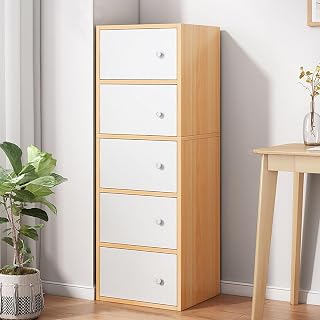


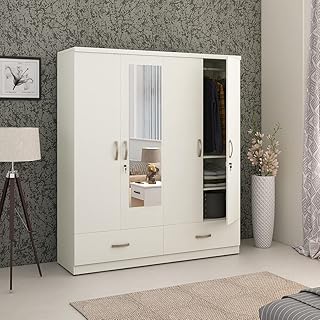


Choosing a wardrobe for an Indian home involves more than comparing appearance and storage capacity. The right model needs to suit the available floor area, room layout, clothing volume, humidity conditions, cleaning routine, and the way you prefer to organise garments and accessories. A wardrobe that looks attractive in a product photograph may not be practical if its doors need more clearance than the room provides, its shelves cannot accommodate folded clothing, or its hanging section is too short for your everyday garments.
For that reason, compare wardrobes on construction, dimensions, storage configuration, material, hardware, ventilation, ease of assembly, stability and long-term practicality rather than relying only on ratings or photographs. Brands such as Godrej Interio, Nilkamal, Wakefit and HomeTown are among the names Indian shoppers may encounter when comparing furniture, but the most suitable choice still depends on the specifications of the individual model.
Steel wardrobes are a practical choice when durability, resistance to everyday wear and relatively straightforward maintenance are priorities. They are particularly useful for people who want a robust storage cabinet without relying on engineered wood panels. A good steel wardrobe should have adequately finished edges, secure doors, dependable hinges and a stable base.
Before purchasing, inspect the stated steel thickness if provided, the quality of the surface finish, locking arrangement, shelf configuration and total weight. A heavier cabinet is not automatically better, but construction details can provide useful clues about stability and durability.
Engineered-wood wardrobes are popular because they offer a wide range of colours, finishes and contemporary designs. Common board materials include particle board, MDF and plywood, although these materials should not be treated as interchangeable. Their resistance to moisture, screw-holding ability, density and structural behaviour can differ considerably.
Pay particular attention to the exposed edges and bottom sections of an engineered-wood wardrobe. These areas can be more vulnerable to moisture, especially when the cabinet is placed close to a bathroom, balcony or wall that experiences dampness.
Plastic wardrobes can be useful for temporary accommodation, children's rooms, rental properties or buyers who prioritise low weight and easy cleaning. They are generally easier to move than large wooden or steel cabinets, although their rigidity and load-bearing characteristics vary substantially between designs.
Check the maximum recommended load, panel thickness, joining system and door mechanism before selecting one for heavy winter clothing or extensive storage.
Fabric wardrobes are designed primarily for lightweight and flexible storage. They can be convenient where a conventional cabinet is impractical, such as rented accommodation, guest rooms or temporary storage areas.
They should not automatically be considered an equivalent replacement for a rigid wardrobe. The frame, connectors, fabric quality, zipper construction and maximum load determine how useful they will be for regular household use.
Door count is an easy specification to compare, but it does not directly indicate storage capacity. A compact three-door wardrobe may have less usable internal volume than a well-designed two-door model. Look at the overall dimensions and internal configuration rather than choosing solely by the number of doors.
Sliding wardrobes can save front clearance because the doors do not swing outward into the room. This can be particularly valuable in compact bedrooms. However, the sliding mechanism becomes an important part of the buying decision.
Check whether the doors run smoothly, how the tracks are constructed, whether the rollers are accessible for maintenance, and whether the internal layout makes the entire storage area easy to reach. A sliding door saves floor clearance but may not provide the same unrestricted opening as a conventional hinged door.
Hinged wardrobes remain a versatile option because the entire front of the cabinet can generally be opened without overlapping sliding panels. They also allow a wide variety of internal configurations and hardware options.
The main consideration is clearance. Measure the room carefully and ensure that beds, side tables, chairs and other furniture will not obstruct the doors when they are fully opened.
Plywood is made from layers of wood veneer bonded together and is often valued for its structural strength. However, plywood quality varies, and the term alone does not establish the exact durability of a wardrobe. Thickness, grade, edge treatment, surface finish and construction technique all matter.
MDF has a smooth and uniform surface that can work well for painted or laminated furniture panels. It can provide an attractive finish, but exposure to moisture should be considered carefully. Look for appropriate edge sealing and avoid placing vulnerable panels directly against persistently damp surfaces.
Particle board can help manufacturers produce affordable furniture with a broad selection of finishes. The quality of the board, density, laminate, edge banding and joining hardware are particularly important.
When comparing particle-board wardrobes, do not evaluate the material name in isolation. Examine the complete construction and the manufacturer's stated specifications.
Steel is a strong choice for users who prefer rigid construction and easy surface cleaning. Powder-coated finishes can provide a practical exterior, but scratches, dents and corrosion protection should still be considered. In humid regions, inspect the manufacturer's information about coating and rust resistance rather than assuming every steel cabinet offers identical protection.
Plastic cabinets are usually lightweight and easy to clean. Their suitability depends heavily on the grade and thickness of the material and the quality of the structural joints. They are better suited to users whose storage requirements are compatible with their lower structural capacity.
Measure width, depth and height before purchasing. Do not measure only the vacant wall area. Account for skirting boards, electrical sockets, windows, curtains, switches, door openings and nearby furniture.
For apartments with limited space, depth deserves special attention. A deeper wardrobe can provide more storage but may make a bedroom feel cramped or interfere with circulation.
Consider how much of your wardrobe consists of hanging clothes, folded garments, footwear, handbags, accessories and seasonal items. A cabinet with many shelves may be unsuitable if you own a large collection of shirts, dresses, jackets or other hanging garments.
Useful internal features can include adjustable shelves, dedicated drawers, long-hanging compartments, short-hanging sections and overhead storage. The best arrangement is the one that corresponds to your actual possessions rather than the layout that looks most impressive in a product photograph.
Adjustable shelves provide flexibility when storage requirements change. They are particularly useful for households that store items of different heights. Check how many shelf positions are available and whether the shelf supports are sufficiently robust for the intended load.
Drawers are convenient for smaller garments, accessories and personal items, but they also occupy internal space. Compare drawer depth, usable width, runner quality and opening clearance. A wardrobe with numerous shallow drawers may provide less useful storage than a simpler design with fewer but deeper compartments.
Measure the usable vertical distance beneath hanging rods. Long garments require more clearance than shirts and trousers. If two hanging sections are provided, determine whether each is tall enough for the clothing you intend to store.
Door construction has a direct effect on everyday usability. Hinges should allow consistent movement without excessive play, while doors should align properly with the cabinet. For sliding models, pay particular attention to the track and roller system.
If privacy or basic security is important, inspect the lock design and handle construction. A lock can also be useful in shared accommodation, children's rooms or situations where access needs to be controlled.
A useful approach is to inventory your clothing before buying. Separate everyday garments from seasonal clothing and rarely used items. Then estimate how much needs to be folded, hung or stored in drawers.
Space efficiency is often more important than maximum cabinet size. Start by measuring the usable wall and the path through which the wardrobe must be brought into the room. A wardrobe that technically fits the wall may still be impossible to move through a narrow staircase, lift, corridor or doorway.
Sliding doors can be useful where front clearance is limited. Tall wardrobes can make better use of vertical space when floor area is scarce, provided the ceiling height and installation conditions permit it. For compact bedrooms, also consider how far doors project when opened and whether they interfere with the bed.
A master-bedroom wardrobe generally benefits from a more deliberate division between hanging, folded and accessory storage. Couples should consider whether the internal arrangement can be divided logically between two users.
Instead of choosing purely by external appearance, compare the number and placement of shelves, drawers and hanging sections. A well-organised medium-sized wardrobe can be more practical than a larger cabinet with inefficient internal space.
Children's wardrobes should be evaluated with stability and accessibility in mind. Furniture should be positioned securely, and tall cabinets should be appropriately anchored where the manufacturer recommends it. Avoid storing heavy objects at heights where they could become difficult to retrieve safely.
Easy-to-clean surfaces can also be valuable in children's rooms. Simple internal layouts can make it easier for children to learn how to organise their own clothing.
Renters may prefer furniture that can be assembled, disassembled and moved without excessive difficulty. Portable, plastic, metal and modular options can be worth considering depending on the intended duration of use.
Before buying a large assembled unit, consider whether it can pass through the home's doors, staircase and lift. Flat-packed furniture may simplify transportation, but assembly quality becomes especially important.
Humidity deserves serious consideration when selecting bedroom furniture in parts of India that experience prolonged damp conditions. Moisture can affect engineered wood, metal components and stored clothing in different ways.
A closed wardrobe protects clothing from dust but does not eliminate the need for sensible moisture management. Damp clothing should never be stored immediately after use. Allow garments to dry thoroughly before placing them inside.
Do not overcrowd shelves or hanging sections. Some space between garments makes organisation easier and helps prevent the cabinet from becoming excessively compressed. Periodic cleaning is also useful, particularly in homes where dust accumulates quickly.
Colour, finish and exterior design matter, but they should not replace examination of dimensions, materials, internal storage and hardware. A visually attractive wardrobe can become frustrating if it does not suit your clothing collection.
Measure the opening path, not just the cabinet footprint. Hinged doors need sufficient space to swing, while sliding doors require adequate room for the complete track system.
Door count is not a reliable measure of capacity. Always compare internal dimensions and usable storage compartments.
Large wardrobes can be challenging to move into upper floors or through narrow entrances. Check whether the product is supplied assembled or in components and understand the assembly requirements before committing to a large cabinet.
An oversized depth can consume valuable bedroom space. Measure the room and consider walking clearance before selecting a particularly deep model.
Hinges, runners, handles, locks, shelf supports and connectors are used repeatedly. They deserve as much attention as the visible panels.
The lower section of a wardrobe can be exposed to floor moisture, cleaning water and accidental spills. Examine how the base is constructed and finished.
When two products appear similar, compare them using a consistent checklist instead of relying on their advertised feature count.
Star ratings can be useful as an initial filter, but individual review details are more informative. Look for recurring comments about assembly, damaged components, door alignment, storage capacity, material quality, dimensions and long-term usability.
Give greater weight to reviews that explain the specific use case and identify both advantages and disadvantages. A review from a buyer using a wardrobe in a small bedroom may reveal different strengths and weaknesses from a buyer with a large master bedroom.
Also distinguish product issues from delivery or installation problems. If many independent customers report the same construction issue, it deserves closer attention. An isolated complaint does not necessarily establish a general product defect.
Many wardrobes require assembly, particularly larger engineered-wood models. Before ordering, determine whether assembly is included through the retailer or manufacturer, whether special tools are required, and whether the installation area needs to be cleared beforehand.
Follow the supplied assembly instructions carefully. Do not substitute screws or connectors casually, because hardware dimensions can affect panel strength and alignment. Once assembled, check that the cabinet is stable, doors are aligned and drawers operate smoothly.
Tall wardrobes may require appropriate anti-tip measures. Follow the manufacturer's safety instructions regarding wall anchoring and installation.
Good organisation can significantly increase the practical value of the same cabinet. Group clothing by type, frequency of use or season. Keep frequently worn garments at easily accessible heights and reserve upper compartments for less frequently used items.
Use the hanging section for garments that benefit from being kept wrinkle-free. Fold heavier knitwear and bulky garments where appropriate instead of overcrowding a hanging rail. Small organisers can help separate accessories, but avoid filling every available space to the point that drawers and shelves become difficult to use.
Not every additional feature adds equal value. Buyers should prioritise features that solve an actual storage or space problem.
Mirrored doors, decorative finishes, unusual colours and additional compartments can make a wardrobe attractive, but they should not distract from fundamental construction quality. Likewise, a large number of advertised features does not automatically indicate better value.
Prioritise structural suitability, storage efficiency, dimensions, materials and hardware first. Treat decorative features as secondary considerations once those requirements have been satisfied.
The cheapest wardrobe is not always the most economical option over its useful life. Consider the balance between purchase cost, storage capacity, construction quality, expected durability, assembly requirements and the cost of replacing unsuitable furniture.
Rather than setting a budget around a particular brand, define your requirements first and then compare models within a realistic price range. Check the current total purchase cost from trusted retailers because furniture prices, offers and availability can change.
Prioritise robust construction, dependable hardware, stable assembly and appropriate material quality. Steel can be worth considering where its characteristics suit the room and storage requirements.
Look for a finish and configuration that complement the existing furniture, but verify dimensions and internal organisation before making the final choice.
Focus on compact depth, vertical storage and appropriate door operation. Sliding doors may be advantageous where front clearance is limited.
Prioritise internal capacity, multiple hanging sections, adequate shelves and logical division between users. A larger wardrobe is useful only when the room can accommodate it comfortably.
Portable or lightweight options can make sense where relocation is likely. Avoid paying for permanent furniture features that do not match a short-term requirement.
There is no single best type for every bedroom. Hinged wardrobes are versatile, sliding wardrobes can save front clearance, steel wardrobes can suit buyers prioritising rigid construction, and engineered-wood wardrobes offer a broad range of designs and finishes. The best choice depends on room dimensions, storage requirements and budget.
Neither material is universally better. Steel can be attractive for durability and straightforward maintenance, while engineered wood can provide more design variety and furniture-style finishes. Compare the construction quality, moisture exposure, hardware and intended use rather than choosing solely by material.
They can be. Because the doors move along a track rather than swinging outward, they can reduce the clearance needed in front of the wardrobe. However, the track mechanism and accessibility of the internal compartments should also be considered.
The appropriate depth depends on the clothing and storage system inside it. Instead of choosing a standard dimension automatically, check the manufacturer's internal dimensions and confirm that the hanging section can accommodate your garments without making the room unnecessarily cramped.
The material alone does not determine moisture performance. Construction, edge sealing, surface finish, base design and placement all matter. In humid environments, prioritise appropriate moisture resistance and keep the cabinet away from direct or persistent water exposure.
Measure the room, doorways and access route first. Then prioritise a suitable depth, vertical storage and a door configuration that does not obstruct the bedroom. Compare usable internal capacity rather than external size alone.
Not necessarily. The number of doors does not determine storage capacity or construction quality. Compare overall dimensions, internal layout, shelf space, hanging sections and drawers before deciding.
Look for recurring feedback about assembly, door alignment, hardware, material quality, storage capacity, dimensions and long-term usability. Reviews that provide specific details are generally more useful than comments containing only a star rating.
Online buying can make specification and price comparison easier, but measurements require particular attention. Before purchasing, verify dimensions, assembly requirements, delivery conditions, current customer feedback and applicable retailer policies.
Avoid overloading it, keep moisture away from vulnerable materials, clean surfaces appropriately and address loose handles, hinges or runners before minor problems become larger ones. Follow the manufacturer's care and installation instructions.
A good wardrobe should continue to solve your storage needs after the initial excitement of buying new furniture has passed. The strongest buying decision is therefore based on fit, construction and usability rather than appearance alone.
For Indian households, consider the room size, climate, clothing habits, storage volume and frequency of relocation. Compare specifications carefully, read verified customer feedback, inspect the complete internal layout and check current prices before purchasing. Whether you ultimately choose a steel, engineered-wood, plastic, portable, hinged or sliding model, the right wardrobe is the one that fits your space and genuinely matches the way you store and access your belongings.
The best wardrobe in India is not determined by one universal ranking. Start with measurements, identify the storage configuration you need, compare construction materials and hardware, consider your local climate, evaluate door operation, read detailed customer feedback and then compare the total cost of the shortlisted models.
Taking this approach makes it easier to distinguish between a wardrobe that simply looks appealing and one that provides practical, dependable storage for years of everyday use.