

♥ Wishlist
Compare 420 verified Gaming Console Accessories for Every Gaming Setup in India products in India. Reviews, ratings, pros, cons and buying advice updated for October 2026.






![HyperX Cloud III– Wired Gaming Over Ear Headset, PC, PS5, PS4, Xbox Series X|S, Xbox One, Nintendo Switch, Mac, Mobile, 53mm with Neodymium Magnets, Memory Foam, USB-C, Grey;Red [B96MXAA]](https://m.media-amazon.com/images/I/51CQq94oyjL._AC_UL320_.jpg)


Choosing gaming hardware in India is no longer simply a matter of selecting the most powerful console. The right setup depends on the type of games you play, display resolution, storage requirements, multiplayer habits, internet connection, portability, controller preferences, available space, and the total cost of ownership. A console that looks attractive on paper may not be the best choice for every household.
This guide is designed to help Indian buyers compare gaming consoles and the accessories that make them more practical to use. When evaluating products, consider specifications alongside long-term usability, compatibility, ergonomics, software ecosystems, storage expansion, warranty terms, retailer reliability, and the availability of replacement accessories.
Performance affects loading times, frame rates, graphical detail and how comfortably a console handles demanding games. Specifications such as CPU architecture, GPU capability, memory, storage technology and supported display resolutions are useful comparison points, but raw numbers do not tell the entire story.
For most buyers, the more useful question is whether the console delivers the type of gaming experience they actually want. Someone primarily playing competitive games may value stable frame rates and responsive controls more than cinematic graphical effects. A player interested in large single-player titles may place greater importance on resolution, visual quality, storage and fast loading.
A console may support high-resolution output, but the practical benefit depends on the television or monitor connected to it. Before buying, check whether your display supports the resolution and refresh rate you intend to use.
Modern games can consume substantial storage space, making internal capacity an important consideration. A console with limited usable storage can require frequent game deletion and reinstallation.
Look beyond the advertised storage figure. Operating-system files and reserved space mean that usable capacity can be lower than the headline specification. Also check whether the console supports an officially compatible expansion method and whether external storage can be used for playing games or only for storing them.
Some buyers prefer physical game discs because they can potentially lend, resell or collect them. Others prefer digital purchases because they are convenient and eliminate the need to change discs.
The choice also affects storage management and purchasing habits. A buyer who expects to maintain a large digital library should pay particular attention to internal and expandable storage. A collector may instead consider disc-drive availability and physical-game compatibility more important.
The games available on a platform should usually carry more weight than small differences in hardware specifications. Before choosing a console, make a shortlist of the games you most want to play and determine which platform supports them.
Also check whether a title is available through multiple platforms, whether cross-platform multiplayer is supported, and whether a particular edition includes features unavailable elsewhere.
Online gaming can introduce recurring costs beyond the initial console purchase. Depending on the platform, multiplayer access, game catalogues, cloud features and other benefits may be connected to subscription services.
When comparing total costs, consider the subscription you are likely to use over one, two or more years rather than looking only at the hardware price.
Backward compatibility can make a console more valuable to buyers who already own games from an earlier generation. However, compatibility can differ by title, edition and platform. Do not assume that every older physical or digital game will work without checking the manufacturer's compatibility information.
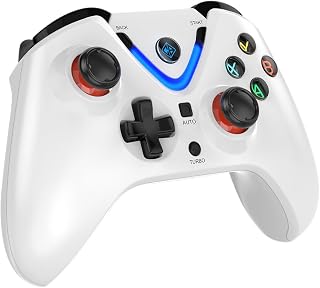
An additional controller is one of the most useful upgrades for households that play local multiplayer games. When comparing controllers, examine battery life, charging method, button layout, wireless connectivity, compatibility and ergonomics.
Official controllers from brands such as Sony, Microsoft and Nintendo are generally the first products to investigate for their respective ecosystems. Third-party alternatives can also be worthwhile, but compatibility and feature support should be verified before purchase.
A good headset can improve communication in multiplayer games and make directional audio easier to follow. Important specifications include connection type, microphone quality, comfort, weight, ear-cup design and platform compatibility.
Popular gaming-audio brands worth comparing include HyperX, SteelSeries, Logitech and Razer. Always verify the exact model's compatibility with your console before purchasing.
A charging dock can keep controllers organised and reduce the need to connect charging cables individually. It is particularly useful when multiple controllers are regularly used.
Check whether the dock is designed for the exact controller generation you own. A visually similar accessory is not necessarily electrically or mechanically compatible.
Additional storage can be useful when the internal drive fills quickly. Compatibility requirements vary considerably between consoles, so buyers should check supported drive types, capacity limits and whether games can be launched directly from the external device.
For high-speed internal expansion, use only storage formats and specifications explicitly supported by the console manufacturer. Avoid choosing a drive solely because it has a large capacity or attractive price.
A gaming monitor can be preferable to a television for users who sit close to the screen or want a compact desk-based setup. Compare resolution, refresh rate, response characteristics, HDMI connectivity, HDR support and screen size.
A very high refresh rate is not automatically useful if the console or game cannot produce a matching frame rate. Match the monitor to the actual capabilities of the gaming hardware.
For living-room gaming, television selection can have a major effect on the overall experience. Consider input latency, supported HDMI features, resolution, refresh rate, HDR capability, screen size and viewing distance.
OLED and LED-based televisions have different strengths. OLED displays are known for strong contrast and deep blacks, while modern LED-based televisions can offer a range of brightness and pricing options. The best technology depends on viewing conditions, budget and personal priorities.
Keyboard-and-mouse support varies by console and game. If this is important to you, confirm support for the specific game rather than assuming that connecting the peripherals will provide full functionality.
For compatible games, a mechanical keyboard can offer a different typing and gaming feel, while a gaming mouse provides adjustable sensitivity and commonly available ergonomic designs. These features are more relevant to desk-based setups than traditional controller-focused gaming.
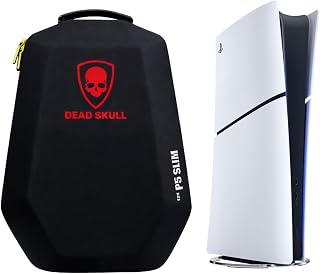
Simple accessories such as grips, protective cases and thumbstick caps can improve handling or help protect equipment from everyday wear. They are inexpensive compared with a console, but compatibility still matters.
Protective accessories should not obstruct ventilation, ports, buttons, sensors or removable components. Avoid products that make heat dissipation more difficult.
Check the number and type of ports available before purchasing. Depending on the setup, useful connections can include HDMI, USB and network connectivity. Wireless standards also matter for controllers, headsets and networking accessories.
If you plan to connect several devices, consider the complete setup rather than the console in isolation. A television, sound system, capture device, charging accessories and external storage can quickly occupy available ports.
For online multiplayer, a wired Ethernet connection can be attractive where practical because it avoids some of the interference and signal variability associated with wireless networking. Wi-Fi is more convenient and may be entirely adequate for many households.
If online gaming performance is inconsistent, investigate the complete network path before blaming the console. Router placement, congestion, wireless interference, internet service quality and other connected devices can all affect the experience.
Gaming hardware generates heat during demanding workloads. Proper ventilation is therefore an important part of setup and maintenance.
Casual users should prioritise ease of use, game availability, controller comfort, reasonable storage and overall system cost. Paying for premium specifications that will rarely be used may not provide good value.
Competitive players should give greater attention to frame-rate consistency, display latency, controller responsiveness, network stability and headset communication quality. A well-matched monitor and reliable wired network connection can sometimes have more practical impact than an expensive collection of decorative accessories.
Families should consider local multiplayer, parental controls, game ratings, controller availability, storage and the accessibility of the interface. If several people will use the system, the cost of additional controllers and commonly used games should be included in the budget.
Enthusiasts may prioritise premium displays, high-speed storage, advanced audio, additional controllers and accessories that complement a dedicated gaming space. In this case, compatibility between components becomes especially important.
Space-conscious buyers should measure the available area before purchasing. Consider the console's physical dimensions, ventilation requirements, cable routing and the space required around connected accessories.
Higher numbers do not automatically translate into a better experience for every player. Game libraries, ecosystem features, display quality and controller ergonomics can be equally important.
The console is only one part of the ownership cost. Include games, online services, additional controllers, storage, a suitable display and potentially a headset when calculating your realistic budget.
Controller generations, ports and wireless standards can differ. Read the compatibility list for the exact model rather than relying on product photographs or a generic description such as “for gaming consoles.”
Limited storage can become frustrating when a large digital library is involved. Think about how many games you expect to keep installed simultaneously.
A console's supported output is useful only when the television or monitor can take advantage of it. Check HDMI specifications and supported resolutions and refresh rates across the entire chain.
The lowest advertised price is not necessarily the lowest overall cost. Compare the exact model, included accessories, seller information, warranty conditions, return policy and whether the product is intended for the Indian market.
Official accessories are often the simplest choice when guaranteed ecosystem compatibility is the priority. Third-party products can provide more variety in price, design and functionality, but buyers need to verify compatibility carefully.
For accessories such as controllers, charging docks and wireless headsets, check whether the manufacturer explicitly lists the exact console generation and connection method. Features such as vibration, adaptive controls, microphone monitoring, wireless audio and button remapping may not work identically across platforms.
Different manufacturers specialise in different areas of the gaming ecosystem. Sony, Microsoft and Nintendo are the major platform brands to consider when comparing console ecosystems. For PC-style peripherals and gaming accessories, brands such as Logitech, Razer, SteelSeries, HyperX, Corsair and ASUS ROG offer products across several categories.
Brand familiarity should not replace product-level research. Even within the same brand, specifications, compatibility, warranty coverage and build quality can vary between individual models.
Customer ratings can be useful, but a star score alone should not determine a purchase. Read reviews for recurring observations about the exact product and look for comments that remain relevant across different buyers.
For high-value purchases, compare specifications from the manufacturer with retailer information and customer feedback rather than relying on a single source.
Warranty and after-sales support deserve attention when buying expensive gaming hardware. Confirm what type of warranty applies, who provides it, where service is available and which components are covered.
For marketplace purchases, check the seller information, return conditions, product condition and included accessories before placing an order. Keep invoices and purchase records because they may be required for warranty claims.
Imported products can sometimes have different warranty arrangements from products intended for the Indian market. Buyers should verify the applicable support terms instead of assuming that an international product has identical local coverage.
A practical entry-level setup can consist of the console, its included controller, an existing compatible television, stable internet and sufficient storage. Add accessories only when they solve an actual need.
A multiplayer-focused setup may benefit from an additional controller, suitable local multiplayer games and a comfortable seating arrangement. For online multiplayer, a reliable network connection and headset can become more important.
A competitive setup should prioritise responsiveness. Match the console to a display with suitable input performance, use a controller that fits your hands comfortably and optimise the network connection where possible.
A premium living-room configuration can combine a large high-quality display, suitable audio, additional controllers and ample storage. Cable management and ventilation become increasingly important as more equipment is added.
Good maintenance can help keep a gaming setup reliable. Allow the console to cool according to the manufacturer's guidance, keep vents clear and avoid exposing equipment to excessive dust, moisture or heat.
Storage management becomes increasingly important as game libraries grow. Regularly review installed games and remove titles that are no longer being played if space becomes limited.
Before deleting a game, check how saved data is handled on the relevant platform. Cloud storage, local saves and backup options can differ. Do not assume that uninstalling a game and deleting saved data are the same action.
Indian buyers should consider the payment method, account region, game availability, digital storefront rules and subscription terms associated with their chosen platform. Regional differences can affect game availability, pricing, downloadable content and account functionality.
Use the platform's official storefront and account information as the authoritative source for region-specific availability rather than relying solely on third-party listings.
A meaningful comparison should go beyond the console's purchase price. Create a simple ownership budget that includes the hardware and the accessories you are realistically likely to need.
This approach makes it easier to compare apparently inexpensive consoles against systems that may require more additional equipment.
If you are unsure which option to choose, start with the following sequence rather than beginning with specifications.
There is no single best console for every Indian buyer. The right choice depends primarily on preferred games, budget, display, multiplayer requirements, storage needs and ecosystem. Compare the current PlayStation, Xbox and Nintendo options according to the games and features that matter most to you.
Start with the console and the display you already have or plan to use. Add accessories after identifying a specific need. An extra controller makes sense for local multiplayer, while a headset is more relevant to online gaming and voice communication.
It depends on how many large games you want installed simultaneously. Buyers who maintain a small rotating library may be comfortable with less storage, while users with many digital games should prioritise greater usable capacity and supported expansion options.
They can be, particularly when they offer a feature set or price that suits your needs. However, verify compatibility, supported features, wireless technology, warranty coverage and platform-specific limitations before purchasing.
No. A headset is optional, but it can be useful for online multiplayer, private listening and voice communication. The importance of a headset depends on how you play.
Ethernet can be preferable when a stable wired connection is practical. Wi-Fi offers greater convenience and can work well when the router, signal quality and network environment are suitable.
No. A compatible Full HD display can still provide a good gaming experience. A 4K television becomes more relevant if you want to take advantage of compatible higher-resolution output and also use the display for other 4K entertainment.
It is important when you want to use specific resolution, refresh-rate, HDR or other display features. Check the capabilities of both the console and display rather than assuming that every HDMI port provides the same functionality.
Not necessarily. If the included usable storage meets your needs, you can wait. If you already expect to maintain a large digital library, checking expansion options before buying the console can prevent future compatibility problems.
Check the exact console generation, controller model, connection type and supported features. Read the manufacturer's compatibility information and compare it with the retailer's listing before ordering.
The strongest purchase is not necessarily the most expensive console or the accessory with the longest specification sheet. It is the combination that matches your games, display, space, connectivity, storage requirements and budget.
For an informed purchase, compare the exact model numbers, specifications, included accessories, compatibility information, warranty terms and current retailer conditions. Read verified customer feedback alongside manufacturer documentation, and check today's price before completing a purchase because Indian pricing and availability can change.
Most importantly, calculate the complete setup cost. A console that appears cheaper initially may require additional storage, controllers or subscriptions, while a higher-priced system may already meet more of your requirements. Treat the console, games, display and accessories as one connected buying decision, and choose the configuration that provides the features you will genuinely use.