

♥ Wishlist
Compare 29 verified Smart Speakers products in India. Reviews, ratings, pros, cons and buying advice updated for October 2026.


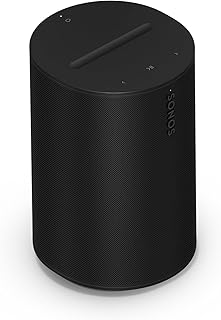


Choosing a smart speaker is no longer simply a matter of selecting the loudest model or the cheapest device. The better choice depends on the voice assistant you use, the quality of your home Wi-Fi, the size of the room, the type of music you listen to, your smart-home requirements, privacy preferences, and whether you want a compact voice assistant or a speaker that can also serve as a serious music system.
For buyers in India, there are additional considerations. A useful smart speaker should work reliably with the services and devices commonly used in Indian homes, respond reasonably well to different accents and speaking styles, integrate with compatible smart-home products, and provide practical controls when voice commands are not convenient. Buyers should also consider whether the speaker supports the streaming platforms, Bluetooth devices, and connected appliances they already own.
The right smart speaker for a bedroom may be very different from the right choice for a living room. Before comparing specifications, identify what you expect the speaker to do most often.
A smart speaker is partly an audio product and partly a software platform. The voice assistant determines how you interact with the device, which services are available, what smart-home commands can be performed and how well the speaker fits into your existing ecosystem.
Alexa-powered speakers are a strong option for buyers who already use Amazon's ecosystem or want extensive smart-home functionality. Amazon Echo devices can be particularly convenient when a household already uses Alexa-compatible plugs, bulbs, appliances or routines. Before buying, check the current capabilities available in your region because voice-assistant features can vary by country, language and service.
Google's smart-home ecosystem can be attractive for households that already rely heavily on Android, Google services or compatible smart-home equipment. Google Nest speakers are designed around voice interaction, music playback and smart-home control. Buyers should check the current regional support for individual commands, services and languages rather than assuming that a feature available in another market is available identically in India.
Apple HomePod models are primarily suited to buyers who are already invested in Apple's ecosystem. They can be particularly appealing when iPhone, iPad, Apple Music and other Apple devices are central to everyday use. The main buying question is therefore not simply whether a HomePod sounds good, but whether its ecosystem matches the rest of the household's technology.
Some smart speakers from brands such as Sonos, JBL, Xiaomi and other manufacturers may combine proprietary audio features with one or more supported voice-assistant ecosystems, depending on the specific model and market. Always verify the exact model's assistant compatibility before purchasing because two speakers from the same brand may have significantly different software capabilities.
Smart-speaker specifications can be difficult to compare because manufacturers do not always publish measurements in the same format. Wattage alone is not a reliable measure of sound quality. A speaker with a higher advertised power figure is not automatically better sounding than one with a lower figure.
Driver design influences how a speaker reproduces music. Larger drivers can help with lower frequencies, while dedicated tweeters or additional drivers can improve the reproduction of higher frequencies and provide greater separation between different parts of the audio spectrum.
For casual listening, a compact full-range driver can be perfectly adequate. For a larger room or more demanding music playback, a multi-driver design may provide a more spacious presentation and better control at higher listening levels.
Strong bass can make a smart speaker sound impressive during a quick demonstration, but excessive bass is not always desirable. If vocals become recessed or instruments lose definition, a bass-heavy tuning may become tiring during longer listening sessions.
Buyers who primarily listen to Bollywood music, Indian classical music, podcasts, acoustic recordings or spoken content should pay attention to vocal clarity rather than selecting a speaker solely for low-frequency impact.
Clear speech is especially important for smart speakers because the device is used for more than music. A speaker should reproduce podcasts, news, audiobooks and voice responses without making speech sound muddy or overly processed.
Maximum volume is useful when a speaker must fill a large living room, but it should not be treated as the primary quality indicator. Distortion at high volume can be more frustrating than having slightly less maximum loudness. For most households, clean and balanced sound at normal listening levels is more valuable.
Microphone performance is one of the most important differences between an ordinary wireless speaker and a well-designed smart speaker. The device needs to hear commands from across the room while music, television audio, fans and everyday household noise are present.
Many smart speakers use microphone arrays to identify speech coming from different directions. This can help the device distinguish a user's voice from background sound and improve voice recognition when the listener is not directly in front of the speaker.
Real-world performance can be affected by accent, pronunciation, room acoustics, background noise and the particular language or assistant configuration being used. Buyers should therefore distinguish between a manufacturer's supported-language list and actual everyday convenience.
If multiple people will use the speaker, consider whether everyone can comfortably activate the assistant and issue commands. A technically capable device is less useful if household members regularly have to repeat themselves.
Wi-Fi is central to most smart speakers because cloud-based voice assistants, streaming services, software updates and smart-home functions typically depend on a network connection. A reliable home router is therefore part of the overall smart-speaker experience.
Before purchasing, check whether your existing router provides dependable coverage in the room where the speaker will be placed. A premium speaker cannot compensate for a weak or unstable Wi-Fi signal.
Bluetooth can be useful when you want to play audio from a smartphone or another compatible device without relying on a particular streaming service. However, Bluetooth behaviour varies between products. Some smart speakers are primarily designed for network streaming, while others provide more conventional Bluetooth functionality.
Multi-room capability allows compatible speakers to work together across different rooms. This can be useful for households that want music throughout the home rather than a single high-volume speaker in one room.
Do not assume that speakers from different brands can automatically be grouped together. Multi-room ecosystems are often platform-specific, so ecosystem compatibility should be checked before buying several devices.
A smart speaker can act as a central voice interface for compatible connected devices, but compatibility is not universal. A smart plug may work with one assistant but provide limited functionality with another. The same applies to bulbs, switches, televisions, cameras and appliances.
For Indian households, compatibility with appliances that are already installed can be more important than the number of devices listed on a manufacturer's ecosystem page. Check the exact appliance model and the exact smart-home integration before purchasing additional hardware.
Because a smart speaker is designed to listen for a wake word, privacy should be part of the buying decision. Buyers should understand how microphone controls work, what indicators show that microphones are active or muted, and which account settings control voice history and related data.
A physical microphone mute control can be useful when you want an obvious way to prevent the speaker from responding to voice commands. Buyers who place a smart speaker in a bedroom, study or other private area may consider this control particularly important.
Privacy controls can differ between platforms and may change as software services evolve. Review the relevant account settings after installation rather than relying only on the privacy information available when you purchased the hardware.
Physical size provides a useful starting point when choosing between models, although it is not a substitute for acoustic specifications.
Compact speakers are well suited to bedside tables, desks, kitchens and smaller rooms. Their main strengths are usually a small footprint, convenient voice assistance and simple placement.
Medium models often provide a better balance between physical size and audio performance. They can be a practical choice for bedrooms, home offices and moderate-sized living spaces.
Larger models generally make more sense when music quality and room-filling sound are priorities. They require more careful placement but can deliver greater low-frequency authority and higher usable volume.
Placement can noticeably affect everyday performance. A speaker should generally have a reasonably unobstructed path toward the room so that microphones can hear commands and the acoustic output is not unnecessarily blocked.
Not every feature deserves a higher purchase price. Prioritise capabilities that will be used regularly.
Price should be considered together with the intended use rather than treated as a simple ranking system.
Budget models can be suitable for basic voice assistance, alarms, timers, podcasts and casual music. At this level, ecosystem compatibility and microphone reliability can be more important than premium acoustic performance.
Mid-range models are often the most balanced choice for households wanting both useful voice-assistant features and noticeably better music performance. Compare driver configuration, room suitability, microphone design and smart-home support carefully.
Premium models make the most sense when audio quality is a major priority or when the buyer wants a more complete ecosystem experience. They can be harder to justify if the speaker will primarily be used for timers, weather information and occasional voice commands.
When two models appear similar, compare them using the same criteria rather than relying on brand reputation or headline specifications.
These ecosystems should not be compared solely on speaker hardware. The better choice depends heavily on the devices and services already present in your home.
Amazon Echo products are worth considering when Alexa routines, Amazon services and a broad smart-home ecosystem are priorities. They can be particularly practical for buyers who expect their speaker to control multiple compatible household devices.
Google Nest speakers can be attractive to users who are already comfortable with Google's ecosystem and Android-based services. Consider the exact assistant capabilities and regional support available for the model you are evaluating.
HomePod is best evaluated as part of Apple's wider ecosystem. Buyers who use iPhone and Apple services extensively may value ecosystem integration more than cross-platform flexibility.
Sonos is particularly relevant for buyers who put music and multi-room audio at the centre of their purchasing decision. Depending on the model, Sonos speakers can also interact with supported voice-assistant platforms. Check the specific product rather than assuming every Sonos model has identical functionality.
JBL and other established audio brands offer products that may appeal to buyers who place greater emphasis on sound, portability or conventional speaker functionality. The important distinction is whether the particular model is genuinely a smart speaker, a connected speaker, or primarily a Bluetooth speaker with additional features.
These products overlap but are not interchangeable.
If you regularly carry the speaker from room to room or outdoors, portability and battery life may matter more than advanced smart-home functionality. If the device will stay permanently in your living room, networked voice assistance and multi-room features may provide greater value.
A smart speaker is generally designed for voice assistance and room audio, while a soundbar is primarily intended to improve television sound. Some soundbars include smart assistants, but they should still be evaluated differently.
If television dialogue and home cinema are your main priorities, a soundbar may be more appropriate. If music, voice commands, alarms and smart-home control are more important, a dedicated smart speaker can make more sense.
A familiar brand does not guarantee that every model is suitable for your needs. Different products from the same manufacturer can have different drivers, microphones, assistants, connectivity options and software features.
Power ratings do not tell the complete story of sound quality. Look at the overall design, driver configuration, acoustic tuning and intended room size.
Buying a speaker that does not work well with your existing smart-home equipment can lead to unnecessary limitations and additional hardware.
Music-service support varies by platform, country and account configuration. Confirm compatibility with the services you actually use before buying.
Voice recognition is central to a smart speaker, but so is the ability to control microphone access. Privacy controls should be treated as a core feature rather than an afterthought.
A large premium speaker can be unnecessary for a small bedroom. Conversely, an extremely compact speaker may disappoint in a large open-plan living space where stronger output is needed.
Product names can be confusing, especially when generations or regional variants have similar names. Compare the exact model number and specification sheet before making a final decision.
Frequency response describes the range of frequencies a speaker is designed to reproduce. Published figures should be interpreted cautiously because manufacturers may use different measurement conditions. A wider advertised range does not automatically mean better sound.
Look for information about full-range drivers, woofers, tweeters, passive radiators and multi-driver configurations. These components provide more useful information about the acoustic design than a simple wattage figure.
A microphone array can improve voice pickup from different positions in a room. The number of microphones is not, however, a guarantee of superior real-world performance.
Check the wireless requirements of the exact model and ensure your home network is compatible. A modern router can still provide poor performance if the speaker is installed in an area with weak coverage.
Bluetooth version alone should not determine the purchase. Compatibility, supported profiles and the speaker's actual intended Bluetooth functionality are more relevant.
Prioritise low-volume clarity, compact dimensions, alarms, timers, sleep-related routines and physical microphone controls. Excessive bass or volume may provide little additional value in a bedroom.
The living room usually benefits from stronger sound output, wider dispersion and better integration with entertainment and smart-home devices. Stereo pairing can be useful where supported.
Voice pickup is particularly important because cooking appliances, ventilation fans and running water can create substantial background noise. Physical controls can also be useful when hands are occupied.
A compact speaker with clear voice reproduction may be preferable for a desk. Consider whether notifications, calls, timers and music will be used frequently and whether the speaker's microphone behaviour could interfere with work.
If you want speakers throughout the house, select an ecosystem before buying several individual units. Compatibility between models within the same product family can be more important than choosing the best individual speaker in isolation.
Smart speakers require relatively little maintenance, but proper handling can extend their useful life and keep microphones, buttons and speaker grilles functioning correctly.
Online shopping makes it easy to compare many smart speakers, but buyers should verify the complete product information before placing an order.
Prices, stock status, seller offers and promotional discounts can change frequently. Treat the listed price as a point-in-time comparison rather than a permanent value.
Customer reviews can reveal practical issues that specification sheets do not show, but they should not be treated as a substitute for technical information.
One isolated complaint is less informative than a recurring pattern across many reviews. Pay particular attention to repeated comments concerning connectivity, microphone pickup, software reliability, setup difficulty, sound quality and long-term usability.
Some negative experiences may result from router configuration, account problems, unsupported services or incorrect setup rather than defective hardware. Look for enough context to determine whether an issue appears product-specific.
Software and firmware can change over time. Older feedback may describe a previous software experience, while recent reviews can provide a better indication of the current setup process and day-to-day behaviour.
There is no single best smart speaker for every household. The right choice depends on the preferred voice assistant, smartphone ecosystem, smart-home devices, room size, music preferences and budget. A compact Alexa or Google-based speaker may be ideal for voice assistance, while a larger audio-focused model may be better for music.
Neither is universally better. Alexa can be a strong choice for users who value its ecosystem and compatible smart-home routines, while Google-based products may be more convenient for people already invested in Google's services. Compare the functions you actually use rather than choosing based on general reputation.
HomePod can make sense for buyers who are already deeply invested in Apple's ecosystem and want a smart speaker designed to work closely with compatible Apple devices and services. Buyers using a mixed Android and Apple household should consider ecosystem limitations before purchasing.
Many smart-speaker functions depend on an internet connection and cloud services. Some models may support Bluetooth playback or limited local functions without an active Wi-Fi connection, but the exact offline capabilities vary by product.
Some smart speakers can control compatible televisions or streaming devices through supported integrations. Compatibility depends on the speaker ecosystem, television model, connected streaming hardware and available software support.
Many ecosystems support multi-room audio or stereo pairing, but the available configurations vary by brand and model. Check compatibility before buying multiple speakers, especially if you plan to mix different generations or product families.
Yes, but audio performance varies significantly. Compact models are often best for casual listening and spoken content, while larger or audio-focused models can provide stronger bass, greater volume and a more detailed presentation.
A smartphone is commonly used during initial setup and for managing accounts, settings and services. Once configured, many everyday voice commands can be performed directly through the speaker, although the exact functionality depends on the ecosystem.
If your priority is the best sound from one location, a larger premium speaker may be preferable. If you want voice assistance and music in multiple rooms, several compatible smaller speakers may provide a more convenient whole-home experience.
There is no universal lifespan because hardware durability, software support, usage and environmental conditions vary. A good buying decision should therefore consider the manufacturer's ecosystem and software support as well as the physical hardware.
The best smart speaker purchase is the one that fits your existing technology and daily habits rather than the one with the longest feature list. Start by deciding which assistant and ecosystem you want, then compare sound quality, microphone performance, connectivity, smart-home compatibility, privacy controls and room suitability.
For music-first buyers, sound quality should carry substantial weight. For smart-home users, compatibility and reliable voice recognition may matter more. For bedroom and office users, compact dimensions, clear speech and useful routines can be more valuable than high output. For households with several connected devices, choosing one ecosystem and expanding it gradually can reduce compatibility problems.
Before making a final purchase, compare the exact model specifications, check current verified customer feedback, review the manufacturer's compatibility information and compare current prices from trusted Indian retailers. Specifications, software features, offers and availability can change, so confirm the details that matter most at the time of purchase.