

Best Heat Guns for Home, DIY & Professional Use Products online india
Explore our real-time updated product directory index curated for performance, verified star metrics, and historical consumer trust rankings.


![1500-Watt, 220V Dual Temperature Control Heat Gun [HOT AIR BLOWER] With 50-400/550 C Temperature Control - BLUE (5)](https://m.media-amazon.com/images/I/31QSqvMdI5L._AC_UL320_.jpg)

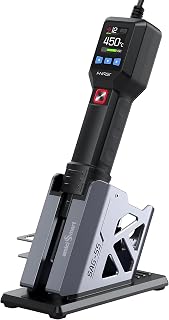


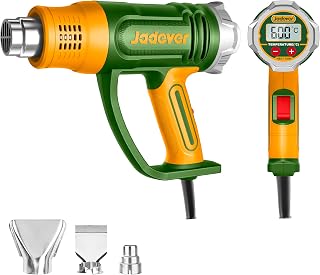


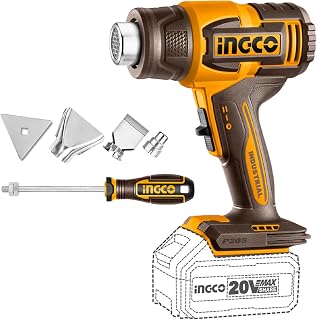


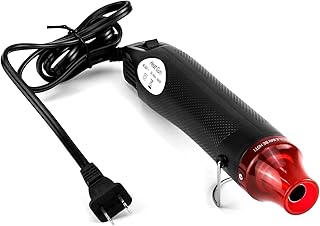

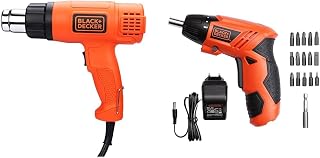


Heat guns are versatile tools designed to deliver concentrated hot air for controlled heating applications. Unlike a conventional hair dryer, a heat gun operates at substantially higher temperatures and is intended for tasks that require focused heat. They are commonly used for DIY repairs, renovation projects, electronics work, crafting, automotive applications and workshop jobs. When selecting a heat gun in India, consider the type of work you plan to perform, the required temperature range, airflow control, power rating, handling comfort and available safety features.
Different heating tasks call for different levels of temperature and airflow control. A basic heat gun can be useful for occasional household and DIY work, while a model with multiple temperature or airflow settings can provide greater flexibility for projects that involve different materials. Variable control can help you apply heat gradually rather than relying on one fixed setting.
For paint removal, the tool should provide sufficient heat and a manageable airflow pattern. For heat-shrink tubing, a narrower nozzle can help direct warm air towards a specific area. Crafting applications may benefit from compact designs that are easier to manoeuvre around small workpieces. If you regularly use a heat gun in a workshop, ergonomic handling and convenient controls can become especially important.
A heat gun can support a wide range of practical applications. DIY users often use these tools to soften old paint, loosen adhesives, remove labels and work with heat-shrink materials. They can also be useful for certain craft and restoration projects where controlled heat is required.
Temperature range is one of the most important specifications to check. Different materials respond differently to heat, so adjustable temperature settings can provide better control across multiple applications. Always follow the material and tool manufacturer's instructions before applying heat.
Airflow affects how quickly and broadly heat reaches a surface. Multiple airflow levels can make it easier to adapt the tool to detailed jobs and larger areas. A concentrated airflow can suit precision work, while broader airflow can be useful when working across a larger surface.
The wattage of a heat gun provides an indication of its electrical power consumption and heating capability, but it should not be the only specification you consider. Temperature range, airflow, controls and intended application all contribute to how suitable a model is for a particular task.
Some heat guns can be used with different nozzle attachments to direct or distribute hot air. A reflector, reduction or surface nozzle may be useful for specific applications, depending on compatibility. Check the supplied accessories and attachment compatibility before buying.
For occasional household use, ease of handling and straightforward controls can be more valuable than features intended for intensive professional work. A compact heat gun can be convenient for small repair, craft and renovation projects. Before choosing one, think about how frequently you expect to use it and whether your projects require adjustable heat and airflow.
Frequent users may want to prioritise durable construction, comfortable grip, accessible controls and consistent heating performance. A model with adjustable settings can help accommodate different materials and jobs. For professional environments, also consider the operating instructions, duty cycle and compatibility with any required accessories.
Heat guns produce very high temperatures, so careful handling is essential. Keep the hot nozzle away from skin, flammable materials and sensitive surfaces. Wear suitable protective equipment when the application requires it, maintain a clear working area and allow the tool to cool safely after use. Never leave a switched-on heat gun unattended.
When heating painted surfaces, coatings or unknown materials, work in a suitable ventilated area and follow relevant product guidance. Avoid directing concentrated heat at electrical components, containers or materials that may release harmful fumes unless the application is specifically designed for that purpose. Always consult the manufacturer's safety instructions before operation.
Start by identifying the work you need the tool to perform. Then compare temperature control, airflow settings, wattage, design, nozzle options and other relevant specifications. Buyers in India should also check the product's electrical compatibility, included accessories, warranty information and seller details where available.
For occasional DIY tasks, a simple and easy-to-handle model may be sufficient. For varied applications, adjustable controls can provide more flexibility. By matching the tool's specifications with your intended projects, you can make a more informed purchase and avoid paying for features you may not need.
A heat gun is used to apply concentrated hot air for tasks such as paint removal, adhesive softening, heat-shrink tubing and selected DIY, craft and workshop applications.
Yes. A heat gun can provide controlled hot air to shrink compatible heat-shrink tubing around suitable electrical connections. Use the correct temperature and follow the tubing manufacturer's instructions.
The appropriate temperature depends on the material and application. Start with the lowest suitable setting and increase heat gradually while following the manufacturer's recommendations.
Heat guns can be used to soften suitable paint coatings so they can be removed more easily with an appropriate scraper. Work carefully and follow safety guidance for the coating and surface.
Compare temperature range, airflow settings, wattage, ergonomic design, nozzle options, intended use, electrical compatibility and warranty or after-sales information.
No. A heat gun is designed for substantially hotter and more concentrated airflow than a conventional hair dryer. It should only be used for applications appropriate for the tool.
Switch it off, disconnect it from the power supply and allow it to cool completely before storage. Keep it in a dry, secure location away from children, flammable materials and moisture.
Find practical heat guns for DIY projects, repair work, crafting and workshop applications at A2Z Deal. A heat gun produces a controlled stream of hot air that can help with tasks such as paint removal, heat-shrink tubing, softening adhesives and shaping certain materials. Whether you need a compact model for occasional household projects or a more capable option for regular workshop use, choosing the right heat gun can make detailed work easier and more controlled.