

♥ Wishlist
Compare 59 verified Hygienic Plastic Pedal Bin products in India. Reviews, ratings, pros, cons and buying advice updated for October 2026.


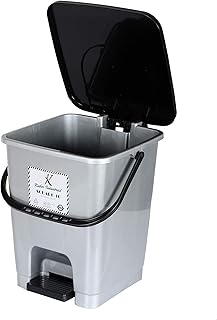


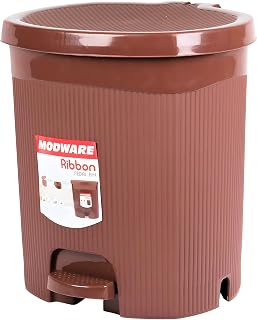





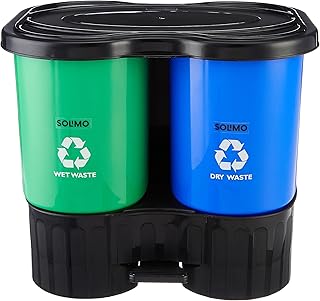


A good pedal bin should do more than hold household waste. For kitchens, bathrooms, bedrooms, offices and other frequently used spaces, the right bin should allow hands-free opening, contain unpleasant odours, resist moisture, remain stable during daily use and be straightforward to empty and clean. Plastic pedal bins are particularly practical in Indian homes because they are generally lightweight, easy to move and available in a wide range of capacities and designs.
When comparing the best hygienic plastic pedal bin products in India, look beyond appearance and headline capacity. The quality of the pedal mechanism, lid fit, inner bucket arrangement, plastic construction, footprint, cleaning access and suitability for your waste routine can make a much greater difference over time. A compact bin that fits neatly beneath a kitchen counter may be more useful than a larger model that is difficult to position or empty.
Hygiene is primarily about reducing unnecessary contact with waste and making the container easy to clean. A pedal-operated lid allows users to open the bin with a foot rather than touching the lid with contaminated hands. This can be especially useful when preparing food, handling wet waste or disposing of bathroom waste.
Not all plastic bins provide the same level of durability. The important consideration is not simply whether a product is labelled “plastic”, but how the material is used throughout the body, lid, pedal housing and base.
A rigid outer body is preferable for a frequently used kitchen or bathroom bin because excessive flexing can affect the lid alignment and overall feel. The pedal area also deserves particular attention because it receives repeated mechanical force. A well-designed pedal should return smoothly after activation rather than requiring excessive pressure.
For buyers comparing polypropylene, ABS components and other plastic constructions, the complete design matters more than selecting a material name in isolation. Look at the thickness and rigidity of the body, the quality of joints, the pedal assembly and how the lid connects to the main container.
The pedal is the feature that distinguishes a pedal bin from a conventional wastebasket, so its operation should be evaluated carefully. A pedal that requires excessive force can become frustrating in everyday use, while an overly light mechanism may feel unstable or may not provide a controlled lid movement.
Pay attention to the lid's opening angle and closing behaviour. A lid that opens sufficiently wide makes it easier to dispose of waste and replace liners. Controlled closing is also useful because repeated slamming can create unnecessary noise and mechanical stress.
Capacity should be matched to the amount and type of waste generated rather than selected solely by the largest number available. A small bathroom may need only a compact bin, while a busy kitchen can require substantially more capacity, particularly if waste is collected less frequently.
Remember that stated capacity does not always translate into usable capacity. The lid mechanism, inner bucket, liner arrangement and tapered shape can affect how much waste can practically be accommodated.
Kitchen bins usually face more demanding conditions than bedroom or office bins. They may receive food scraps, packaging, wet waste and other materials at different times of the day. For this reason, easy cleaning and reliable lid operation are especially important.
A kitchen-friendly model should have an opening large enough for ordinary disposal without requiring users to touch the container. The body should be easy to wipe, and the base should provide enough stability to prevent movement while the pedal is being used.
If the bin will be kept under a counter, measure the available height and depth before buying. Also account for the additional clearance needed for the lid to open. A model can have an appropriate capacity yet still be unsuitable if its lid cannot open properly in the intended location.
Bathroom bins generally benefit from a compact footprint, enclosed lid and easy-to-clean surface. Since bathrooms can be humid, buyers should consider how easily the outside and base can be wiped or washed.
A smaller pedal bin is often preferable when floor space is limited. However, extremely small models may require frequent emptying. Consider the number of people using the bathroom and the type of waste being disposed of before deciding on capacity.
An inner bucket can make waste removal considerably easier. Instead of lifting the entire outer shell, the user can remove the internal container, empty it and clean it separately. This can be valuable for kitchen applications where leakage from waste bags is more likely.
Single-body designs can have their own advantages, including fewer components and potentially lower overall weight. However, cleaning may be less convenient if the entire bin must be handled whenever the interior becomes dirty.
When comparing these designs, check whether the inner bucket has a practical handle, whether the liner can be held securely and whether removing the bucket requires awkward manipulation.
A closed lid can reduce exposure to unpleasant smells, but odour control depends heavily on the waste itself and how long it remains inside the bin. Food waste, particularly moist organic material, can develop strong odours regardless of the container.
For households disposing of wet kitchen waste, frequent emptying and appropriate waste segregation are generally more important than relying on a particular lid design. A well-fitting lid is still useful because it helps keep the contents enclosed between disposal cycles.
Measure the actual location before choosing a bin. This is especially important for kitchens where bins are positioned beside cabinets, beneath counters or near appliances.
When researching products through Amazon India or other trusted retailers, compare specifications alongside customer feedback rather than choosing solely from the displayed rating. Product listings can differ in stated dimensions, capacity descriptions, included components and design versions.
Several established household and storage brands offer waste bins or related home-organisation products in India. Depending on the specific model, buyers may encounter names such as Milton, Nayasa, Cello, Signoraware, IKEA, Treo and Solimo. Brand familiarity can be useful, but it should not replace model-level comparison.
A reputable brand can still have different product ranges with substantially different construction, capacity and mechanisms. Always evaluate the particular model's specifications, current customer feedback and suitability for your intended room.
A bin may advertise a generous capacity while having a footprint that is unsuitable for your kitchen or bathroom. Always compare the external measurements with the available space.
The pedal is one of the most frequently operated components. A visually attractive bin is not necessarily a good choice if its mechanism is awkward, fragile or poorly positioned.
A high overall rating provides useful context but does not explain whether a product is suitable for your particular use. Read reviews for specific information about construction, cleaning, size and long-term mechanical performance.
A larger bin can reduce emptying frequency, but excessive size can create placement problems and make the bin harder to clean or move.
Check whether your preferred waste bags fit the internal dimensions. An unusual shape or oversized rim can make liner installation unnecessarily difficult.
Plastic pedal bins are not automatically the best choice for every household. Comparing them with other designs helps clarify the trade-offs.
Sensor bins are attractive to buyers seeking completely automatic opening, but they are not necessarily more practical for every home. A pedal mechanism does not depend on batteries and can be simpler to operate and maintain.
For a household seeking straightforward hands-free disposal without electronics, a conventional pedal bin can be the more sensible choice. A sensor model may appeal to users who prioritise automatic opening and are comfortable maintaining an electronic mechanism.
Even a well-designed bin requires regular cleaning. Hygiene depends on the way the bin is used as much as on its construction.
A household bin should fit into the local waste-segregation system rather than replacing it. Where local authorities or housing societies require separate collection of wet waste, dry waste, sanitary waste or other categories, choose the number and size of bins accordingly.
For homes practising source segregation, several appropriately sized containers can be more useful than one oversized mixed-waste bin. The exact segregation requirements can vary by municipality, apartment complex and local collection arrangement, so check the rules applicable to your area.
For a compact kitchen, prioritise footprint and lid clearance before choosing maximum capacity. A narrow or moderately sized model can work well if it fits beside cabinets and still permits comfortable pedal access.
Consider an inner bucket if wet waste is common, and check that the liner can be removed without moving surrounding appliances or furniture. A stable base is particularly important in confined spaces because repeatedly repositioning a bin can become inconvenient.
Larger households generally benefit from greater capacity, provided the bin still fits comfortably into the available space. The objective is to balance fewer emptying cycles against the practical disadvantages of a larger container.
Families should also consider whether one bin is sufficient or whether separate bins are more appropriate for waste segregation. A large capacity alone does not solve waste-management requirements if different waste streams need to be separated.
For offices, meeting rooms and workspaces, a compact enclosed bin can help maintain a tidy appearance while reducing direct contact with waste. Consider the number of users, the amount of paper or general waste produced and the frequency of cleaning.
A pedal model is particularly useful where multiple people share the same waste container and reducing hand contact is desirable. However, if most office waste is dry paper, capacity and ease of emptying may be more important than advanced odour-control features.
Bedrooms usually require smaller capacities. A compact model with a secure lid can be appropriate where floor space is limited and the bin is emptied regularly.
Choose dimensions carefully if the bin is intended to sit beside a desk, dressing table or wardrobe. The pedal should remain accessible without forcing the user to pull the bin away from its normal position.
Customer reviews are most useful when treated as a source of recurring observations rather than as a simple popularity score. Look for multiple reviews discussing the same physical feature or problem.
A plastic pedal bin is a strong option when you want hands-free operation, relatively easy cleaning, modest weight and practical everyday waste storage. It can suit kitchens, bathrooms, bedrooms, offices and other indoor areas, provided the capacity and dimensions match the location.
For most buyers, the best choice is not necessarily the most expensive or largest model. It is the one whose construction, pedal mechanism, capacity, dimensions and cleaning requirements align with the way the household actually handles waste.
There is no single best model for every household. The right choice depends on capacity, available floor space, waste type, pedal quality, cleaning requirements and budget. Compare these factors alongside current verified customer feedback before choosing.
They can be a hygienic option because the pedal allows hands-free lid operation and the plastic body can generally be cleaned relatively easily. Good hygiene still requires regular emptying, appropriate liners and routine cleaning.
The appropriate size depends on household size, waste generation and emptying frequency. Measure the available space and consider the amount of wet and dry waste generated rather than selecting capacity based only on the product title.
An inner bucket can be worthwhile when convenient emptying and cleaning are priorities. It is particularly useful when there is a possibility of liquid leakage from waste bags.
A close-fitting lid can help contain unpleasant smells, but it cannot prevent odours indefinitely. The type of waste, moisture and how long waste remains in the container have a major influence on odour.
It depends on the user's priorities. Pedal bins offer a straightforward mechanical hands-free mechanism without batteries, while sensor bins provide automatic opening but introduce electronic components and their associated maintenance considerations.
Cleaning frequency should reflect how the bin is used. A bin containing wet or food waste may require more frequent cleaning than one used only for dry paper or packaging. Clean it promptly whenever residue, leakage or unpleasant contamination occurs.
Check the stated capacity, external dimensions, materials, pedal and lid design, inner bucket configuration, customer feedback and current retailer terms. Also make sure the product will fit the intended location with adequate lid-opening clearance.
Not necessarily. Price can reflect design, materials, mechanisms and brand positioning, but a higher price does not automatically mean a better fit for your requirements. Compare construction and practical features at the model level.
If your household separates different types of waste, multiple appropriately sized bins may be more practical than one large mixed-waste container. The best arrangement depends on local collection requirements and your household's waste-generation pattern.
The best hygienic plastic pedal bin for an Indian home should combine practical capacity, reliable hands-free operation, easy cleaning and dimensions that suit the intended space. Before buying, compare the complete specification rather than relying on a product photograph or headline rating. For the most useful decision, weigh the pedal mechanism, lid fit, inner bucket, liner compatibility, stability, cleaning access and current verified customer feedback together.
Product specifications, availability, retailer policies and prices can change during 2026. Always verify the latest listing information before placing an order, and choose the model that best matches your room, waste type, household size and cleaning routine.