

♥ Wishlist
Compare 53 verified floor cleaner products in India. Reviews, ratings, pros, cons and buying advice updated for October 2026.


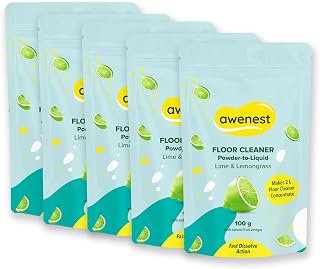


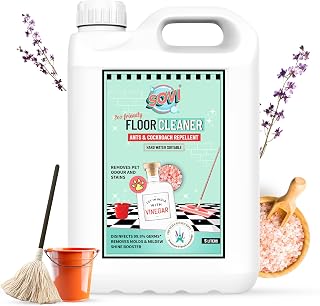


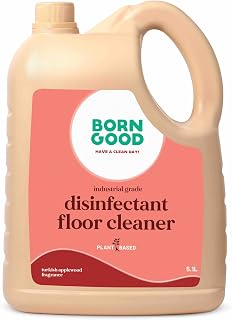


Choosing a floor cleaner is not simply a matter of selecting the strongest-smelling liquid or the product with the highest number of reviews. Different floors, cleaning routines, household conditions and types of dirt require different formulations. A cleaner that works well on ceramic or vitrified tiles may not be the right choice for natural stone, laminate, wood-look surfaces or floors with delicate finishes.
For Indian homes, the buying decision can also depend on everyday factors such as dust accumulation, muddy footwear, cooking grease, hard-water residue, stains, pet messes, children playing on the floor and the amount of water used during mopping. The right product should therefore balance cleaning performance with surface compatibility and practical everyday use.
When comparing floor cleaning products, look beyond marketing claims and examine the intended surface, dilution instructions, cleaning method, fragrance preference, ingredient information, pack size, customer feedback and overall value. Brands such as Lizol, Domex, Harpic, Colin and Dettol are familiar names in Indian household cleaning, but brand recognition alone should not determine the purchase. The formulation and suitability for your particular floor matter more.
An effective floor cleaner should help remove the types of soil commonly found on floors without unnecessarily damaging the surface or leaving an unpleasant residue. Cleaning performance generally depends on the formulation, concentration, surfactants, solvents or other cleaning agents used, water quality, contact time and the physical action of mopping.
A good everyday cleaner should ideally spread easily, lift ordinary dirt and oily residues, rinse or evaporate without leaving excessive film, and remain compatible with the flooring according to the manufacturer's directions. A highly concentrated product is not automatically better; using too much cleaner can make rinsing difficult and may leave a sticky or cloudy residue.
Consider what you actually need to remove. Light household dust requires a different approach from greasy kitchen residue, tracked-in mud or dried food spills. For routine maintenance, a balanced everyday formulation can be more useful than an aggressive product intended for occasional heavy cleaning.
Flooring material should be one of the first selection criteria. Ceramic and vitrified tiles are generally easier to maintain than porous natural stone. Marble, granite, limestone and other stone surfaces can have different maintenance requirements, particularly when the cleaner is acidic, strongly alkaline, abrasive or otherwise unsuitable for the finish.
Always check the product label for surfaces that are specifically recommended or excluded. If the flooring manufacturer provides cleaning instructions, those instructions should take priority over generic cleaning advice.
A cleaner can remove dirt effectively and still perform poorly if it leaves a visible film. Excess product, incorrect dilution, dirty mop water and repeated application without adequate rinsing can all contribute to streaks or residue.
For glossy vitrified tiles and other reflective surfaces, residue can be especially noticeable under bright daylight. If a floor repeatedly looks dull after cleaning, review the quantity of cleaner being used and the condition of the mop before assuming that a stronger formulation is required.
Fragrance is a preference rather than a direct measure of cleaning ability. A strong scent may make a freshly cleaned room feel pleasant, while other households may prefer mild or low-fragrance products. If anyone in the household is sensitive to fragrances or cleaning chemicals, product-label information should be considered before purchase.
Vitrified tiles are common in modern Indian homes and are generally relatively easy to clean. A suitable everyday floor cleaner can be diluted according to the label and applied with a clean mop. Glossy vitrified surfaces benefit from avoiding excessive detergent, because residue can reduce the visual clarity of the finish.
For textured or anti-skid tiles, pay attention to the grooves and uneven areas where dirt can accumulate. Periodic deeper cleaning may be more effective than repeatedly increasing the concentration of an everyday cleaner.
Ceramic tiles are widely used for floors, kitchens and bathrooms. The tile itself may tolerate routine cleaning well, but grout lines require additional attention. Dirt can become embedded in porous grout, so simply using more floor cleaner is not always the best solution.
For stubborn grout discoloration, use a method and product specifically appropriate for the grout and tile combination rather than assuming that an ordinary floor cleaner is designed for deep grout restoration.
Natural stone deserves greater caution. Some stone surfaces are sensitive to acidic cleaners, harsh chemicals or abrasive cleaning methods. A product marketed for general floor cleaning should not automatically be assumed to be appropriate for every stone surface.
Check the manufacturer's compatibility information before using a cleaner on marble or other natural stone. For valuable, polished or newly installed stone, following the flooring supplier's maintenance recommendations is particularly important.
Granite is comparatively durable, but the exact finish, sealing condition and manufacturer's recommendations still matter. Avoid treating all stone as interchangeable. A cleaner that is appropriate for one surface may not be appropriate for another.
Laminate floors generally require controlled moisture rather than soaking. Excess water can enter joints and cause problems over time. Use only products indicated as compatible with laminate or follow the flooring manufacturer's maintenance instructions.
Wood flooring should not be treated like ceramic tile. Excess water, unsuitable detergents and aggressive scrubbing can affect the finish or the material. Use a cleaner specifically intended for the particular wood flooring system when one is recommended by the manufacturer.
Terrazzo and composite flooring can vary considerably in composition and finish. Before selecting a cleaner, identify the surface and check its care requirements. The safest choice is generally the product and cleaning method recommended for that specific material.
Concentrated floor cleaners require dilution, while ready-to-use formulations are designed to be applied with less preparation. Neither format is universally superior.
For an Indian household with substantial floor area, concentration and recommended usage rate can be important when comparing value between products. Compare the usable quantity after dilution rather than comparing bottle prices alone.
The cheapest bottle is not necessarily the cheapest option to use. A more useful comparison considers pack size, concentration, recommended dilution, frequency of cleaning and the amount required per application.
For example, two bottles with similar prices may have very different recommended dilution ratios. One may be designed to make substantially more cleaning solution from the same volume of concentrate. Conversely, a product that appears economical may not provide good value if a large quantity is required for each cleaning session.
When comparing products online, record the following information:
One of the most important distinctions when comparing household floor cleaners is the difference between cleaning and disinfection. Cleaning primarily removes dirt and contaminants from a surface. Disinfection involves reducing specified microorganisms under defined conditions and depends on the product formulation, concentration, contact time and instructions.
Do not assume that every floor cleaner is a disinfectant simply because its advertising uses words associated with hygiene. If antimicrobial or disinfecting performance is important to your purchase decision, read the current label and manufacturer information carefully and follow the stated usage instructions.
Similarly, increasing the amount of a product beyond its recommended concentration should not be treated as a shortcut to better hygiene. Correct application is more important than indiscriminate overuse.
Homes with young children often have more frequent floor contact, but this does not mean that the strongest available chemical cleaner is automatically the best option. Focus on correct dilution, surface compatibility, proper ventilation and safe storage.
Pet-owning households may need to deal with fur, tracked dirt, food residue and occasional accidents. A useful floor cleaner should be compatible with the flooring while fitting the household's cleaning routine.
Do not assume that a strongly perfumed cleaner is preferable around pets. Follow the product's instructions concerning ventilation, dilution and drying, and keep cleaning concentrates securely stored. For urine or other biological messes, ordinary floor cleaning may not fully address odour or staining; a product specifically designed for the particular problem may be more appropriate.
Kitchen floors often accumulate a combination of dust, food particles and oily residue. A cleaner intended for routine floor maintenance can help, but heavy grease may require a suitable degreasing approach rather than simply adding more floor cleaner.
Pay particular attention to the floor texture and grout. Textured kitchen tiles can retain greasy soil, while porous grout may darken over time. Use the least aggressive method that effectively addresses the problem and follow the flooring manufacturer's recommendations.
Bathroom floors present different challenges, including soap residue, hard-water deposits, moisture and grout discoloration. An ordinary floor cleaner may be adequate for routine maintenance, but it should not automatically be treated as a specialist descaler or grout-restoration product.
Acidic bathroom cleaning products require particular caution because certain acids can damage natural stone and some other surfaces. Always confirm compatibility before using a specialist bathroom cleaner on flooring.
A pleasant scent can improve the cleaning experience, but fragrance does not establish cleaning effectiveness. Compare formulation, intended surface and usage instructions first.
More aggressive cleaning chemistry is not necessarily appropriate for everyday floor maintenance. The wrong product can damage sensitive finishes, affect sealants or leave undesirable residue.
This is one of the most consequential mistakes. Always identify the floor before selecting a cleaner, particularly when dealing with natural stone, wood, laminate or specialist finishes.
Overdosing can waste money and may increase residue. Follow the recommended dilution rather than relying on the assumption that more cleaner equals a cleaner floor.
Compare usable cleaning volume, concentration and recommended quantity per application. A larger bottle is not automatically better value.
Online listings can change formulations, packaging, pack sizes and sellers over time. Recent customer feedback is generally more useful when evaluating current purchasing conditions.
When buying through an online marketplace, check the current listing carefully. Confirm the product name, size, seller information, pack quantity and other specifications before placing an order. Different listings may use similar images while offering different pack configurations.
Customer reviews can be useful, but the star rating alone is not enough to determine whether a floor cleaner is right for your home. Look for recurring, specific observations rather than isolated comments.
Be cautious about treating every negative review as proof of a product defect. Poor results can sometimes be caused by incorrect dilution, incompatible flooring, unsuitable expectations or an unrelated issue with the seller or delivery.
A useful Top 10 list should not simply arrange products according to popularity. The ranking should help readers understand which type of buyer each option suits.
For example, one product may be a sensible everyday choice for tiled floors, another may focus more heavily on hygiene-related positioning, while another may be preferable for buyers prioritising fragrance or convenience. A product should not be labelled the universal winner when flooring, cleaning requirements and household preferences differ.
When comparing shortlisted products, consider these categories:
Ingredient information can help buyers understand the general nature of a formulation, but individual ingredients should not be evaluated in isolation. The overall formulation, concentration and intended use determine how the product behaves.
Where the manufacturer provides an ingredient or active-substance disclosure, read it alongside the usage instructions and safety information rather than assuming that the presence of a particular chemical automatically makes a product superior.
pH can be relevant to surface compatibility. Strongly acidic or alkaline formulations may be unsuitable for certain materials or finishes. If a floor manufacturer specifies a particular pH range or type of cleaner, that guidance should take precedence.
The dilution ratio is one of the most useful specifications for comparing concentrates. A product's apparent strength cannot be judged reliably from bottle size or marketing language alone.
If the manufacturer provides coverage or usage guidance, use it to estimate how long a pack may last. Where no reliable coverage figure is provided, avoid inventing one from the bottle size.
The floor cleaner is only one part of the cleaning system. A dirty, overloaded or poorly maintained mop can redistribute soil rather than remove it. Microfiber, flat and traditional mop designs each have different practical characteristics.
A good mop should suit the floor texture, room size and cleaning routine. Microfiber materials can be useful for controlled moisture and routine dust and soil removal, while other mop designs may be more convenient for larger or heavily trafficked areas.
Regardless of mop type, washing or replacing the cleaning head as appropriate is essential. A high-quality floor cleaner cannot compensate indefinitely for a contaminated mop.
There is no single schedule that works for every Indian household. Cleaning frequency depends on household traffic, outdoor footwear, pets, children, cooking activity, climate, dust levels and the type of flooring.
Routine dry dust removal followed by appropriately timed wet cleaning is often more practical than using large quantities of floor cleaner every day.
Allowing mud to dry slightly can make loose soil easier to remove in some situations. Remove the bulk of the dirt before wet mopping. Repeatedly scrubbing wet mud across a large area can simply spread it.
Use a cleaner appropriate for the flooring and the type of grease. Kitchen grease may require a suitable degreasing product or method rather than an excessive quantity of ordinary floor cleaner.
Sticky floors after mopping can result from excessive cleaner, incorrect dilution or incomplete removal of a previous product layer. Review the dilution ratio and use clean water and a properly rinsed mop.
White deposits can be associated with hard water or mineral buildup, but the correct removal method depends heavily on the surface. Do not use acidic descaling products on sensitive natural stone without confirming compatibility.
Remove solid or liquid contamination promptly using an appropriate cleaning method. If odour persists after normal cleaning, consider a product designed specifically for biological odours and verify that it is safe for the flooring.
Sometimes, but not always. If a home contains only compatible hard surfaces, a single suitable everyday cleaner can simplify the cleaning routine. However, a home combining vitrified tile, marble, wood and laminate may require different products or cleaning methods.
The desire to maintain one bottle for every room should never override surface compatibility. Using a specialist product where necessary can be more sensible than forcing one general-purpose cleaner to work on every material.
Water hardness can affect the appearance of floors and the way cleaning products perform. Hard water may contribute to mineral deposits, particularly on dark or glossy surfaces. If streaking or deposits persist despite correct product use, water quality may be one factor worth considering.
This does not necessarily mean that a stronger cleaner is required. Cleaning tools, water replacement frequency, dilution accuracy and the condition of the floor can all influence the final appearance.
Mixing cleaning chemicals can produce unexpected reactions and potentially hazardous fumes. This is especially important when consumers combine products because they believe stronger chemistry will produce better cleaning.
Use products exactly as directed. If two different cleaning products are needed for different tasks, use them separately according to their respective instructions rather than creating an improvised mixture.
Well-known household brands can make the initial shortlist easier, but buyers should still compare individual formulations. Lizol, Domex, Harpic, Colin and Dettol each have broad recognition in household cleaning, yet the appropriate product depends on the specific formulation and intended use rather than simply the parent brand name.
When comparing two products from different brands, avoid statements such as “Brand A is always better than Brand B.” A more useful comparison asks which product better matches the flooring, cleaning problem, application method and household preference.
Price segmentation is useful only when the additional cost delivers a meaningful benefit for the buyer. A premium-priced product may offer characteristics that some households value, while another buyer may obtain everything needed from a simpler formulation.
For budget-focused buyers, concentrate on usable quantity, correct dilution and everyday cleaning performance. For mid-range buyers, compare convenience, formulation, packaging and surface suitability. For premium buyers, investigate whether the additional features genuinely solve a particular cleaning requirement rather than paying solely for branding or fragrance.
Prioritise usable volume, concentration, dilution efficiency and compatibility with the dominant flooring. A product used frequently across a large area can make consumption rate more important than the initial bottle price.
Convenience and storage can matter more. A smaller pack or easy-to-use formulation may be practical when storage space is limited and floor area is modest.
Choose a product designed for regular maintenance and focus on correct application rather than attempting to compensate for heavy traffic with excessive cleaner.
Identify every flooring material first. It may be more appropriate to use separate products for incompatible surfaces rather than searching for one universal solution.
Distinguish ordinary cleaning from claims about disinfection or antimicrobial action. Check the current product label and follow the required dilution and contact time where such claims are relevant.
There is no single floor cleaner that is objectively best for every Indian household. “Best” should be interpreted in relation to the buyer's flooring, cleaning frequency, budget, preferred application method and specific cleaning problem.
A good buying guide therefore separates overall suitability from specialist use cases. The most useful recommendation is the one that explains why a product fits a particular need and what limitations a buyer should consider before purchasing it.
For buyers comparing the best floor cleaner products in India in 2026, the most reliable approach is to start with the floor rather than the brand. Identify the surface, define the cleaning problem, check product compatibility and then compare formulation, dilution, pack size, customer feedback and current value.
For ordinary tiled floors, an appropriately formulated everyday cleaner is often the practical starting point. For marble, natural stone, wood, laminate and specialist finishes, compatibility should take priority over broad “all-purpose” claims. For households focused on hygiene, distinguish cleaning performance from verified product claims and follow the label precisely.
Before purchasing, compare the current specifications and recent customer feedback for the exact product and pack size. Marketplace listings, pricing and availability can change, so today's information should be checked at the time of purchase rather than relying exclusively on an older recommendation.
The best option depends on the floor type, cleaning requirements, budget and preferred formulation. A product suitable for everyday tiled floors may not be appropriate for marble, wood or laminate. Compare surface compatibility and usage instructions before choosing.
Not necessarily. Concentrates can provide flexible dilution and may be economical for frequent cleaning, while ready-to-use products prioritise convenience. Compare the recommended usage and usable quantity rather than judging solely by format.
Only if the manufacturer specifically indicates that the product is suitable for both surfaces. Natural stone can have different chemical sensitivities from ceramic or vitrified tiles, so compatibility should always be checked.
Use the quantity and dilution specified on the current product label. Adding extra cleaner does not automatically improve results and may increase residue or waste.
Possible causes include excessive product, incorrect dilution, dirty mop water or residue accumulated from previous cleaning products. Review the label instructions and clean the mop thoroughly before increasing product quantity.
It depends on the stain and flooring. Ordinary floor cleaners are primarily intended for routine cleaning. Persistent grease, mineral deposits, grout staining and biological odours may require specialised products that are compatible with the particular surface.
No. Fragrance and cleaning performance are separate characteristics. Choose fragrance according to household preference while evaluating the formulation and intended use independently.
That depends on the specific product and flooring. Follow the manufacturer's instructions for frequency and dilution. Routine dust removal and appropriate wet cleaning can often be more important than simply increasing the frequency or quantity of chemical cleaner.
Follow the product label. Some formulations are designed for use at a specified dilution without rinsing, while other cleaning situations may require rinsing. Never assume that all floor cleaners have identical application instructions.
No. Price does not by itself establish cleaning performance or suitability. Compare formulation, intended surfaces, dilution, usable quantity, customer feedback and the particular needs of your household.
Compare them using the same criteria: compatible surfaces, formulation type, dilution ratio, recommended quantity, cleaning purpose, fragrance, packaging, recent customer feedback and cost per practical use. This produces a more meaningful comparison than looking only at star ratings or bottle prices.
Product prices, pack sizes, listings and marketplace availability can change. Before purchasing, verify the current product information and recent customer feedback for the exact listing. The buying principles in this guide remain useful even when individual products or listings change.